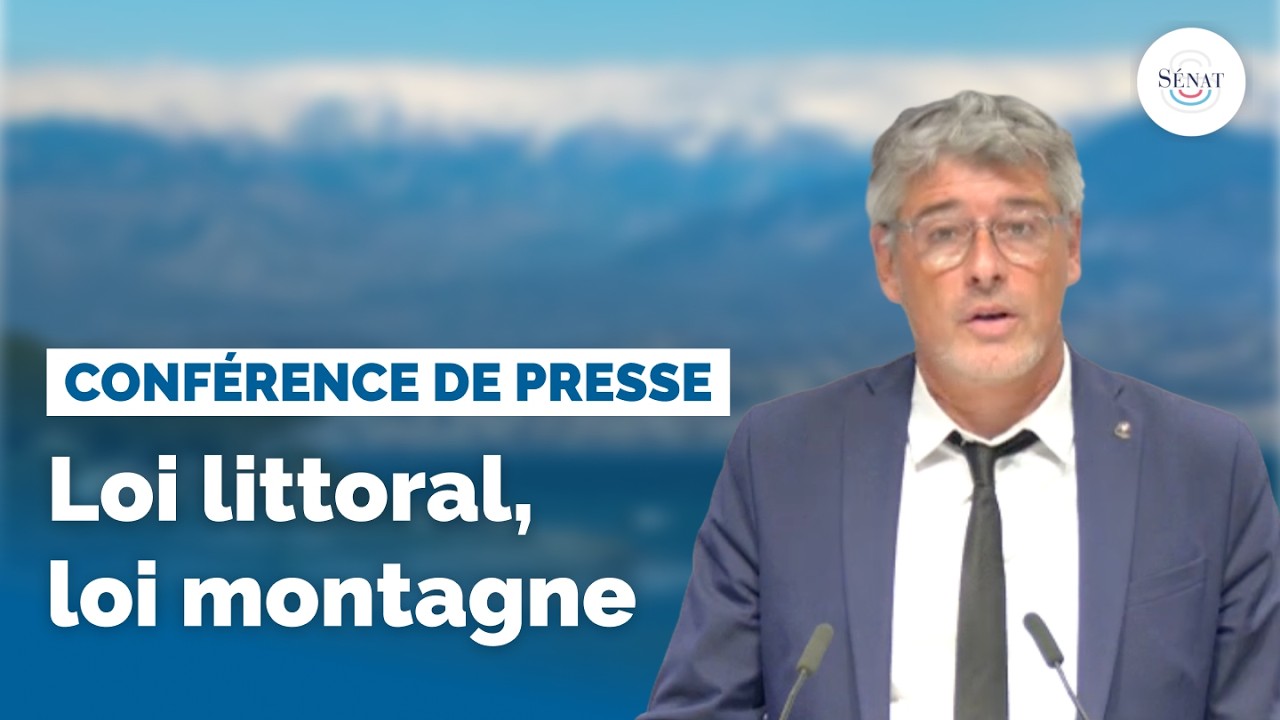
Loi Littoral, loi Montagne : conférence de presse
Keywords
Summary
179 words
Critical Evaluation
Value of the Information & Strength of the Argument
The video provides substantial value as an official summary of a comprehensive parliamentary investigation. It offers detailed insights into the strengths and weaknesses of the two laws, supported by concrete examples from field visits and statistical data from the consultation of local officials. The argumentation is structured and evidence-based, with clear explanations of the rationale behind each recommendation. The speakers present a balanced view, acknowledging the laws’ successes while identifying areas for improvement. The discussion of climate change impacts and the need for territorial differentiation is particularly compelling, backed by expert testimonies and observed phenomena. The presentation is persuasive and well-argued, making a strong case for the proposed adjustments.
Scientific Rigor, Source Quality, Title Accuracy
The scientific rigor is high, as the report is based on extensive hearings, field visits, and a large-scale consultation of local officials. The sources cited include expert testimonies, such as the president of Météo France, and specific case studies like the hamlet of La Bérarde and the coastal retreat in the Pas-de-Calais. The title accurately reflects the content, which is a press conference on the two laws. The video is an official communication from the Senate, lending it institutional credibility. The presentation is clear and well-structured, with a logical flow from findings to recommendations. The only minor weakness is the lack of detailed references to specific legal texts or academic studies, but this is appropriate for a press conference format.
244 words
Title / Content Match
The title accurately reflects the content: a press conference on the Littoral and Mountain laws.
Quality & Reliability
8/10
The video is an official press conference by the French Senate presenting a parliamentary mission's report. The information is institutional, based on extensive hearings and consultations, and is presented by senators directly involved. The content is factual and well-structured, though it represents a political perspective.
Key Moments
Markers derived by PSI from the transcript: the creator did not define chapters.
- Introduction by Guillaume Gontard, president of the mission, outlining the work conducted.
- Gontard highlights the positive impact of the laws and the need to address climate change.
- Jean-Michel Arnaud presents the report's structure and the three main findings.
- Arnaud discusses the need for differentiation and gives examples of territorial disparities.
- Presentation of the first two axes of recommendations: reaffirming principles and differentiation.
- Arnaud details the third axis on urban planning, including clarification and simplification measures.
- Discussion of the fourth axis: strengthening the role of SCoT in territorial differentiation.
- Arnaud concludes with the fifth axis on adapting laws to new challenges and the importance of local governance.
Cited Sources
- Rapport d'information sur la loi littorale et la loi montagne — The report is the main subject of the press conference, presented by the senators.
Concurring Sources
- Rapport d'information n° 123 (2025-2026) — The official report is the primary source, and the press conference is based on it.
Contribution & Novelties
The video provides a novel contribution by presenting the first combined evaluation of the Littoral and Mountain laws, highlighting their common challenges and proposing a unified framework for adaptation. It offers concrete recommendations that could influence future legislation. The emphasis on territorial differentiation and the role of SCoT is particularly innovative.
Pour aller plus loin :
- Loi littoral (France) — Wikipedia article on the French Littoral law.
- Loi montagne (France) — Wikipedia article on the French Mountain law.
- Schéma de cohérence territoriale — Wikipedia article on SCoT, a key planning tool mentioned in the report.
95 words
Radar Profile
The radar profile shows high scores in information quantity, quality, and reliability, with a moderate technical level. This indicates a well-documented and credible presentation, though it may require some background knowledge to fully grasp the legal and planning concepts.
💬 No comments were provided for analysis.