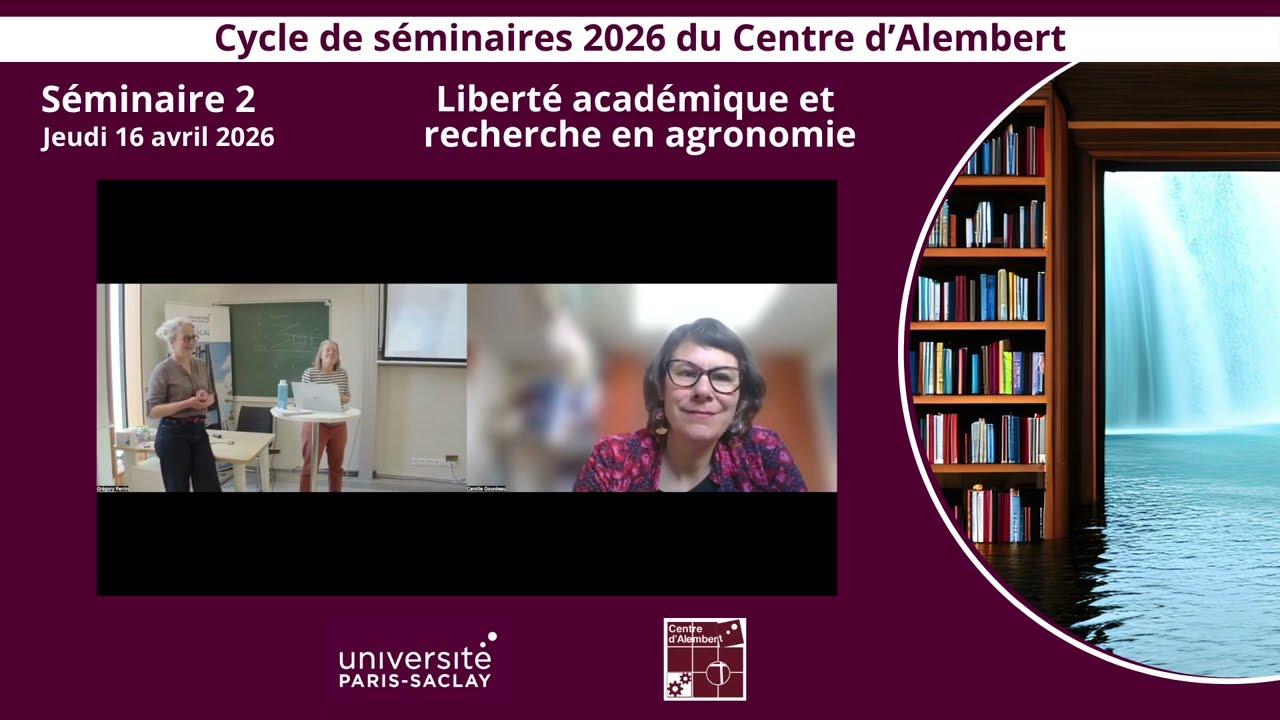
Questions du public à Adrienne Ressayre et Camille Gourdeau
Keywords
Summary
145 words
Critical Evaluation
Value of the Information & Strength of the Argument
The video provides valuable insights into the lived experiences of researchers dealing with controversies in agronomy and social sciences. The argumentation is based on personal anecdotes and specific examples, such as the Séralini affair and the stigmatization of biodynamic research, which illustrate the complexities of academic freedom. The speakers offer nuanced perspectives, acknowledging the difficulty of separating scientific from social controversies and the influence of economic and political factors. However, the discussion is exploratory rather than conclusive, and some claims lack systematic evidence.
Scientific Rigor, Source Quality, Title Accuracy
The scientific rigor is moderate: the speakers reference specific events and publications (e.g., Séralini’s article, AFIS) but do not provide a systematic review of sources. The title accurately reflects the content, which is a Q&A session. The discussion is informed and thoughtful, but the lack of formal citations and the debate format limit its rigor. No comments were provided for analysis.
159 words
Title / Content Match
The title accurately describes the content: a Q&A session with the two speakers.
Quality & Reliability
7/10
The video is a recorded academic seminar featuring two researchers discussing academic freedom and controversies in agronomy. The discussion is substantive and grounded in personal experience and references to specific cases (e.g., Séralini affair, biodynamics). However, it is a debate format with limited formal sourcing, and the claims are not systematically verified.
Key Moments
Markers derived by PSI from the transcript: the creator did not define chapters.
- Introduction and first question about diversity of researcher positions on controversies.
- Adrienne Ressayre discusses the Séralini affair and its impact on her laboratory.
- Camille Gourdeau contrasts teaching about racism and migration.
- Question about whether CNRS and INRAE researchers are covered by academic freedom.
- Martin Quentin raises the issue of taboo on biodynamic research.
- Discussion on the role of AFIS and rationalist movements.
- Frédéric Pascal questions the protection of non-affiliated researchers and the influence of economic interests.
- Ressayre reflects on GMO research and the difficulty of reaching consensus.
- Discussion on the blurred boundaries between scientific and social controversies.
Cited Sources
- Séralini affair (article on GMO impact) — Mentioned as a trigger for controversy in the laboratory.
- Qualité de la science française (letter) — Cited as an example of academic freedom being used defensively.
- AFIS (Association française pour l'information scientifique) — Discussed as a rationalist association critical of biodynamics.
- The Conversation — Mentioned as a platform for reliable scientific information in media.
Concurring Sources
- Academic freedom in research — General concept discussed in the video.
- Séralini affair — Specific case mentioned by Ressayre.
Contribution & Novelties
The video offers a unique insider perspective on how scientific controversies are experienced within research communities, particularly in agronomy. It highlights the tension between academic freedom and institutional pressures, and the challenges of teaching controversial topics. The discussion on biodynamics as a taboo research area is particularly original.
Pour aller plus loin :
- Academic freedom — Provides a general overview of the concept.
- Séralini affair — Details the controversy and its scientific and public impact.
- Biodynamic agriculture — Explains the practices and controversies surrounding biodynamics.
- Science communication — Relevant to the discussion on media and public understanding.
97 words
Radar Profile
The radar profile shows balanced scores across information quantity, quality, technical level, and reliability, indicating a moderately informative and reliable discussion. The technical level is slightly lower, reflecting the accessible nature of the debate.