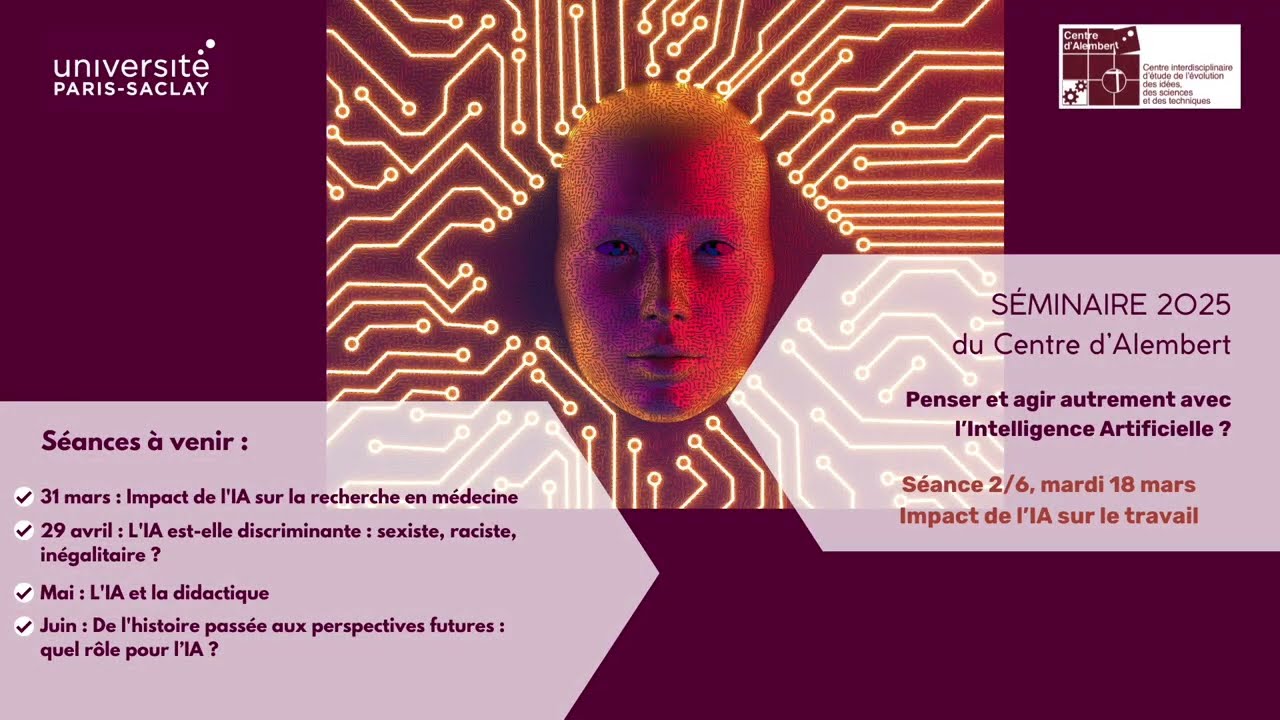
Séance 2 : Questions du public à Paola Tubaro, Flore Barcellini et Moustafa Zouinar
Keywords
Summary
129 words
Critical Evaluation
Value of the Information & Strength of the Argument
The discussion provides valuable insights into the social and psychological dimensions of AI in the workplace, often overlooked in technical debates. The speakers ground their arguments in empirical research and real-world examples, such as the Kenyan content moderators and the impact on radiologists. They acknowledge uncertainties and avoid definitive claims, which strengthens their credibility. The argumentation is coherent, with each speaker building on the others’ points, though some arguments rely on general observations rather than specific data.
Scientific Rigor, Source Quality, Title Accuracy
The speakers demonstrate scientific rigor by referencing known cases and studies, such as the Kenyan moderators and Daron Acemoglu’s work, though they do not provide detailed citations. The title accurately reflects the content, which is a Q&A session. The discussion is well-structured and stays on topic, with the speakers carefully distinguishing between established findings and hypotheses.
148 words
Title / Content Match
The title accurately reflects the content: a Q&A session with the three speakers, focusing on audience questions about AI's impact on work.
Quality & Reliability
7/10
The discussion features three researchers with expertise in work sociology, ergonomics, and AI, providing nuanced perspectives grounded in empirical studies and reports. They acknowledge uncertainties and avoid overgeneralizations, though specific citations are limited in the transcript.
Key Moments
Markers derived by PSI from the transcript: the creator did not define chapters.
- Introduction and first question about mental health of AI workers.
- Paola Tubaro discusses mental health issues among content moderators, citing the Kenyan case.
- Flore Barcellini adds general workplace conditions and loss of meaning.
- Moustafa Zouinar mentions job losses in US ports due to AI automation.
- Discussion on the neglect of collective work in AI implementations, with radiology example.
- Question about whether AI is a rupture or continuity; speakers caution against hype.
- Meredith Whittaker's quote about venture capital hype is shared.
- Discussion on risks to creativity and critical thinking, especially in education.
- Audience question about AI in computer-aided design and potential breakthroughs.
- Speakers acknowledge the oversight and discuss potential impacts in engineering.
Cited Sources
- No specific sources cited in the video — The speakers reference studies and reports but do not provide specific URLs or titles.
Concurring Sources
- Daron Acemoglu's research on AI and productivity — Mentioned in the discussion regarding economic effects of AI.
Contribution & Novelties
The video offers a multidisciplinary perspective on AI’s impact on work, combining sociology, ergonomics, and economics. It highlights often-overlooked aspects such as mental health of data workers, the neglect of collective work, and the role of hype in shaping AI investments. The speakers provide a balanced view, avoiding both techno-optimism and fatalism.
Pour aller plus loin :
- Daron Acemoglu’s work on technology and productivity — Relevant for understanding economic perspectives on AI.
- Content moderation and mental health — Provides background on the psychological impacts discussed.
- AI and the future of work — Overview of broader debates on AI and employment.
100 words
Radar Profile
The radar profile shows balanced scores across information quantity, quality, technical level, and reliability, indicating a well-rounded discussion with moderate depth. The high quality and reliability scores reflect the expertise of the speakers, while the moderate technical level suggests accessibility to a general audience.