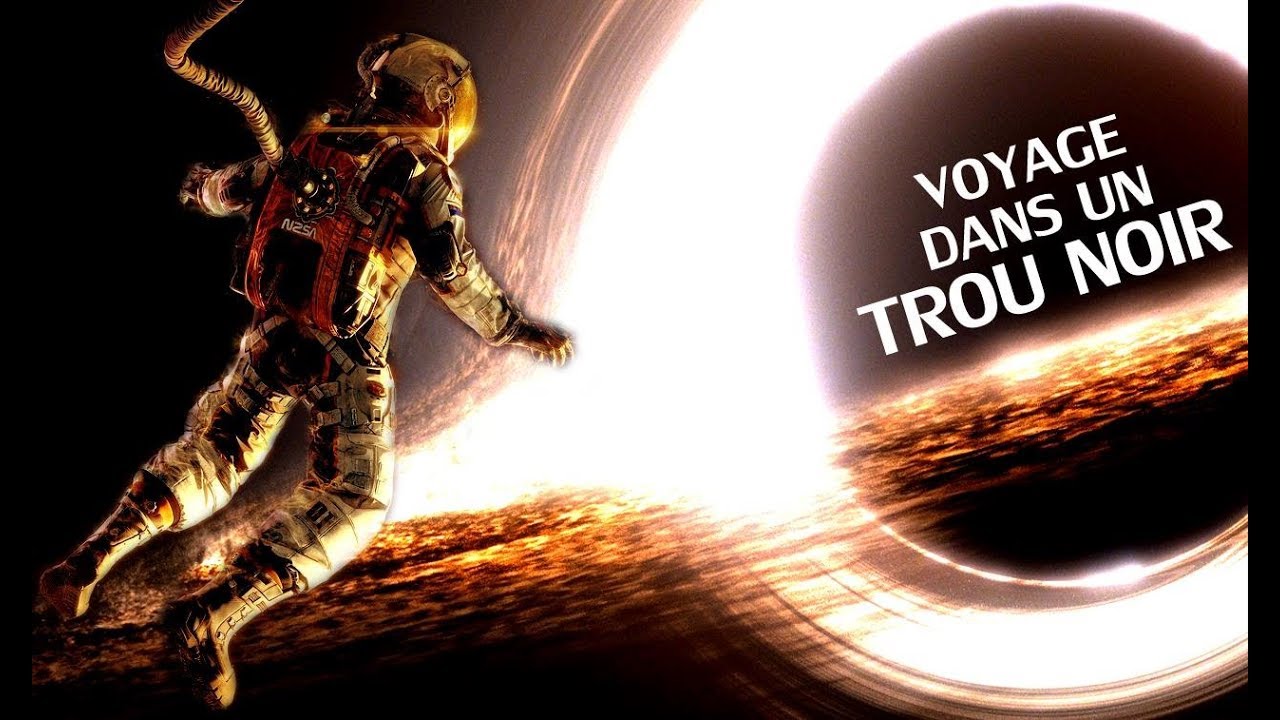
Voyage dans un trou noir - #LeSOW 5 (avec Nexus VI)
Keywords
Summary
197 words
Critical Evaluation
Value of the Information & Strength of the Argument
The video provides valuable information by combining accurate scientific explanations with engaging storytelling. It effectively uses the Interstellar movie as a hook to discuss real physics, and the narrative of sending Jar Jar into a black hole makes complex concepts accessible. The argumentation is solid, based on general relativity and expert sources, and it corrects common misconceptions (e.g., black holes as vacuum cleaners, density misconceptions). The explanations are clear and logically structured, from appearance to the fate of an infalling object, and finally to the theoretical limits.
Scientific Rigor, Source Quality, Title Accuracy
The scientific rigor is high: the video cites experts like Alain Riazuelo and Jean-Pierre Luminet, and provides links to their work and further resources. The description includes references to blog posts and lectures, enhancing credibility. The title accurately reflects the content, and the video’s claims are consistent with established physics. The production quality is excellent, with visual aids and a clear narrative. The video also acknowledges and corrects a minor error in a pinned comment, demonstrating a commitment to accuracy.
182 words
Title / Content Match
The title accurately reflects the content: a journey into a black hole, with a narrative and scientific explanations.
Quality & Reliability
8/10
The video is a well-researched science communication piece, with accurate explanations of general relativity, black hole properties, and the physics behind Interstellar. It cites experts (Alain Riazuelo, Jean-Pierre Luminet) and provides links to further resources. Minor simplification (density vs. mass density) is corrected in a pinned comment, showing attention to accuracy.
Key Moments
Markers derived by PSI from the transcript: the creator did not define chapters.
- Introduction: comparing Interstellar's Gargantua to realistic black hole images.
- Explanation of gravitational lensing and the omission of Doppler effect in the film.
- Setting up the experiment: sending Jar Jar into a black hole.
- Clarifying that black holes are not cosmic vacuum cleaners; orbits unchanged if Sun replaced.
- Demonstration of gravitational time dilation as Jar Jar approaches the event horizon.
- Crossing the event horizon: light cannot escape, image freezes.
- Discussion of density: more massive black holes are less dense; spaghettification.
- No-hair theorem: black holes characterized by mass, spin, and charge.
- The singularity and the need for quantum gravity.
- Channel updates and funding appeal; Q&A section begins.
Cited Sources
- Interstellar : un trou noir à Hollywood (blog de Jean-Pierre Luminet) — Referenced as inspiration and further reading on black hole depiction in Interstellar.
- Black holes, Interstellar etc… (blog d'Alain Riazuelo) — Referenced as a source for accurate black hole physics and the film's realism.
- Voyage au coeur d’un trou noir, avec Alain Riazuelo (Science et Avenir) — Suggested as further viewing on black hole interiors.
- Trous noirs et énergie sombre, une conférence de Jean-Pierre Luminet — Recommended for deeper understanding of black holes and cosmology.
- Les trous noirs, une vidéo de Science Etonnante — Additional resource on black holes.
Concurring Sources
- Interstellar : un trou noir à Hollywood (blog de Jean-Pierre Luminet) — Supports the discussion on the realism of Gargantua.
- Black holes, Interstellar etc… (blog d'Alain Riazuelo) — Provides scientific backing for the physics described.
External References
Contribution & Novelties
The video offers a unique blend of humor and rigorous science, using a popular culture reference (Jar Jar Binks) to explain complex astrophysical concepts. It provides a clear, visual explanation of gravitational lensing, time dilation, and spaghettification, making them accessible to a broad audience. The collaboration with Nexus VI adds a creative narrative layer, and the video corrects common misconceptions while citing expert sources.
Pour aller plus loin :
- Black hole - Wikipedia — Comprehensive overview of black hole physics.
- Event horizon - Wikipedia — Detailed explanation of the boundary.
- Gravitational time dilation - Wikipedia — Concept central to the video’s demonstration.
- No-hair theorem - Wikipedia — Explains the simplicity of black hole properties.
- Quantum gravity - Wikipedia — The theory needed to resolve singularities.
125 words
Radar Profile
The radar profile shows high scores in information quality and technical level, indicating a scientifically robust and detailed content. The slightly lower scores in quantity and reliability reflect the video's focus on a specific topic with some simplifications, but overall it is a well-balanced and trustworthy production.
💬 Très positif. Sur les 30 commentaires analysés, l'accueil est extrêmement enthousiaste, avec des éloges pour la qualité de la vidéo, le retour après une longue absence, et la collaboration avec Nexus VI, ainsi que des remerciements pour les explications claires.