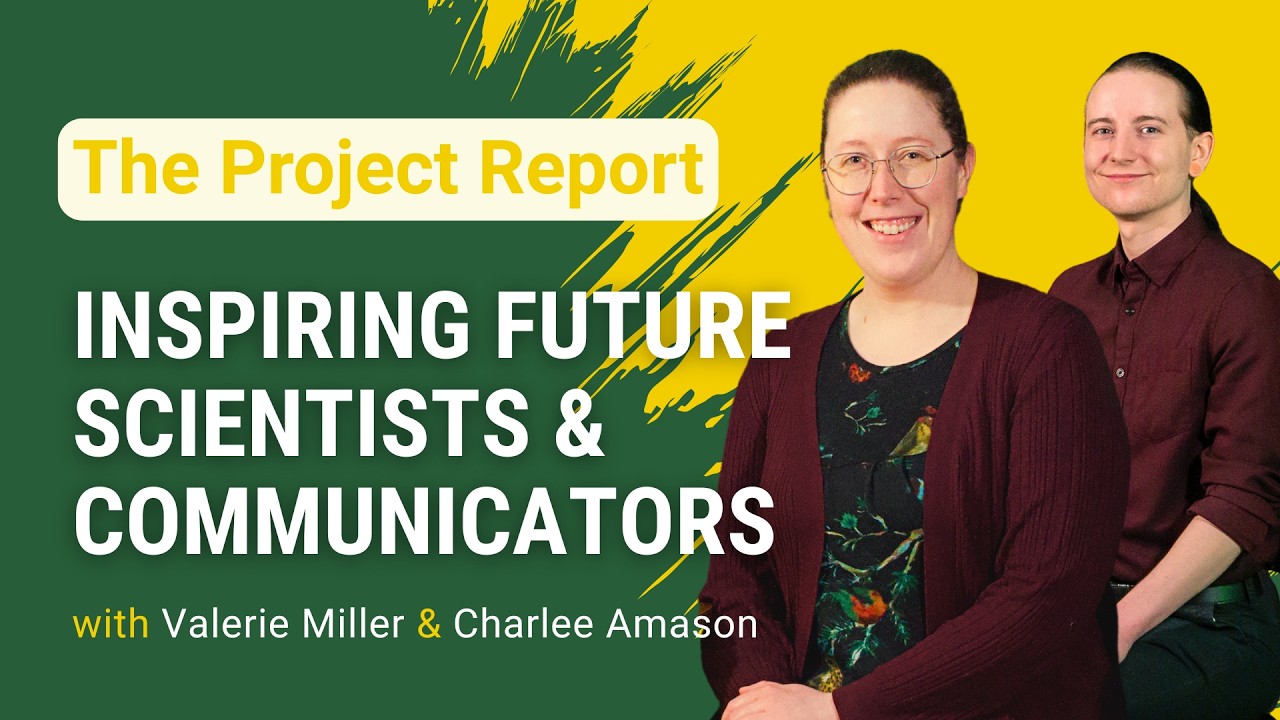
The Project Report: Inspiring Future Scientists & Communicators
Keywords
Summary
158 words
Critical Evaluation
Value of the Information & Strength of the Argument
The video provides valuable insights into the practical implementation of science communication programs, highlighting successful strategies such as curriculum alignment, hands-on activities, and diverse media. The argumentation is based on personal experience and program outcomes, but lacks quantitative data or external evidence. The discussion is coherent and persuasive, emphasizing the importance of making science accessible and engaging.
Scientific Rigor, Source Quality, Title Accuracy
The video is produced by Future Energy Systems, an institutional source, and the information is presented without external citations. The sources cited are the organization’s own website and resources, which are relevant but not independently verified. The title accurately reflects the content, focusing on inspiring future scientists through communication. The video does not address potential limitations or criticisms of the programs.
133 words
Title / Content Match
The title accurately reflects the content, which focuses on inspiring future scientists through science communication and outreach.
Quality & Reliability
7/10
The video is an institutional interview presenting outreach programs and personal experiences. It is reliable in describing the programs' activities and goals, but lacks external validation or critical analysis. The information is anecdotal and promotional.
Key Moments
Markers derived by PSI from the transcript: the creator did not define chapters.
- Introduction to the Project Report series and guest Dr. Valerie Miller.
- Valerie discusses her background in land reclamation and passion for science communication.
- Explanation of the Energy Explorers program and its origins.
- Discussion of teacher resources and the growth of classroom programs.
- Introduction of Charlie Amson and his background in astrophysics and coding.
- Overview of the 'Energy Adventures of Tommy and Remy' book series.
- Creation of workbooks, comics, and video games for educational purposes.
- Discussion of the impact of gamification on learning.
- Future plans and the upcoming end of Future Energy Systems in 2026.
- Advice for the public to support science communication and engage with researchers.
Cited Sources
- Future Energy Systems — Main website of the research program.
- Learning Page — Educational resources and programs.
- Teacher Resources — Resources for teachers.
- News — News and updates from the program.
Concurring Sources
- Future Energy Systems — Official program website supporting the information presented.
Contribution & Novelties
The video showcases innovative approaches to science communication, such as integrating research into children’s books and video games, and training graduate students as communicators. It emphasizes the importance of making science accessible to diverse audiences.
Pour aller plus loin :
- Science communication — Overview of the field.
- Energy transition — Context for the research program.
- STEM education — Related educational approaches.
61 words
Radar Profile
The radar profile shows moderate scores across all dimensions, with a slight emphasis on reliability and information quality, reflecting the institutional nature of the content and its focus on practical outreach rather than deep technical detail.