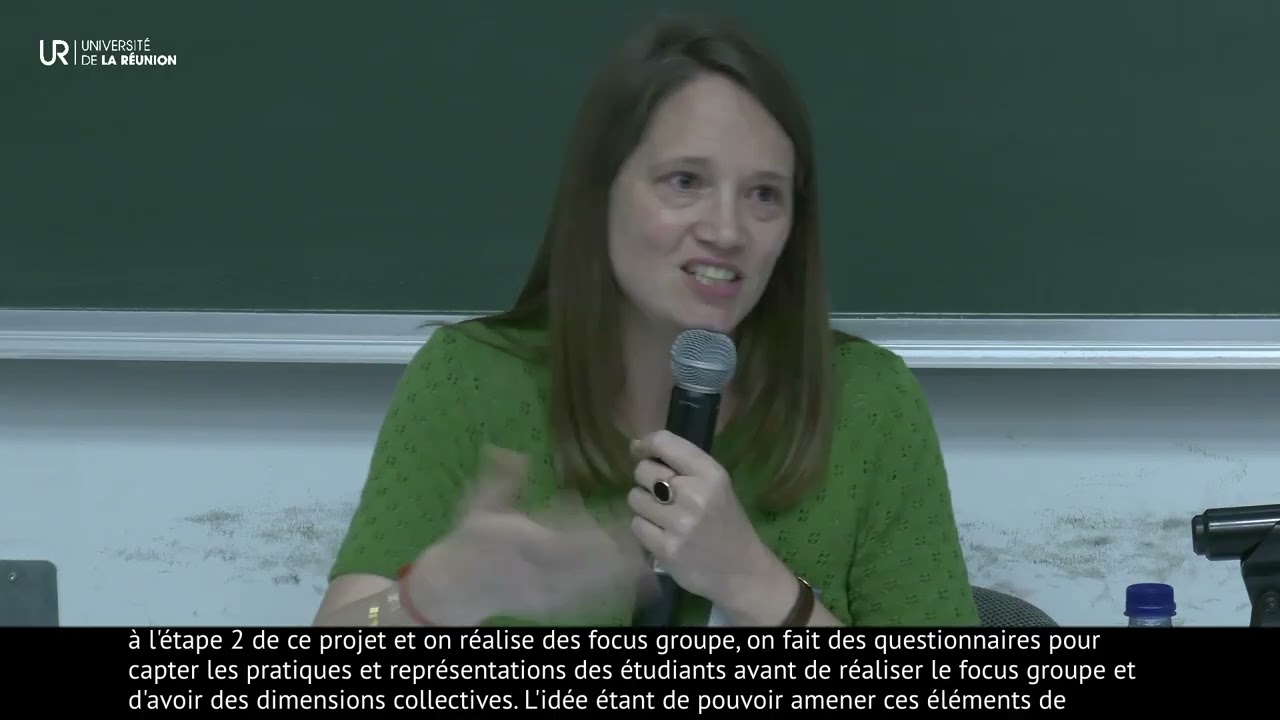
Colloque Et SI : intervention d'Amandine Rochedy
Keywords
Summary
138 words
Critical Evaluation
Value of the Information & Strength of the Argument
The presentation provides valuable insights into the often-overlooked food challenges faced by students with disabilities, particularly those with ASD. The use of a case study (David) makes the issues tangible and illustrates the complex interplay of sensory, cognitive, and social factors. The argumentation is solid, grounded in sociological concepts like food itineraries and the social model of disability. However, the presentation is limited to a single case, and the speaker acknowledges the lack of generalizability. The participatory research approach is commendable, but the presentation focuses on preliminary results, leaving room for further validation.
Scientific Rigor, Source Quality, Title Accuracy
The presentation references academic literature (e.g., Grignon, Desjeux) and institutional data (Observatoire de la vie étudiante), but no specific sources are cited in the video description. The title accurately reflects the content, as it is a conference talk. The speaker demonstrates scientific rigor by clearly stating the research methodology and limitations. However, the lack of accessible sources in the description limits the ability to verify claims independently.
175 words
Title / Content Match
The title accurately reflects the content: a conference presentation by Amandine Rochedy.
Quality & Reliability
7/10
The presentation is based on a research project and references academic literature, but it is a conference talk with limited detail on methodology and no external sources provided in the description.
Key Moments
Markers derived by PSI from the transcript: the creator did not define chapters.
- Introduction: Amandine Rochedy presents herself and the research project 'Université Al inclusif'.
- Context: Student life cycle and the transition to university, highlighting the importance of food practices.
- Literature review: Food insecurity and vulnerability among students, with reference to the Observatoire de la vie étudiante.
- Research methodology: Participatory, accessible, and inclusive research approach.
- Case study introduction: David, a student with ASD, and his food autobiography.
- Findings: David's challenges with grocery shopping and meal preparation at home.
- Findings: Navigating the university campus food environment, including the restaurant and its complexities.
- Discussion: The need to consider food in university disability policies and the concept of 'food rights'.
- Conclusion: Call for more inclusive food environments and further research.
Cited Sources
- Observatoire de la vie étudiante — Cited as a source of data on student living conditions, particularly food insecurity.
Concurring Sources
- Observatoire de la vie étudiante — Provides data on student food insecurity, supporting the presentation's claims.
Contribution & Novelties
The presentation offers a novel perspective by focusing on the intersection of disability and food practices in higher education, an area often neglected. The participatory approach, involving students with disabilities as co-researchers, is innovative. The case study of David provides rich qualitative data that highlights the hidden challenges faced by students with ASD.
Pour aller plus loin :
- Social model of disability — Relevant to the inclusive research approach.
- Food insecurity — Context for student food challenges.
- Autism spectrum disorder — Background on ASD and sensory issues.
87 words
Radar Profile
The radar profile shows high scores in information quantity and quality, with moderate technical level and reliability. This suggests a well-informed presentation with practical insights, but with limited technical depth and reliance on a single case study.