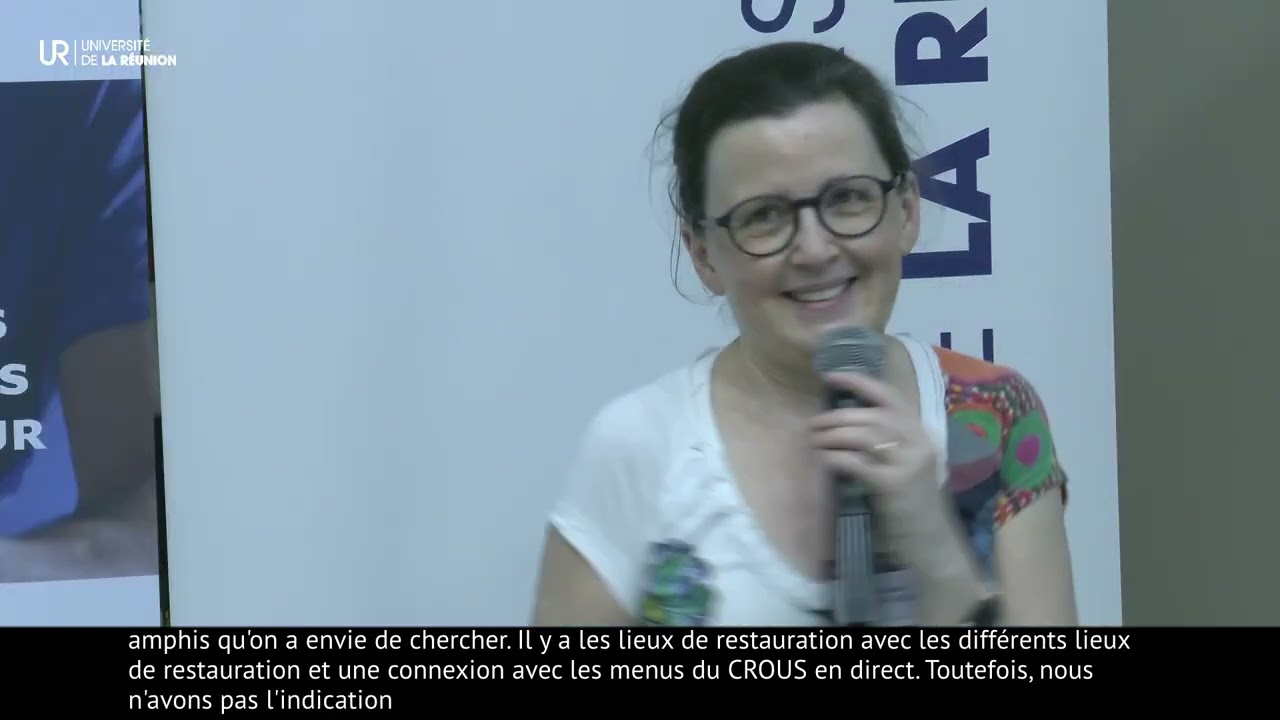
Colloque Et SI : intervention de Stéphanie Jean Daubias
Keywords
Summary
129 words
Critical Evaluation
Value of the Information & Strength of the Argument
The talk provides valuable insights into practical applications of inclusive design in higher education. The speaker’s argumentation is based on personal experience and concrete examples, which strengthens its credibility. She effectively demonstrates how research and teaching can converge to create more inclusive environments. However, the argumentation could be strengthened by referencing specific studies or frameworks to support her claims.
Scientific Rigor, Source Quality, Title Accuracy
The talk is scientifically grounded in the speaker’s expertise and ongoing research, but it lacks formal citations. The sources mentioned are primarily her own work and the OpenStreetMap project. The title accurately reflects the content, and the talk is well-structured. The speaker’s personal experience adds authenticity but also introduces potential bias. Overall, the scientific rigor is moderate, with a clear focus on practical application.
138 words
Title / Content Match
The title accurately reflects the content: a conference presentation on inclusive education and research, with concrete examples from the speaker's work.
Quality & Reliability
7/10
The speaker is an experienced professor in computer science with a focus on HCI and accessibility. The talk is based on personal experience and ongoing research, but lacks formal citations or peer-reviewed references. The content is credible and practical, but the scientific rigor is moderate.
Key Moments
Markers derived by PSI from the transcript: the creator did not define chapters.
- Introduction and personal motivation
- Overview of academic career and research themes
- Introduction to Opal app and its features
- Campus map and points of interest
- Personalized routes and accessibility features
- Research on inclusive routing and data integration
- Teaching approach and inclusive practices
- Course materials and accessibility improvements
- Impact of autism diagnosis and conclusion
Cited Sources
- OpenStreetMap — Used as the base map for the Opal app, allowing for open and contributive mapping.
Concurring Sources
- OpenStreetMap — The app relies on OpenStreetMap, which is a collaborative project providing free geographic data.
Contribution & Novelties
The talk offers a unique perspective on integrating accessibility and inclusion into both research and teaching in computer science. The Opal app is a concrete example of how technology can be developed to meet diverse user needs. The speaker’s personal experience with autism provides valuable insights into the challenges faced by neurodivergent individuals in academic settings.
Pour aller plus loin :
- Universal Design for Learning — Framework for creating inclusive educational environments.
- Accessible Route Planning — Overview of technologies and approaches for accessible navigation.
- OpenStreetMap Accessibility — Community-driven efforts to map accessibility features.
93 words
Radar Profile
The radar profile shows high scores in information quantity and quality, reflecting the speaker's expertise and the practical nature of the content. The technical level is moderate, suitable for a general academic audience. The overall reliability is good, though the lack of formal citations slightly reduces the score.
💬 No comments were provided for analysis.