FA25 - Fernando Luiz Lara
Keywords
Summary
157 words
Critical Evaluation
Value of the Information & Strength of the Argument
The lecture provides a valuable critique of Eurocentrism in architectural history, offering a well-argued and evidence-based perspective. Lara supports his claims with specific examples from historical texts and his own research, making a compelling case for the need to decolonize the discipline. The argumentation is logical and persuasive, though it relies heavily on the authority of the speaker and the cited decolonial theorists. The lecture is particularly strong in its analysis of how architectural historiography has systematically marginalized the Americas, and it offers a constructive framework for rethinking the field.
Scientific Rigor, Source Quality, Title Accuracy
The lecture demonstrates scientific rigor through the use of primary sources, such as the Codex Yanhuitlán, and the analysis of canonical architectural history books. Lara cites specific authors and works, including Banister Fletcher, Lewis Mumford, Leonardo Benevolo, Spiro Kostof, and decolonial theorists like O’Gorman, Quijano, and Escobar. The sources are relevant and credible, though the lecture format limits the depth of engagement with each. The title is accurate but generic, reflecting the lecture series rather than the specific content. Overall, the sources are well-chosen and contribute to the lecture’s credibility.
195 words
Title / Content Match
The title is generic (FA25 - Fernando Luiz Lara) but accurately identifies the speaker and the series; the content matches the expected lecture format.
Quality & Reliability
8/10
The lecture is delivered by a recognized scholar in architectural history and theory, with a clear methodological approach and reference to specific publications and authors. The arguments are well-structured and supported by historical evidence, though some claims rely on personal interpretation and the lecture format limits depth.
Key Moments
Markers derived by PSI from the transcript: the creator did not define chapters.
- Introduction of Fernando Luiz Lara by Vanessa
- Lara introduces his book 'Spatial Theories for the Americas' and the concept of counterweights to Eurocentrism
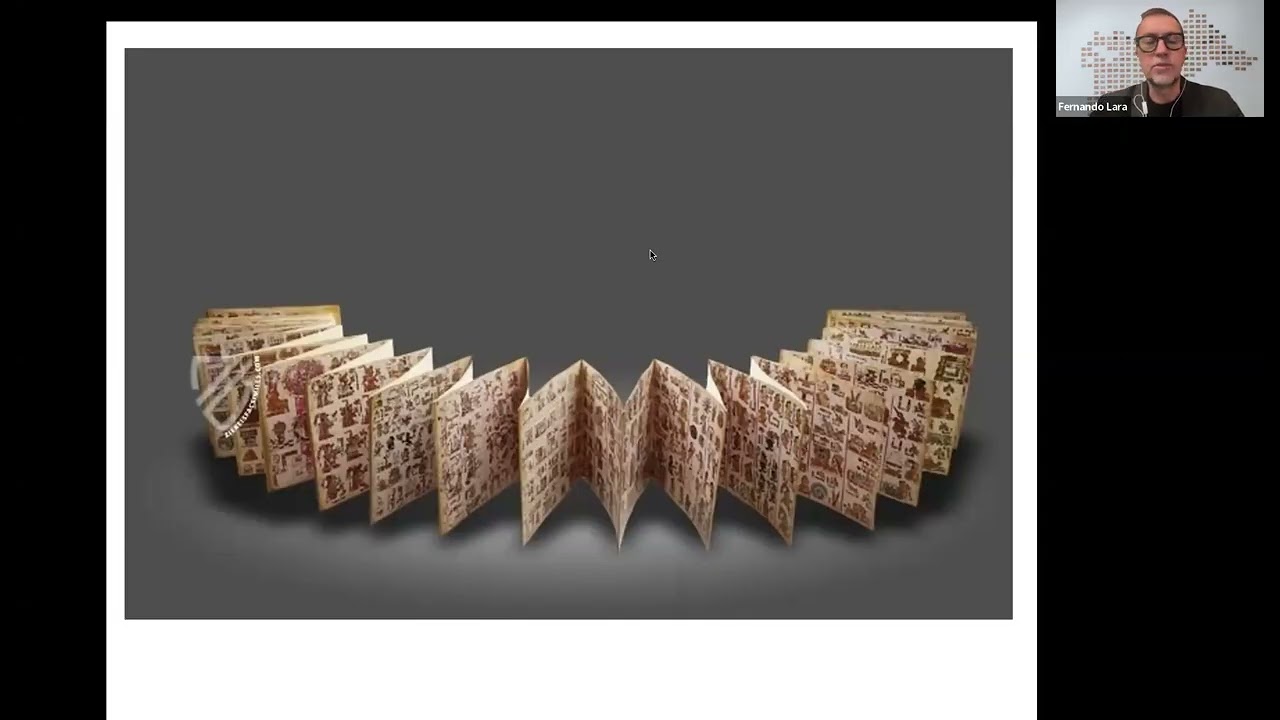
- Discussion of the Codex Yanhuitlán as the oldest record of architects in the Americas
- Lara explains the metaphor of the kidnapped document for the erasure of knowledge
- Personal trajectory: from Brazil to the US, research on modernist architecture in Brazil
- Introduction to decolonial theory: O'Gorman, Quijano, Escobar
- Mapping of architectural history books: Banister Fletcher, Mumford, Benevolo, Kostof
- Analysis of the absence of the Americas in Fletcher's book
- Discussion of Benevolo's acknowledgment of Renaissance cities in the Americas
- Kostof's mention of the Americas and the critique of Eurocentrism
- Expansion of global architectural history: Ingresol, Jarzombek, Prakash
- The problem of modern expansion: focus on pre-modern sites
- Conclusion: the need for spatial theories of the Americas
Cited Sources
- Spatial Theories for the Americas: Counterweights to Five Centuries of Eurocentrism — Lara's book, the main subject of the lecture
- Modern Architecture in Latin America — Co-authored by Lara and Luis Carranza, mentioned as a comprehensive survey
- Encountering Development — Book by Arturo Escobar, cited for the idea that modernization and colonization are inseparable
- The Dawn of Everything — Book by David Graeber and David Wengrow, mentioned for the indigenous critique of European enlightenment
Concurring Sources
- The Dawn of Everything — Supports the idea that indigenous critique influenced European enlightenment
Dissenting Sources
- Banister Fletcher's 'A History of Architecture' — Lara critiques its Eurocentric perspective and omission of the Americas
Contribution & Novelties
The lecture offers a fresh perspective on architectural history by centering the Americas and challenging Eurocentric narratives. Lara’s concept of ‘undrawn’ architecture provides a new lens for understanding self-built environments. The lecture also synthesizes decolonial theory with architectural historiography, offering a framework for future research.
Pour aller plus loin :
- Decoloniality — Overview of decolonial thought.
- Aníbal Quijano — Key theorist of coloniality of power.
- Arturo Escobar — Anthropologist and author of ‘Encountering Development’.
- Spiro Kostof — Architectural historian whose work Lara analyzes.
83 words
Radar Profile
The radar profile shows high scores in information quantity, quality, and reliability, with a moderate technical level. This indicates a lecture that is rich in content and well-supported, but not overly technical, making it accessible to a broad audience.