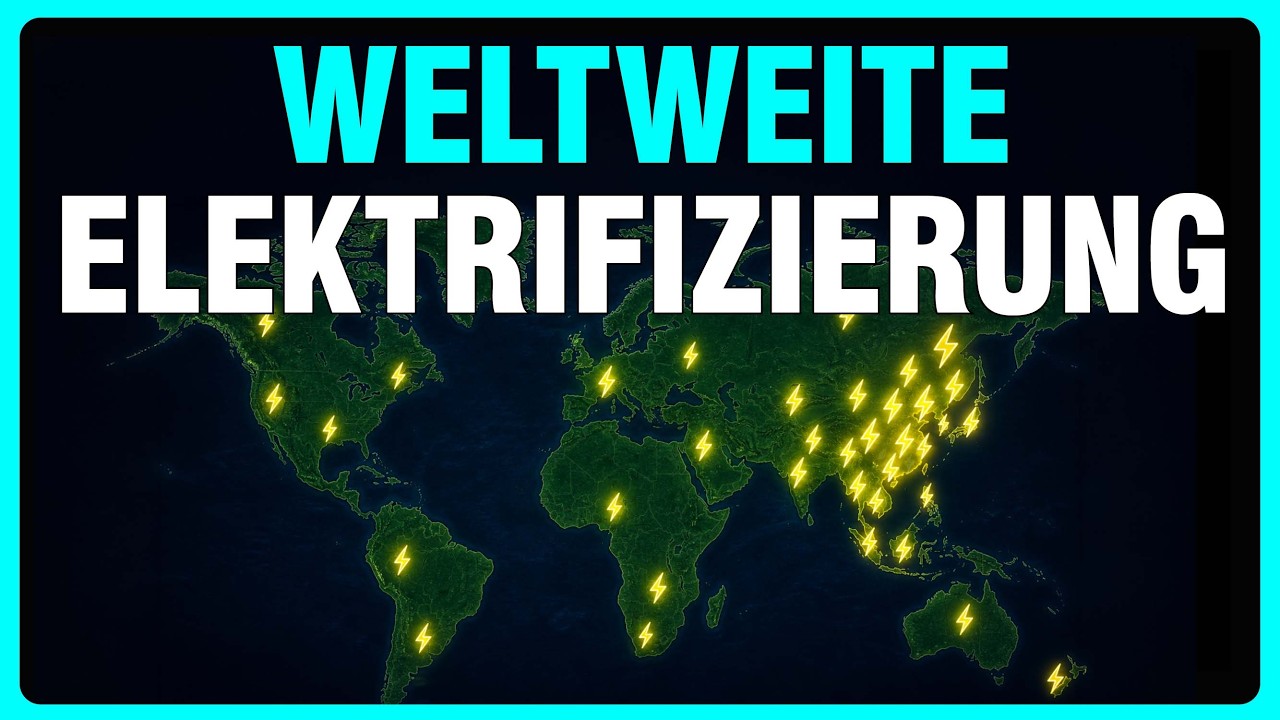
Das Ende des Erdöls beginnt jetzt - Dirk Specht
Keywords
Summary
124 words
Critical Evaluation
Value of the Information & Strength of the Argument
The value of the information is high, offering unique insights from a two-month Asia trip and a detailed analysis of China’s technocratic system. The argumentation is coherent and well-structured, using concrete examples to illustrate the contrast between Asian and European responses. Specht’s expertise adds credibility, though some claims lack direct evidence.
Scientific Rigor, Source Quality, Title Accuracy
The scientific rigor is moderate; the speaker references personal observations and general knowledge but provides few specific sources. The title accurately reflects the content, which focuses on the end of oil and the need for energy transition. The description includes links to the podcast’s social media, but no direct references to studies or reports are cited in the video.
125 words
Title / Content Match
The title accurately reflects the core message that the end of oil is imminent, supported by examples from Asia and Germany.
Quality & Reliability
8/10
The speaker is an experienced energy sector entrepreneur and board member, providing informed analysis based on direct observations from a two-month Asia trip. Claims are plausible and align with known trends, but lack formal citations or verifiable data in the video.
Key Moments
Markers derived by PSI from the transcript: the creator did not define chapters.
- Introduction to the topic and the impact of the Hormuz closure.
- Comparison of Asian and European crisis responses.
- Examples from India, Indonesia, and Sri Lanka.
- Discussion of China's Malacca dilemma and strategic planning.
- Analysis of China's five-year plans and technocratic system.
- Critique of German energy policy and bureaucratic hurdles.
- Discussion of system costs and the 36-billion-euro calculation.
- Recommendations for consumers and businesses.
- Conclusion and call for long-term strategy.
Cited Sources
- Geladen Podcast LinkedIn — Official LinkedIn page of the podcast, mentioned in the description.
Concurring Sources
- IEA Report on Oil Market — The IEA is mentioned in the video as a source for the severity of the oil crisis.
Contribution & Novelties
This episode provides a unique on-the-ground perspective on how Asian countries are rapidly pivoting away from fossil fuels in response to the Hormuz crisis, contrasting sharply with Germany’s short-term measures. It offers a detailed explanation of China’s strategic energy planning, which is often misunderstood in the West.
Pour aller plus loin :
- Malacca Dilemma — Relevant to understanding China’s strategic concerns.
- National Development and Reform Commission — Key institution in China’s planning process.
- Strait of Hormuz — Context for the current crisis.
82 words
Radar Profile
The radar profile shows high scores in information quantity and quality, reflecting the rich content and expert insights. The technical level is moderate, suitable for a general audience. Overall reliability is good, though lacking formal citations.
💬 Très positif. Sur les 30 commentaires analysés, la grande majorité exprime une forte approbation du contenu, saluant la compétence de l'invité et la clarté des explications, avec quelques critiques acerbes envers la politique énergétique allemande.