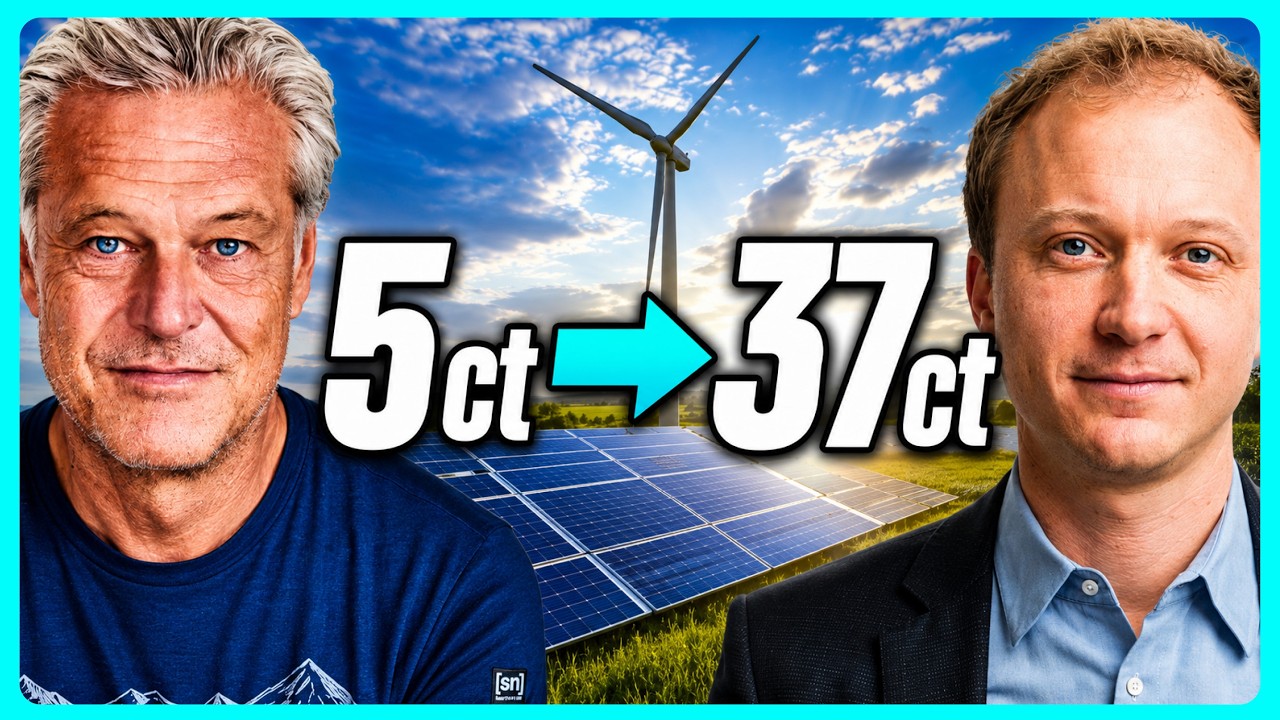
Wind und Solar sind billig - warum zahlen wir so viel für Strom? Dirk Specht & Lion Hirth
Keywords
Summary
130 words
Critical Evaluation
Value of the Information & Strength of the Argument
The value of the information is high, as it provides a nuanced and expert-level analysis of the German electricity market. The discussion goes beyond simplistic narratives, addressing both the benefits and challenges of renewable energy. The argumentation is solid, with both experts presenting coherent economic and technical reasoning. They acknowledge uncertainties and differing perspectives, making the debate constructive and informative. However, some claims are based on personal opinions or general observations rather than specific data, which slightly weakens the empirical grounding.
Scientific Rigor, Source Quality, Title Accuracy
The scientific rigor is generally high, with references to economic theory, market mechanisms, and regulatory frameworks. The experts cite general concepts like merit order and mention reports (e.g., IEA) but do not provide specific citations during the discussion. The description includes links to the podcast’s social media and a sponsor, but no direct sources for the claims made. The title accurately reflects the content, which is a debate on electricity prices. The adequacy between title and content is strong, as the discussion directly addresses the paradox of cheap renewables and high consumer prices.
189 words
Title / Content Match
The title accurately reflects the core question of why electricity prices remain high despite low renewable generation costs, and the discussion directly addresses this paradox.
Quality & Reliability
8/10
The discussion features two recognized experts in energy policy and economics, providing a balanced and technically informed debate. The arguments are grounded in economic theory and empirical observations, though some claims are contested and not all are backed by specific citations.
Key Moments
Markers derived by PSI from the transcript: the creator did not define chapters.
- Introduction of guests and initial question on why electricity is expensive despite cheap renewables.
- Breakdown of electricity bill components: energy, grid fees, taxes/levies.
- Explanation of merit order principle and its impact on prices.
- Discussion on extreme price fluctuations and the need for flexibility.
- Critique of regulatory inefficiencies and high capital costs.
- Reform proposals and outlook on future electricity prices.
Cited Sources
- Ostrom - NeoGrid AI — Sponsoring segment promoting smart energy optimization.
- Geladen LinkedIn — Podcast's LinkedIn page for further engagement.
- Ostrom referral link — Sponsor link with referral code for listeners.
Concurring Sources
- IEA report on electricity prices — Mentioned by Lion Hirth as showing Germany has the highest household electricity prices among compared countries.
Contribution & Novelties
The episode provides a balanced and expert discussion on the German electricity market, offering insights into the merit order, grid costs, and the role of flexibility. It challenges simplistic views on renewable energy costs and highlights the complexity of the energy transition.
Pour aller plus loin :
- Merit Order — Explains the economic principle of dispatching power plants by marginal cost.
- German Energy Transition (Energiewende) — Overview of Germany’s energy policy and its challenges.
- Smart Meter — Discusses the technology and its role in enabling flexible electricity consumption.
88 words
Radar Profile
The radar profile shows high scores in information quantity and quality, reflecting the depth of the discussion. The technical level is moderate, suitable for an informed audience. The global reliability is strong, though the lack of specific citations slightly reduces the score.
💬 Positif : Sur les 30 commentaires analysés, la majorité exprime une appréciation très positive de la discussion, saluant la qualité des échanges et la complémentarité des intervenants, avec quelques critiques constructives sur des points spécifiques.