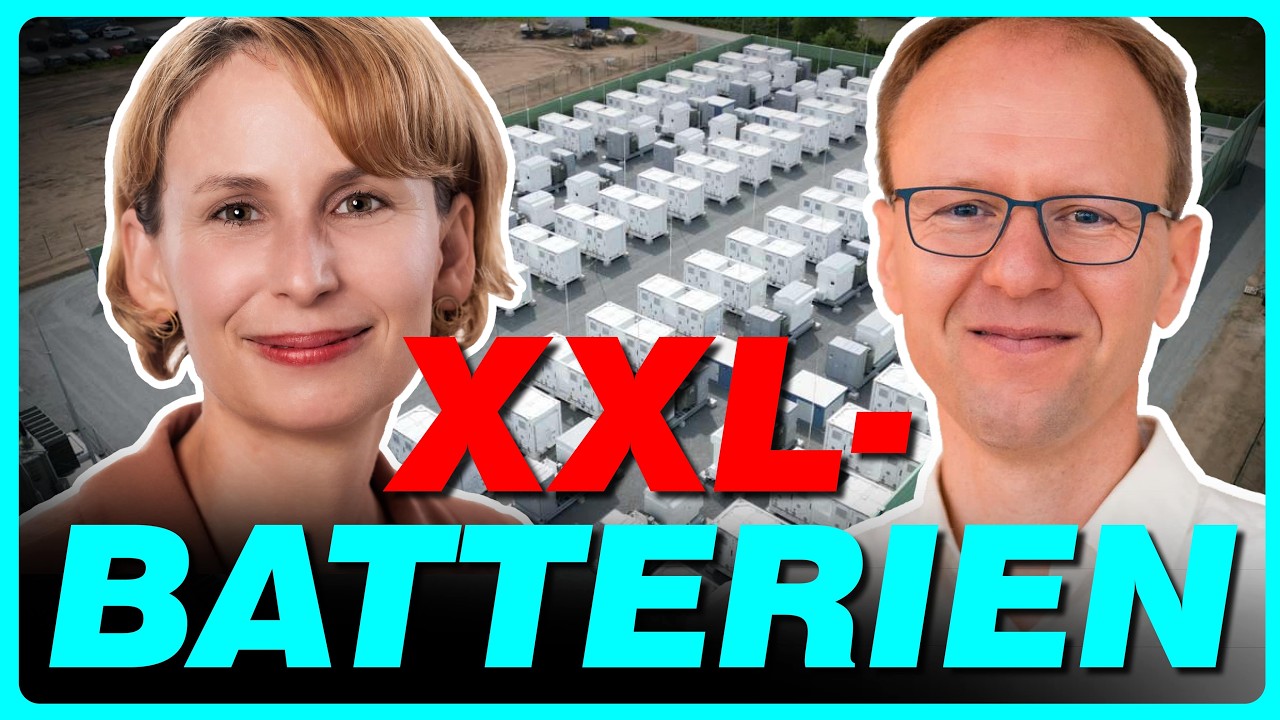
Yes! 🔋 💪💪 78 GW von 500 GW GROSSBATTERIEN genehmigt! XXL-Akkus J.Bammert/M.Schmid | Geladen Podcast
Keywords
Summary
190 words
Critical Evaluation
Value of the Information & Strength of the Argument
The podcast provides valuable insights into the operational and strategic perspectives of a transmission system operator regarding battery storage and grid integration. The guests present concrete data, such as the 40 GW of approved battery connections and the 500 GW of requests, which underscores the scale of the transition. Their arguments are well-structured, explaining the technical and regulatory challenges, such as the outdated connection procedures and the need for system-friendly operation of storage. The discussion on electricity price zones is particularly valuable, as it presents a nuanced view from the network operator’s perspective, challenging common assumptions. The hosts also contribute by asking pointed questions and providing critical commentary, which adds depth to the argumentation. However, the perspective is inherently that of the network operator, so the argumentation may not fully represent other stakeholders’ views.
Scientific Rigor, Source Quality, Title Accuracy
The scientific rigor is high, with guests from a major TSO providing detailed technical and regulatory information. The sources cited include a study on electricity price zones from the Baden-Württemberg Ministry of the Environment, a press release about the OctoFlexBW pilot project, and a previous podcast episode with 50Hertz. These are relevant and credible. The title accurately reflects the main topic of battery storage approvals, though it emphasizes the 78 GW figure, which is mentioned in the episode as part of the 500 GW requests. The title is somewhat sensational but not misleading. The content is well-aligned with the title, focusing on large battery storage and grid integration.
257 words
Title / Content Match
The title highlights the approval of 78 GW of large battery projects, which is a key topic discussed in the episode, though the focus is broader on grid integration and market design.
Quality & Reliability
8/10
The podcast features experts from TransnetBW, a major transmission system operator, providing detailed insights into grid operations, battery storage integration, and regulatory challenges. The discussion is grounded in specific data and references, though it represents the perspective of the network operator.
Key Moments
Markers derived by PSI from the transcript: the creator did not define chapters.
- Introduction of guests and topic: battery storage and grid integration.
- Discussion on the 40 GW of approved battery connections and the 500 GW in requests.
- Challenges of grid connection procedures and the need for faster approvals.
- Overview of supply security in Europe and Germany, referencing the ERA report.
- Discussion on capacity mechanisms and the German power plant strategy.
- Debate on splitting the German electricity price zone into multiple bidding zones.
- Insights into grid operations, redispatch measures, and forecasting challenges.
- Presentation of the OctoFlexBW pilot project for using EV flexibility.
- Final thoughts on the role of network operators in the energy transition.
Cited Sources
- Study on electricity price zones for Baden-Württemberg — Referenced in the discussion about the potential splitting of the German electricity price zone.
- TransnetBW press release on OctoFlexBW pilot project — Mentioned as a project using electric vehicle flexibility for grid stabilization.
- Previous Geladen podcast episode with 50Hertz — Referenced as the background for the 'communication problem' discussion.
- Geladen LinkedIn page — Provided as a channel for further engagement.
Concurring Sources
- Study on electricity price zones for Baden-Württemberg — The study likely provides analysis that aligns with the guests' arguments against splitting price zones.
- Previous Geladen podcast episode with 50Hertz — The earlier episode with 50Hertz provides a contrasting view on battery storage, which is discussed in this episode.
Dissenting Sources
- Previous Geladen podcast episode with 50Hertz — The 50Hertz representative expressed skepticism about the scale of battery storage, which contrasts with the more positive view of TransnetBW.
Contribution & Novelties
This episode provides a rare insider perspective from a transmission system operator on the integration of large-scale battery storage. It offers concrete numbers on connection approvals and requests, and discusses the operational challenges of grid management with increasing renewable penetration. The discussion on electricity price zones presents a nuanced view that challenges common assumptions, adding depth to the ongoing debate. The episode also highlights innovative pilot projects like OctoFlexBW, which demonstrate practical approaches to using flexibility for grid stability.
Pour aller plus loin :
- Electricity market — Provides background on market design and price zones.
- Battery storage power station — Overview of large-scale battery storage technology.
- Redispatch — Explanation of grid management measures.
- Capacity mechanism — Discusses mechanisms to ensure supply security.
122 words
Radar Profile
The radar profile shows high scores in information quantity, quality, and reliability, with a slightly lower technical level. This indicates a well-informed discussion with practical insights, though the technical depth is moderate, making it accessible to a broad audience.
💬 Positive and engaged. On the 30 comments analyzed, the audience appreciates the expert guests and the hosts' critical questioning, with many comments focusing on the electricity price zone debate and the role of network operators.