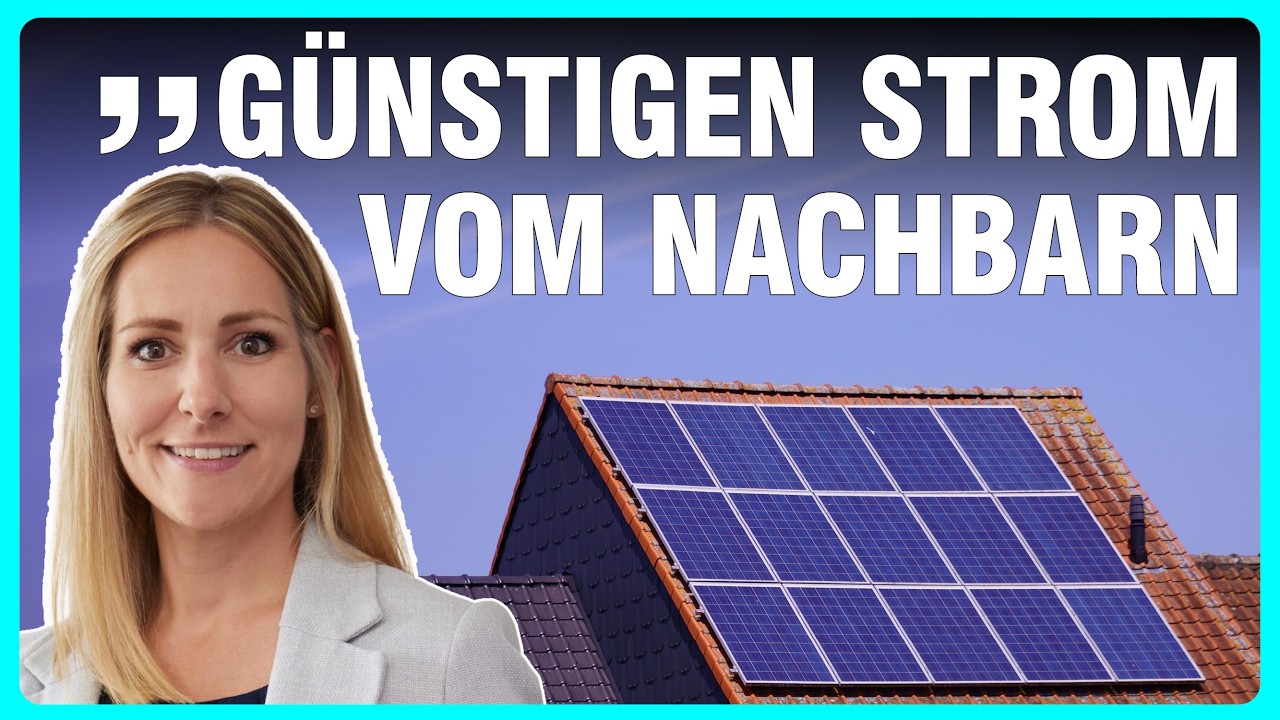
Österreich teilt PV-Strom - Deutschland bremst beim Energy Sharing
Keywords
Summary
178 words
Critical Evaluation
Value of the Information & Strength of the Argument
The value of the information is high, as it provides detailed, firsthand insights into the operational aspects of energy sharing in Austria, including specific numbers (95% smart meter rollout, 12,000 communities) and legal details (ElWG, network fee reductions). The argumentation is coherent and well-supported by the guest’s expertise, with clear explanations of how energy sharing works, its benefits (grid relief, citizen engagement, economic advantages), and the barriers in Germany. The discussion is balanced, acknowledging challenges such as the need for an organizer and the initial bureaucratic effort. However, the argumentation is somewhat one-sided, as it does not deeply explore potential downsides or criticisms of the Austrian model, such as cost distribution or scalability issues.
Scientific Rigor, Source Quality, Title Accuracy
The scientific rigor is moderate: the podcast is an expert interview rather than a peer-reviewed analysis, but the guest’s professional position lends credibility. The sources cited are limited to the podcast’s own links (LinkedIn, Ostrom), with no external references provided in the description. The title accurately reflects the content, which is a comparative analysis of energy sharing in Austria and Germany. The discussion is based on the guest’s direct experience and knowledge, but lacks citations to specific studies or official documents, which would enhance its rigor. The adéquation between title and content is strong, as the episode directly addresses the topic.
230 words
Title / Content Match
The title accurately reflects the content, which compares Austrian and German approaches to energy sharing, highlighting Austria's progress and Germany's lag.
Quality & Reliability
8/10
The podcast features an expert guest (Vera Immitzer, managing director of Photovoltaic Austria) with direct knowledge of the Austrian energy sharing framework. The discussion is grounded in specific data (e.g., 95% smart meter rollout, ~12,000 energy communities) and references concrete legislation (ElWG). However, it is an opinion-based interview with limited critical examination of potential drawbacks, and no external sources are cited in the description beyond the podcast's own links.
Key Moments
Markers derived by PSI from the transcript: the creator did not define chapters.
- Introduction of the topic and guest Vera Immitzer.
- Explanation of energy sharing models in Austria: gemeinschaftliche Erzeugungsanlage, erneuerbare Energiegemeinschaft, Bürgerenergiegemeinschaft.
- Discussion on smart meter rollout in Austria (95%) and its role in enabling energy sharing.
- Comparison with Germany: minimal implementation of EU requirements, lack of incentives.
- Details on network fee reductions for local sharing and the new Versorgungsinfrastrukturbeitrag for large PV systems.
- Practical examples of energy communities, including residential buildings and neighborhood projects.
- Explanation of the EDA platform for data communication and billing.
- Discussion on the role of a 'Kümmerer' (organizer) and the process of founding an energy community.
Cited Sources
- Geladen Podcast LinkedIn — Official LinkedIn page of the podcast, mentioned in the description.
- Ostrom (sponsor) — Sponsor link mentioned in the description, not a scientific source.
Concurring Sources
- Photovoltaic Austria — Official website of the Austrian PV association, which the guest represents, providing data and reports on PV and energy sharing.
Contribution & Novelties
The podcast provides a detailed, expert-led comparison of energy sharing implementation in Austria and Germany, offering concrete insights into the Austrian model’s success factors, such as the high smart meter rollout and the EDA platform. It highlights the lack of incentives in Germany and the potential benefits of adopting similar policies. The discussion adds value by explaining the practical aspects of energy sharing, including billing and network fee reductions, which are often not covered in general media.
Pour aller plus loin :
- Energy sharing in the EU — EU policy context on energy sharing.
- Smart meters in Europe — Overview of smart meter deployment across Europe.
- Citizen energy communities — Repository on energy communities in Europe.
116 words
Radar Profile
The radar profile shows high scores in information quantity, quality, and reliability, reflecting the expert guest and concrete data. The technical level is moderate, as the discussion is accessible but includes some technical details. The overall profile indicates a well-informed and credible episode, with a slight dip in technical depth compared to other dimensions.
💬 Positif. Sur les 30 commentaires analysés, la majorité exprime une admiration pour le modèle autrichien et une frustration face à la lenteur de l'Allemagne, avec des appels à adopter des politiques similaires.