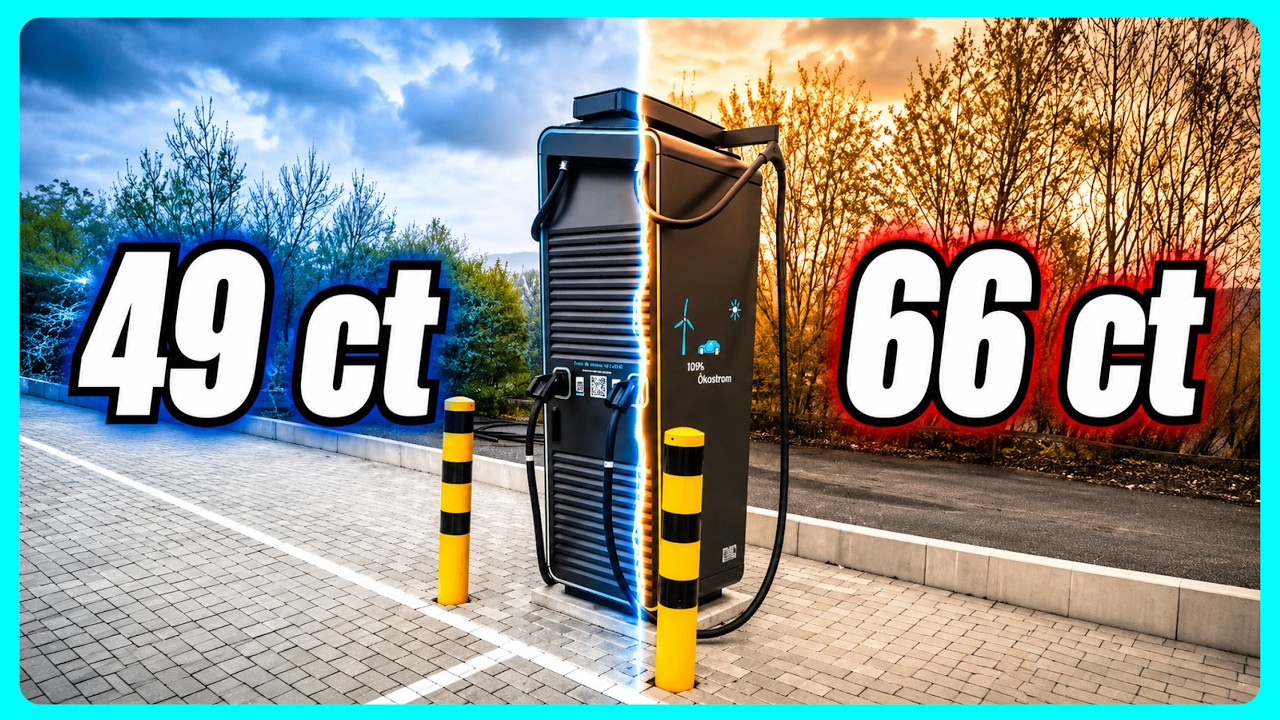
Selbe Ladesäule, 34 % teurer - das Preischaos beim E-Auto-Laden | Geladen Podcast
Keywords
Summary
173 words
Critical Evaluation
Value of the Information & Strength of the Argument
The value of the information is high, as it provides an insider perspective from a key figure in Germany’s charging infrastructure policy. The discussion is grounded in current data and regulatory frameworks, such as the Deutschlandnetz and the GEIG (Gebäude-Elektromobilitätsinfrastruktur-Gesetz). The argumentation is solid, with Pallasch clearly explaining the rationale behind the Deutschlandnetz’s pricing model and the challenges of achieving fair competition. However, the episode is largely opinion-based, with limited reference to specific studies or reports, which slightly reduces its scientific rigor.
Scientific Rigor, Source Quality, Title Accuracy
The scientific rigor is moderate: the podcast is produced for KIT, and the guest is a recognized expert, but the discussion lacks direct citations to academic sources. The title accurately reflects the content, focusing on the price differences at charging stations. The description provides links to the sponsor and social media, but no direct references to studies or reports. The comments section shows a strong public reaction to the issues discussed, with many users sharing personal experiences of high prices and complex payment systems, which aligns with the podcast’s themes.
187 words
Title / Content Match
The title accurately reflects the main topic: the price chaos and surcharges at public charging stations, with a specific example of 34% price difference at the same charging point.
Quality & Reliability
8/10
The podcast features an expert guest (Johannes Pallasch, head of the National Centre for Charging Infrastructure) and is produced for the Karlsruhe Institute of Technology (KIT), lending credibility. The discussion is based on current data and regulatory frameworks, but lacks direct citations to specific studies or reports during the conversation.
Key Moments
Markers derived by PSI from the transcript: the creator did not define chapters.
- Introduction and presentation of the guest Johannes Pallasch.
- Discussion on the three main challenges for first-time EV drivers: finding a charging station, access, and payment.
- Explanation of different payment models, including ad-hoc charging and subscription-based tariffs.
- Discussion on the lack of price transparency and the absence of price boards at charging stations.
- Introduction of the Deutschlandnetz and its role in filling gaps in the charging network.
- Discussion on the need for competition, standardization, and regulation in the charging market.
- Explanation of dynamic pricing and its potential benefits for grid integration.
- Overview of the current state of charging infrastructure: 200,000 public points, 50,000 fast chargers.
- Discussion on the future needs for charging points and the role of AC vs DC charging.
- Conclusion and final thoughts on the path to mass-market adoption.
Cited Sources
- WARP4 Wallbox by Tinkerforge — Sponsor segment in the podcast, promoting a modular open-source wallbox.
- Geladen Podcast LinkedIn — Social media channel for the podcast, mentioned in the description.
Concurring Sources
- Stiftung Klimaneutralität — The podcast references a study by this foundation on price differences at DC charging points.
Contribution & Novelties
The podcast provides an up-to-date expert perspective on the challenges and policy approaches to public charging infrastructure in Germany, particularly focusing on price transparency and fairness. It offers insights into the Deutschlandnetz model and the ongoing legal debates about non-discriminatory pricing. The discussion on dynamic pricing and the integration of public charging into the electricity market is particularly valuable.
Pour aller plus loin :
- Gebäude-Elektromobilitätsinfrastruktur-Gesetz (GEIG) — Official text of the German law on charging infrastructure in buildings.
- Nationale Leitstelle Ladeinfrastruktur — Official website of the National Centre for Charging Infrastructure, providing data and reports.
- Deutschlandnetz — Official website of the Deutschlandnetz initiative, with details on the tendering process and locations.
- Stiftung Klimaneutralität — Think tank that published the study on price differences at charging stations, as mentioned in the podcast.
131 words
Radar Profile
The radar profile shows high scores in information quantity, quality, and reliability, with a slightly lower technical level, indicating that the content is accessible to a general audience while still providing expert insights. The overall balance suggests a well-rounded and trustworthy discussion.
💬 Négatif: Sur les 30 commentaires analysés, la majorité exprime frustration face aux prix élevés et à la complexité des systèmes de paiement, avec des appels à plus de régulation et de transparence.