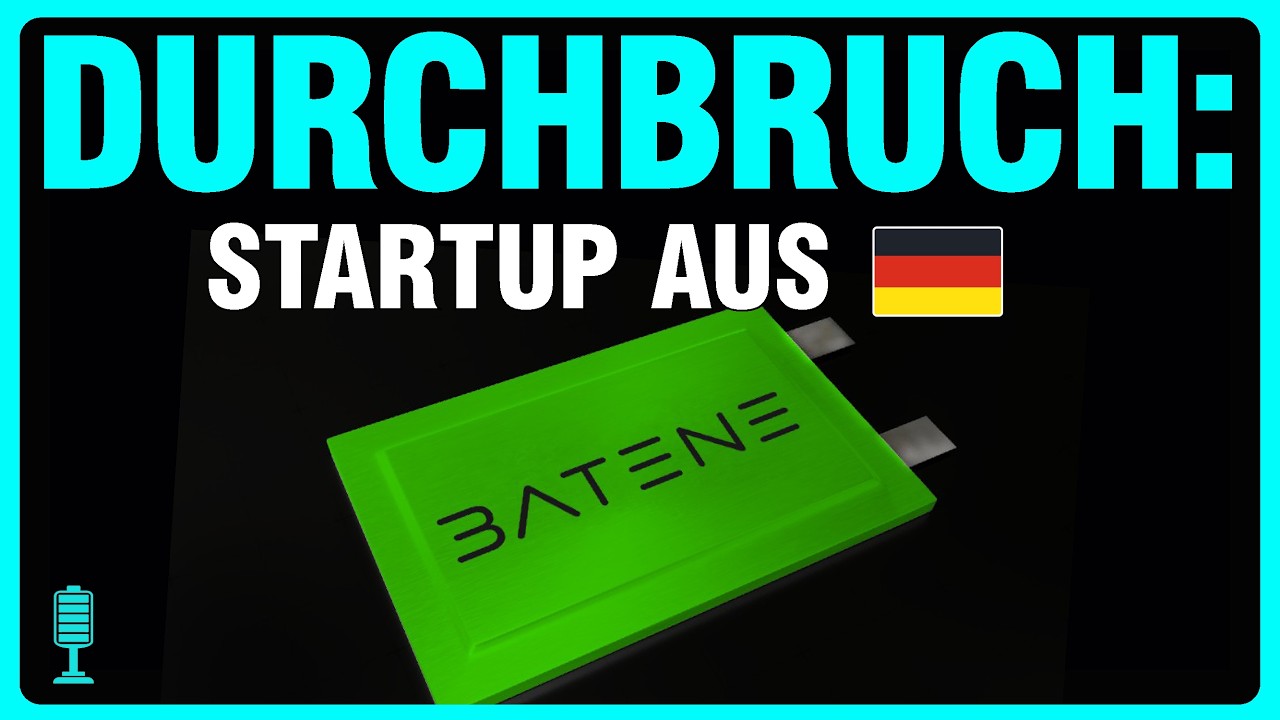
Neue Batterie-Technologie: 80% mehr Energiedichte - Prof. Spatz & Prof. Esser | Geladen Podcast
Keywords
Summary
188 words
Critical Evaluation
Value of the Information & Strength of the Argument
The podcast provides valuable insights into a promising battery innovation, explaining the technical principles clearly and logically. The argumentation is solid, based on the inventors’ own research and prototype data, but it is presented as an expert opinion rather than peer-reviewed findings. The hosts ask pertinent questions that help clarify the technology’s advantages and limitations. The discussion is well-structured, moving from the basic concept to specific performance metrics and future possibilities. However, the claims of 80% energy density increase are speculative and not yet demonstrated, which is acknowledged by the speakers. Overall, the information is informative and credible within the context of an expert interview.
Scientific Rigor, Source Quality, Title Accuracy
The scientific rigor is moderate: the guests are established researchers, and the technology is based on published research (though not cited in detail in the episode). The sources mentioned are primarily the guests’ own work and the Batene website, but no specific publications are referenced. The title accurately reflects the content, focusing on the potential 80% energy density increase. The podcast is produced by KIT, adding credibility. However, the lack of independent verification and the promotional nature of the interview (as it features the founder) slightly reduce the overall reliability. The comments section shows positive reception, with viewers appreciating the clear explanations and the innovative approach.
226 words
Title / Content Match
The title accurately reflects the content: the podcast discusses a new battery technology that could increase energy density by up to 80%, featuring the two professors.
Quality & Reliability
8/10
The podcast features two professors (Joachim Spatz, founder of Batene, and Birgit Esser, University of Ulm) discussing a novel battery technology. The claims are based on their research and prototype results, but the episode is primarily an interview and presentation of their own work, lacking independent verification or peer-reviewed sources. The discussion is technically detailed and plausible, but the 80% energy density increase is presented as a future potential, not yet achieved.
Key Moments
Markers derived by PSI from the transcript: the creator did not define chapters.
- Introduction of guests and topic: Batene's battery technology.
- Explanation of replacing current collector foils with metal fleece.
- Discussion on the advantages of the 3D structure for ion and electron transport.
- Prototype results: 270 Wh/kg vs 300 Wh/kg with fleece, and potential for 80% increase.
- Explanation of the Helmholtz layer and its role in the technology.
- Manufacturing process: melt spinning and paper-making techniques for the fleece.
- Challenges for scaling up and future outlook for the technology.
Cited Sources
- Batene website — Mentioned as the company's official site with information on the technology.
- Max Planck Institute for Medical Research — Where Professor Spatz is director and where the technology was developed.
- University of Ulm — Where Professor Esser is a professor and involved in the research.
Concurring Sources
- Batene website — Official claims of 30-80% energy density increase and 40% cost reduction.
- Max Planck Institute for Medical Research — Research institution where the technology was developed, supporting the credibility.
External References
Contribution & Novelties
The episode highlights a novel approach to battery design by replacing flat current collectors with a 3D metal fleece, which improves both electron and ion transport. This could lead to significant gains in energy density and cost reduction. The technology is based on a simple yet effective idea that has been overlooked, and it has the potential to be combined with other advanced materials like silicon anodes. The discussion provides a clear explanation of the underlying physics and manufacturing scalability.
Pour aller plus loin :
- 3D current collectors for batteries — Overview of current collector designs, including 3D structures.
- Silicon anode materials — Discusses the challenges and potential of silicon anodes, which Batene aims to enable.
- Lithium-ion battery — General background on lithium-ion batteries and their components.
127 words
Radar Profile
The radar profile shows high scores in information quantity and quality, with a moderate level of technical depth and reliability. This indicates a well-informed discussion that is accessible to a broad audience while still providing technical details. The reliability is slightly lower due to the promotional nature of the interview, but overall the content is credible.
💬 Positif. Sur les 30 commentaires analysés, la grande majorité exprime un enthousiasme marqué pour l'innovation, saluant la clarté des explications et le potentiel de la technologie, avec quelques remarques constructives sur les calculs de pourcentage.