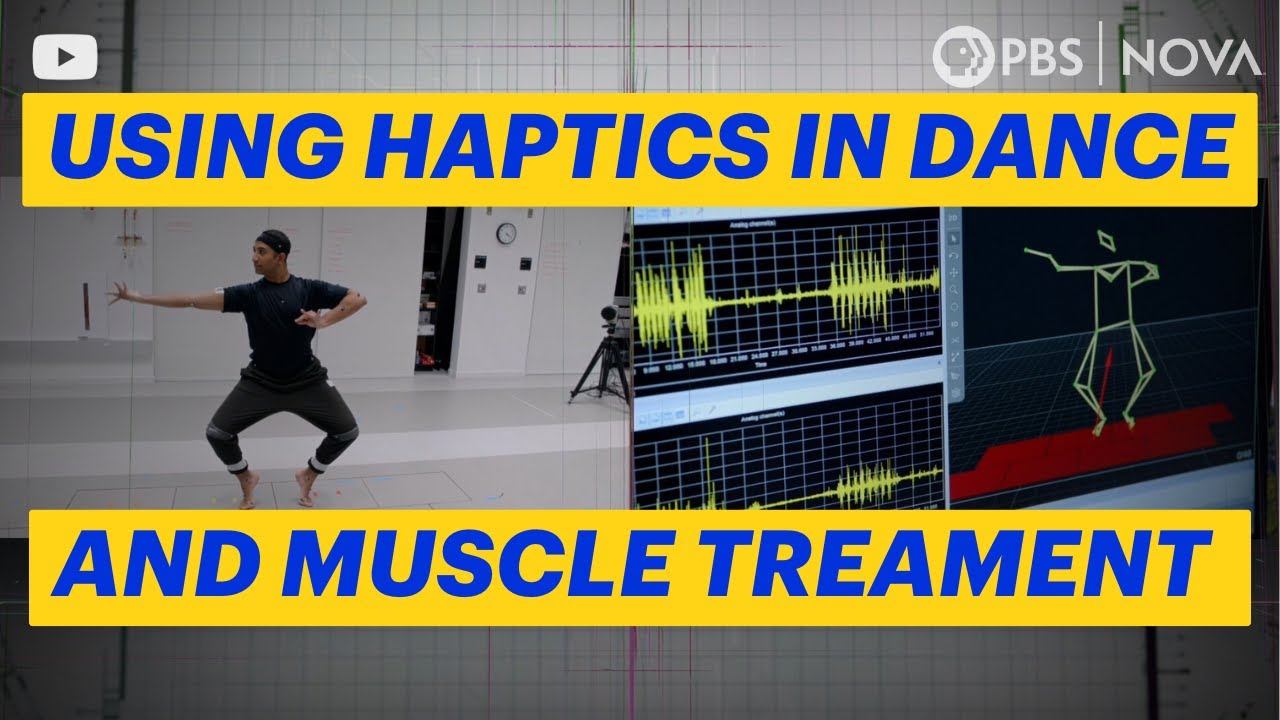
How an Ancient Dance Could Help Reduce Muscle Spasms
Keywords
Summary
100 words
Critical Evaluation
The video provides a compelling overview of an innovative application of haptics in biomedical engineering. It effectively bridges the gap between art and science, showing how principles from dance can inform therapeutic devices. The scientific content is presented clearly, with explanations of muscle co-contraction and the role of sensory feedback. However, the video lacks depth in terms of quantitative results and does not reference specific studies or publications, limiting its scientific rigor. The demonstrations are preliminary and the sample size is small, so the efficacy of the approach is not yet established. The production quality is high, with good visuals and expert interviews, but the ad breaks (though not present in this clip) could be distracting. Overall, the video is informative and engaging, but it should be viewed as an introduction to ongoing research rather than a definitive scientific source.
140 words
Title / Content Match
The title accurately reflects the content, focusing on the use of ancient dance-inspired haptics to potentially reduce muscle spasms.
Quality & Reliability
8/10
The video presents ongoing research from Harvard scientists, with clear explanations of the engineering and biological principles. It includes demonstrations and preliminary data, but lacks peer-reviewed references and detailed methodology, so it is informative but not fully rigorous.
Key Moments
Markers derived by PSI from the transcript: the creator did not define chapters.
- Introduction to haptics and its role in technology.
- Shria Shasan explains her background in dance and engineering.
- Motion capture lab demonstration with dancer Joshua George.
- Explanation of haptics in aviation and its evolution.
- Application of haptics to dance and development of vibration patterns.
- Research on using vibrations to reduce muscle spasticity.
- Testing the prototype on volunteer Annie with EMG sensors.
- Live performance 'Decoded Rhythms' with audience haptic feedback.
Cited Sources
- Building Stuff: Boost It! - Full Episode — The full episode from which this clip is taken, providing more context on the research.
Concurring Sources
- Building Stuff: Boost It! - Full Episode — The full episode provides additional details and context consistent with the clip.
Contribution & Novelties
The video highlights an innovative cross-disciplinary approach, combining dance and engineering to develop haptic feedback systems for both artistic and therapeutic purposes. It showcases the potential of using sensory feedback to enhance motor function in patients with spasticity, a novel application that could lead to new rehabilitation devices.
Pour aller plus loin :
- Haptic technology - Wikipedia — Overview of haptics and its applications.
- Electromyography - Wikipedia — Explanation of EMG used in the video.
- Spasticity - Wikipedia — Medical background on the condition targeted.
85 words
Radar Profile
The radar profile shows strong scores in quality of information and global reliability, with moderate scores in quantity and technical level. This indicates a well-produced, reliable video that provides a good overview but lacks deep technical detail.