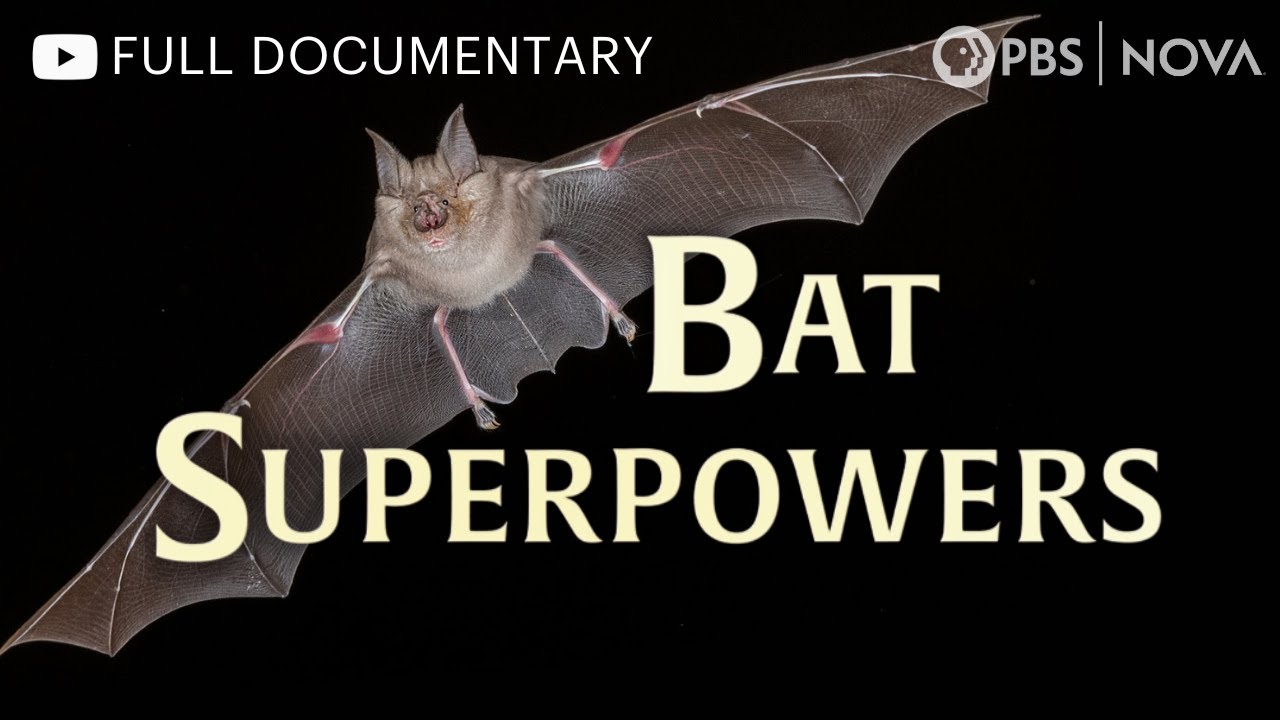
Bat Superpowers | Full Documentary | NOVA | PBS
Keywords
Summary
180 words
Critical Evaluation
The documentary provides a comprehensive and engaging overview of current research on bat biology, particularly their immune systems and longevity. The scientific content is presented with a high degree of accuracy, featuring interviews with leading researchers such as Linfa Wang, Emma Teeling, and Liliana Dávalos. The explanations of complex concepts, such as interferon signaling and telomere dynamics, are accessible without oversimplifying the underlying science. The film effectively uses visual aids, including 3D scans and laboratory demonstrations, to illustrate key points. However, some claims are presented with less nuance than might be found in peer-reviewed literature; for example, the assertion that bats’ constant immune activation is the primary reason for their virus tolerance is an active area of research with competing hypotheses. The documentary also touches on the potential for bats to inform human health, but it does not delve deeply into the challenges of translating these findings into therapies. The inclusion of the COVID-19 pandemic as a framing device is timely, but it risks reinforcing a negative perception of bats, which the film attempts to counterbalance by emphasizing their ecological importance. Overall, the documentary is scientifically sound and well-produced, though viewers should be aware that some topics are simplified for a general audience. The adéquation between title and content is strong, as the film indeed focuses on the ‘superpowers’ of bats. The public comments (not provided) would likely reflect appreciation for the educational value and visual appeal, but without them, no assumptions are made.
244 words
Title / Content Match
The title accurately reflects the content, focusing on the unique biological abilities of bats and their potential implications for human health.
Quality & Reliability
8/10
The documentary features interviews with recognized scientists from reputable institutions (e.g., Duke-NUS Medical School, Stony Brook University, Yale University) and presents research findings with appropriate caveats. The content is generally accurate and well-contextualized, though some claims are simplified for a general audience.
Chapters
Cited Sources
- NOVA Official Website — Official program page with additional resources and information.
- PBS Donation Page — Support PBS and public television.
- PBS App — Watch full episodes of PBS shows.
- NOVA Newsletter — Sign up for science news and updates.
- PBS YouTube Channel — Official PBS channel.
- Particles of Thought Podcast — NOVA's podcast series.
Concurring Sources
- Nature Reviews Microbiology — Review on bat immune system and virus tolerance.
- Science Advances — Study on telomere dynamics in bats.
Dissenting Sources
- Some researchers argue that bat immune tolerance is not solely due to constitutive interferon — Alternative hypotheses include dampened inflammatory responses and unique DNA repair mechanisms.
Contribution & Novelties
The documentary synthesizes recent research on bat immunology and longevity, presenting it in an accessible format. It highlights the concept of constitutive interferon expression as a key adaptation, which is a relatively recent finding. The film also showcases cutting-edge techniques like 3D scanning of bat nasal cavities and genomic analyses.
Pour aller plus loin :
- Bat immunity and zoonotic viruses — Review on bat immune system and virus tolerance.
- Telomeres and aging in bats — Study on telomere dynamics in bats.
- Interferon and antiviral defense — Overview of interferon signaling.
- Bat flight and oxidative stress — Research on bat flight metabolism.
101 words
Radar Profile
The radar profile shows high scores in quantity and quality of information, with a moderate technical level. This indicates a well-researched documentary that balances scientific depth with accessibility, making it suitable for a broad audience while maintaining credibility.