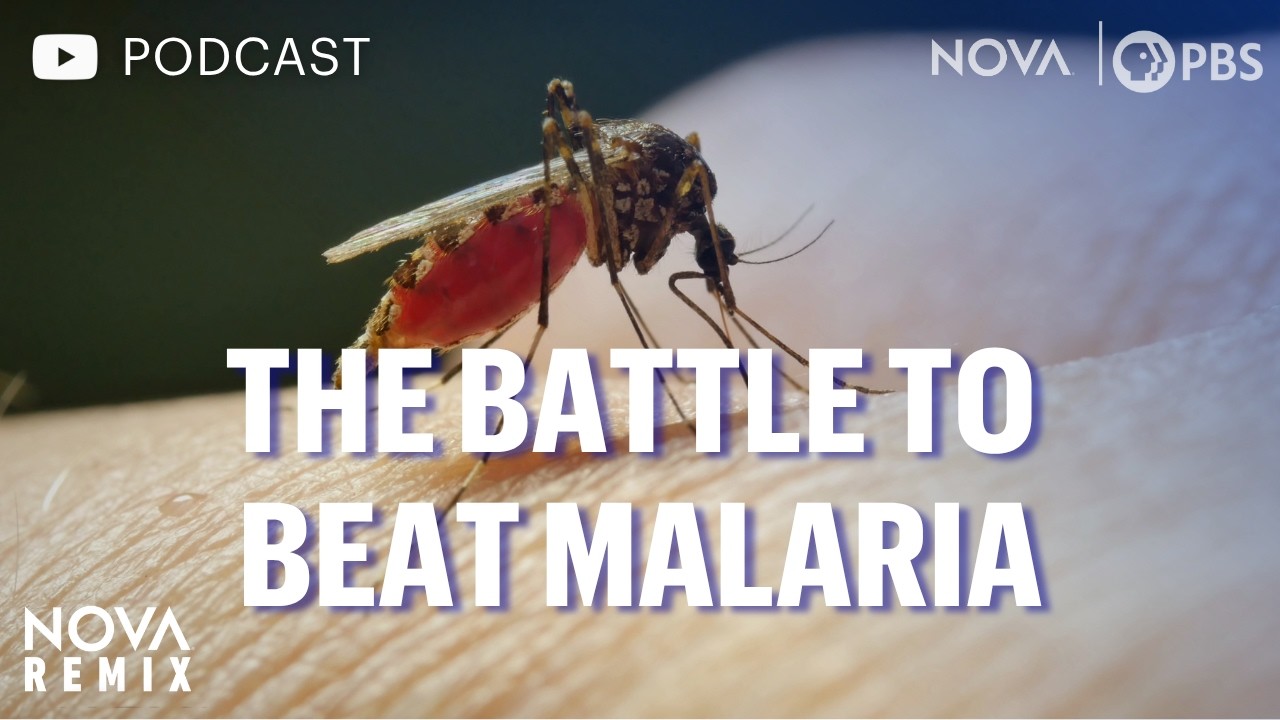
(Podcast Version) The Battle to Beat Malaria | NOVA Remix | NOVA | PBS
Keywords
Summary
179 words
Critical Evaluation
The documentary provides a compelling and informative account of the scientific process behind the R21 malaria vaccine. Its strength lies in the direct interviews with key scientists, including Dr. Adrian Hill, Dr. Katie Ewer, and Dr. Ali Al-Latif, which lend authenticity and insider perspective. The explanation of vaccine efficacy, using the example of RTS,S’s 40% efficacy, is clear and accessible, helping viewers understand the metric’s meaning. The step-by-step progression from laboratory research to clinical trials is well-structured, illustrating the lengthy and rigorous nature of vaccine development. The inclusion of the phase 3 trial design, with a control vaccine and blinding, demonstrates scientific rigor. However, the documentary simplifies some aspects, such as the immune response, and does not delve into potential limitations or controversies surrounding the vaccine, such as its duration of protection or the possibility of waning efficacy. The funding challenges are mentioned but not deeply explored. The ad breaks, while not penalized, interrupt the narrative flow. Overall, the information is reliable and well-presented, but the documentary’s focus on the success story may overlook some of the complexities and uncertainties inherent in vaccine development. The title accurately reflects the content, and the production quality is high, typical of NOVA.
199 words
Title / Content Match
The title accurately reflects the content, which is a podcast version of a documentary about the development of the R21 malaria vaccine.
Quality & Reliability
8/10
The video is produced by NOVA PBS, a reputable science documentary series. It features interviews with scientists directly involved in the R21 vaccine development, including Dr. Adrian Hill and Dr. Katie Ewer from Oxford, and Dr. Ali Al-Latif. The content is based on published clinical trial data and WHO targets. However, it is a documentary aimed at a general audience, so some details are simplified, and the efficacy figures are presented without full statistical context.
Key Moments
Markers derived by PSI from the transcript: the creator did not define chapters.
- Introduction: The deadliest animal is the mosquito, and malaria kills 600,000 people annually.
- Dr. Ali Al-Latif explains the 40% efficacy of the RTS,S vaccine and the need for better.
- Explanation of how malaria parasites invade the body and the role of the circumsporozoite protein (CSP).
- Dr. Adrian Hill and team at Oxford develop R21 by increasing CSP on virus-like particles.
- Early human trials with 28 adults show promising antibody response and protection in challenge trials.
- Partnership with Serum Institute of India for large-scale manufacturing.
- Phase 2 trial in Burkina Faso shows 77% efficacy in 450 children.
- Phase 3 trial design: nearly 5,000 children, with a rabies vaccine as control.
- Laboratory analysis of blood samples to measure antibody responses.
- Pressure and stress on the Oxford team as they await phase 3 results.
Cited Sources
- NOVA: The Battle to Beat Malaria (full film) — The full documentary film is available on PBS, providing more detailed information.
- NOVA Newsletter — Sign up for NOVA's newsletter to stay updated on science discoveries and episodes.
Concurring Sources
- WHO: Malaria vaccine implementation — WHO's page on malaria vaccines, which includes information on RTS,S and R21.
Contribution & Novelties
The documentary provides an inside look at the development of the R21 malaria vaccine, highlighting the collaborative effort between Oxford University and the Serum Institute of India. It explains the scientific rationale behind the vaccine’s design, specifically the increase in circumsporozoite protein (CSP) to enhance immune response. The film also emphasizes the rigorous clinical trial process and the challenges of funding and scaling up production. This behind-the-scenes perspective is valuable for understanding the complexities of vaccine development beyond the headlines.
Pour aller plus loin :
- WHO Malaria Fact Sheet — Provides up-to-date statistics and information on malaria.
- R21/Matrix-M malaria vaccine — WHO’s official page on the R21 vaccine, including its recommendation and efficacy data.
- Circumsporozoite protein — Wikipedia article explaining the role of CSP in malaria infection and vaccine development.
130 words
Radar Profile
The radar profile shows high scores in quantity and quality of information, reflecting the documentary's comprehensive coverage and reliable sources. The technical level is moderate, suitable for a general audience but still providing scientific depth. The overall reliability is high, consistent with NOVA's reputation.