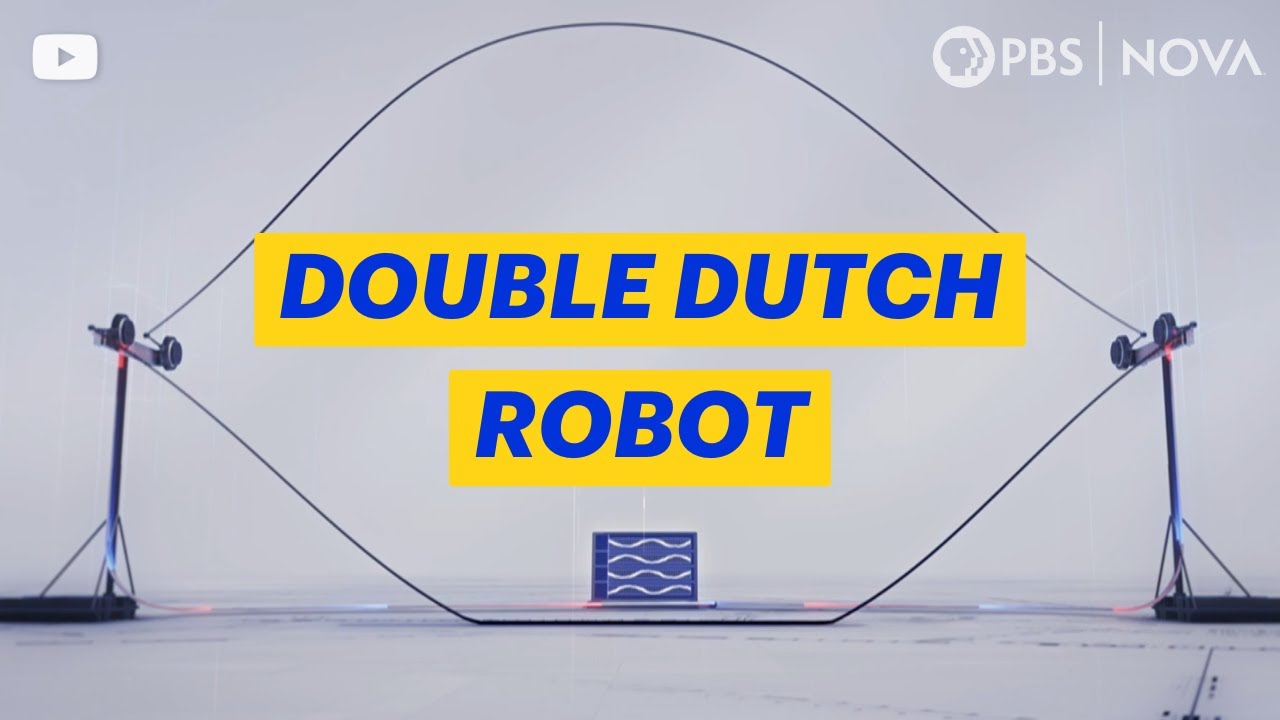
Creating a Robotic Double Dutch Machine | NOVA | PBS
Keywords
Summary
131 words
Critical Evaluation
The video provides an engaging and informative look into the engineering process behind creating a robotic Double Dutch machine. It effectively combines personal narratives with technical details, making it accessible to a general audience while still offering insights into the challenges of robotics and mechanical design. The engineering concepts are explained clearly, such as the use of encoders for motor position feedback and the importance of synchronization. The collaboration between Tahira and Sky exemplifies interdisciplinary engineering, blending mechanical and software expertise. The video also underscores the value of user testing and iterative design, as seen when they test the prototype with a jumper. The sources cited are primarily the NOVA episode and PBS resources, which are credible. The title accurately reflects the content. The video could be criticized for not delving deeper into the technical specifics, but for a documentary, it strikes a good balance. The public comments (not provided) would likely appreciate the inspirational aspect and the behind-the-scenes look at engineering.
162 words
Title / Content Match
The title accurately reflects the content, which focuses on the creation of a robotic Double Dutch machine.
Quality & Reliability
8/10
The video is produced by NOVA PBS, a reputable science documentary series. It features interviews with engineers and shows actual prototypes and testing. The information is presented clearly and appears accurate, though it is a popular science documentary rather than a peer-reviewed source.
Key Moments
Markers derived by PSI from the transcript: the creator did not define chapters.
- Introduction to Tahira Reed Smith and her childhood dream of a Double Dutch machine.
- Explanation of Double Dutch history and its cultural significance.
- Sky Leilani demonstrates her robotic prototype using hoverboard motors and encoders.
- Discussion of synchronization challenges and the need for 180-degree phase offset.
- Successful test of a single rope with two synchronized motors.
- Tahira and Sky collaborate on a full Double Dutch jump, achieving success.
- Tahira partners with a design firm to create a mechanical version using gears and chains.
Cited Sources
- Building Stuff: Boost It! - NOVA — Full episode that this video is part of, providing broader context on engineering innovations.
Concurring Sources
- Building Stuff: Boost It! - NOVA — The full episode provides additional examples of engineering innovations, aligning with the themes of the video.
Contribution & Novelties
The video showcases a unique application of robotics to a cultural activity, highlighting the engineering challenges of synchronizing two ropes. It emphasizes the value of interdisciplinary collaboration and user-centered design. The story of Tahira and Sky serves as an inspiration for aspiring engineers from underrepresented backgrounds.
Pour aller plus loin :
- Double Dutch (jump rope) — Provides historical and cultural background.
- Encoder (position) — Explains the technology used for motor position feedback.
- Hoverboard motor — Details on the motors used in the prototype.
- Interdisciplinary engineering — Discusses the benefits of combining different engineering fields.
94 words
Radar Profile
The radar chart shows high scores in quality of information and reliability, reflecting the credible production by NOVA. The quantity of information is moderate, and the technical level is accessible, making it suitable for a general audience. The overall profile indicates a well-rounded educational documentary.