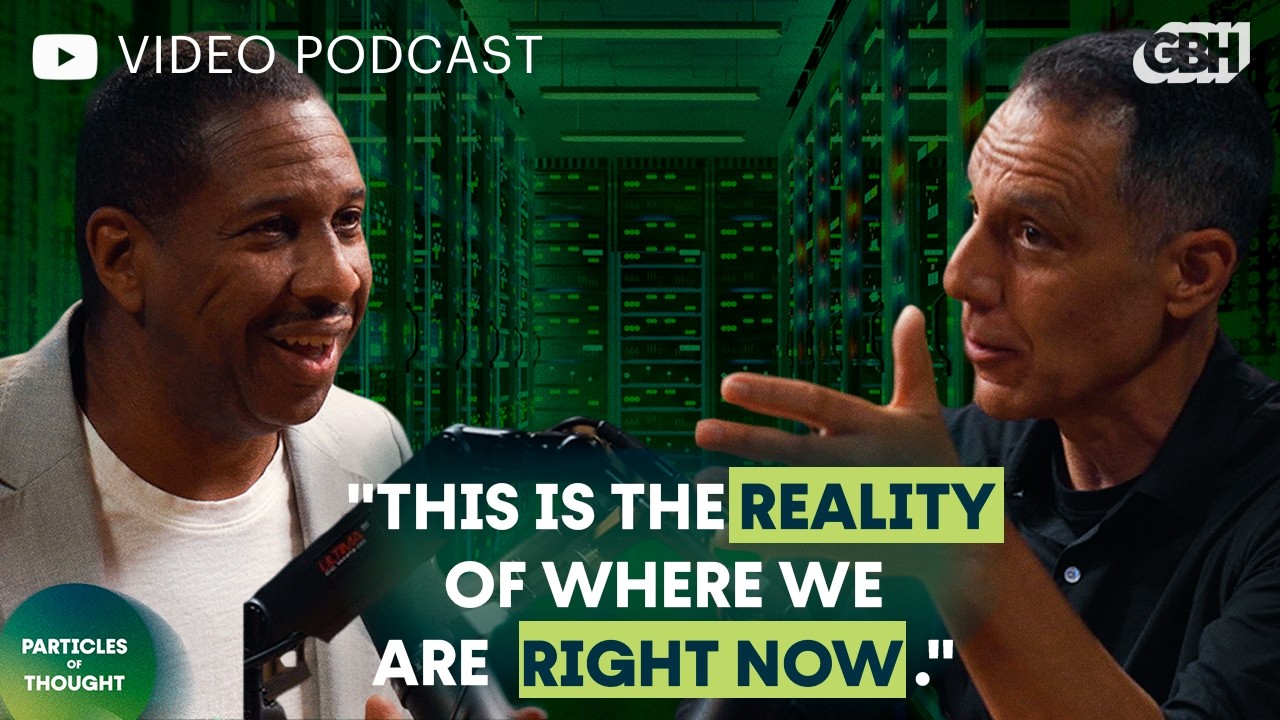
Interview: Deepfake Detection and the Future of AI with Hany Farid | Particles of Thought
Keywords
Summary
204 words
Critical Evaluation
The interview provides a valuable and accessible overview of deepfake technology and its implications, grounded in the expertise of Hany Farid, a leading researcher in digital forensics. Farid’s explanations of AI and machine learning are clear and accurate, correctly distinguishing between the hype and the underlying statistical nature of current systems. His historical context, from the early days of AI to the recent explosion, helps demystify the technology for a general audience. The discussion of deepfake detection methods is particularly insightful, covering both technical approaches (e.g., analyzing visual artifacts, inconsistencies in lighting and geometry) and the broader challenges of scalability and the arms race between generation and detection. Farid’s emphasis on the need for authentication standards and global regulation is well-argued and reflects a consensus among experts in the field. However, the interview is primarily an opinion piece rather than a rigorous scientific review. While Farid’s credentials lend credibility, many claims are made without specific citations or references to peer-reviewed studies. For instance, statistics about job displacement or the prevalence of deepfakes are mentioned without sources. The interactive segments, while engaging, are anecdotal and do not constitute systematic testing. The host’s questions sometimes veer into philosophical territory, which, while interesting, may distract from the core technical content. Overall, the interview is informative and thought-provoking, but viewers seeking empirical evidence or detailed technical explanations may need to consult additional resources. The adéquation between title and content is strong, as the interview directly addresses deepfake detection and the future of AI. The presence of a brief sponsorship segment (approximately 30 seconds) is noted but does not detract from the content’s value.
269 words
Title / Content Match
The title accurately reflects the content, which is an interview focused on deepfake detection and the future of AI.
Quality & Reliability
8/10
The interview features Hany Farid, a recognized expert in digital forensics and AI, providing credible insights. However, it is an opinion-based discussion without rigorous citations or peer-reviewed references, and some claims lack empirical support.
Chapters
Cited Sources
- Particles of Thought on Apple Podcasts — Podcast platform where the episode is available.
- NOVA PBS Official — Link to NOVA PBS content related to the episode.
Concurring Sources
- Deepfake - Wikipedia — Provides background on deepfakes, consistent with Farid's explanations.
- Digital forensics - Wikipedia — Supports the discussion on authentication and detection methods.
External References
Contribution & Novelties
The interview offers a unique perspective by combining technical explanations of deepfake detection with broader societal implications, presented by a leading expert. It demystifies AI and machine learning, clarifying common misconceptions. The interactive segments where the host and guest test their ability to spot deepfakes provide a practical demonstration of the challenges involved.
Pour aller plus loin :
- Deepfake - Wikipedia — Provides a comprehensive overview of deepfake technology, history, and detection methods.
- Digital forensics - Wikipedia — Explains the field of digital forensics, which is central to Farid’s work.
- Machine learning - Wikipedia — Offers foundational knowledge on machine learning, the core technology behind deepfakes.
- Hany Farid’s UC Berkeley profile — Details his research and publications in digital forensics and misinformation.
122 words
Radar Profile
The radar profile shows strong scores in information quantity and quality, reflecting the depth of the discussion, while technical level is moderate, suitable for a general audience. Reliability is high due to the expert guest, but the lack of citations slightly reduces the score.
💬 Sur les 0 commentaires analysés, aucune tendance n'est disponible.