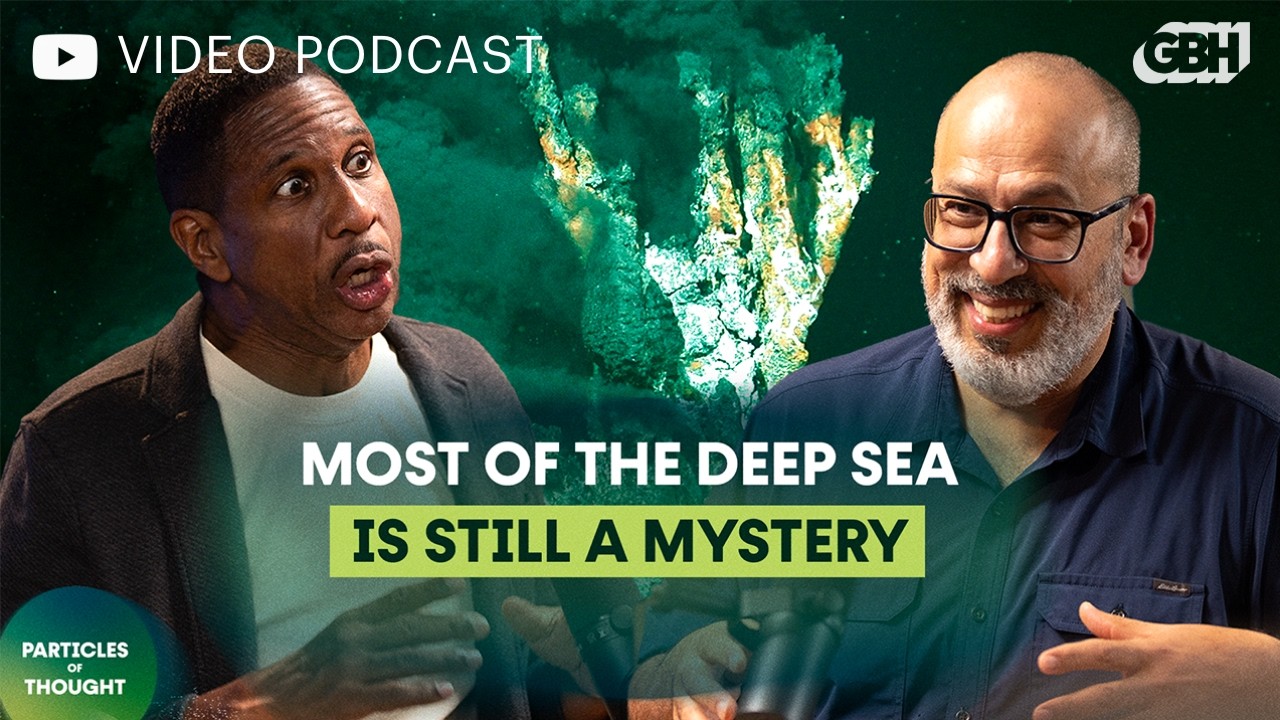
Interview: Extremophiles, the Deep Sea, and Alien Life with Peter Girguis | Particles of Thought
Keywords
Summary
201 words
Critical Evaluation
The interview provides a compelling and scientifically robust discussion of extremophiles and their relevance to astrobiology. Peter Girguis, a professor at Harvard, demonstrates deep expertise and communicates complex concepts with clarity and enthusiasm. The content is well-structured, moving from foundational concepts about microbial dominance to specific examples of extremophile adaptations and their implications for extraterrestrial life. The argumentation is solid, with logical connections drawn between Earth’s microbial ecology and the potential for life on other planets. The discussion of the Great Oxidation Event and the role of cyanobacteria is accurate and well-explained, providing a strong foundation for the audience. The exploration of deep-sea environments and the use of submersibles like Alvin adds a practical dimension, grounding the theoretical concepts in real-world research. The sources cited are primarily the guest’s own expertise and general scientific knowledge, but the lack of direct references to specific studies or publications is a minor weakness. The title accurately reflects the content, and the inclusion of a segment on science headlines adds a lighthearted but relevant touch. Overall, the interview is highly informative and thought-provoking, making it a valuable resource for anyone interested in microbiology, oceanography, and the search for life beyond Earth.
197 words
Title / Content Match
The title accurately reflects the content, which is an interview focusing on extremophiles, deep-sea exploration, and the implications for alien life.
Quality & Reliability
8/10
The interview features a Harvard professor with deep expertise in marine microbiology and extremophiles. The content is scientifically accurate, well-explained, and grounded in established research. The host and guest maintain a rigorous yet accessible tone, and the discussion includes references to specific scientific concepts and missions. The main limitation is the lack of direct citations to primary literature, but the expertise of the guest and the overall coherence of the arguments support a high reliability score.
Chapters
Cited Sources
- Particles of Thought on Apple Podcasts — The podcast episode is available on Apple Podcasts, providing a platform for the interview.
- NOVA Ancient Earth series — Peter Girguis appears in NOVA's Ancient Earth series, which is referenced in the description.
Concurring Sources
- NASA Astrobiology — NASA's astrobiology program supports research on extremophiles and the search for life beyond Earth, aligning with the interview's themes.
External References
Contribution & Novelties
The interview offers a unique perspective by connecting deep-sea microbiology with astrobiology, emphasizing the importance of understanding Earth’s extremophiles as analogs for potential extraterrestrial life. It provides accessible explanations of complex concepts such as the Great Oxidation Event and microbial metabolic diversity, making it valuable for a broad audience. The discussion of the challenges in defining microbial species and the potential for microbial life on other planets adds depth to the astrobiological discourse.
Pour aller plus loin :
- Extremophiles — Provides an overview of organisms that thrive in extreme environments, relevant to the discussion of life in harsh conditions.
- Great Oxidation Event — Explains the historical rise of oxygen in Earth’s atmosphere, a key concept discussed in the interview.
- Cyanobacteria — Details the photosynthetic bacteria responsible for producing oxygen, central to the conversation.
- Alvin (submersible) — Information about the deep-sea submersible used in the research mentioned.
- Astrobiology — Overview of the study of life in the universe, directly relevant to the interview’s theme.
163 words
Radar Profile
The radar profile shows high scores in quality of information and reliability, reflecting the expert guest and accurate content. The quantity of information is also strong, though the technical level is moderate, making it accessible to a general audience. Overall, the interview is well-balanced and informative.