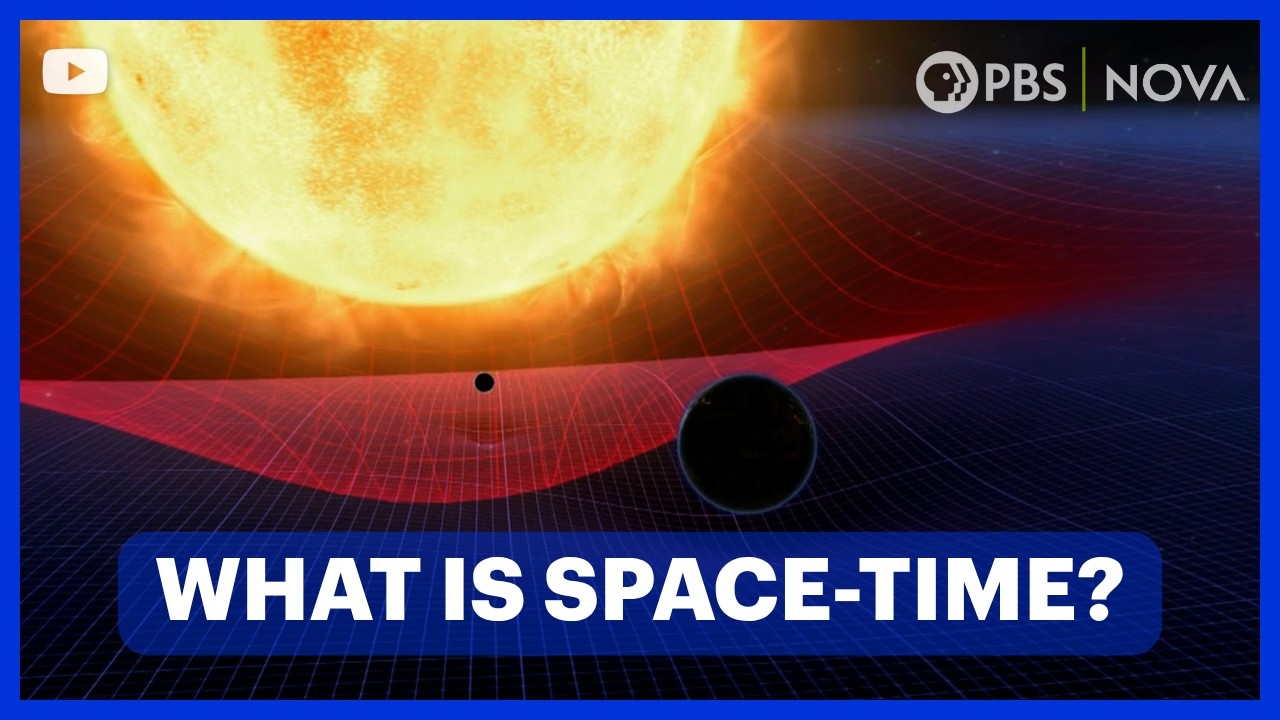
Einstein’s “Biggest Blunder” Was Actually Right | NOVA | PBS
Keywords
Summary
160 words
Critical Evaluation
The video provides a clear and engaging narrative of the cosmological constant’s history, from Einstein’s initial proposal to its modern interpretation as dark energy. It effectively uses expert interviews and archival footage to illustrate key concepts. The scientific content is accurate and up-to-date, reflecting the current consensus on dark energy. However, the video is aimed at a general audience and therefore simplifies complex ideas, such as the nature of dark energy and the details of supernova measurements. It does not delve into the ongoing debates or alternative theories, such as modified gravity. The production quality is high, with excellent visuals and pacing. The title is somewhat misleading, as the video focuses more on the history and discovery of dark energy than on the cosmological constant itself, but it does address the connection. The sources cited are limited to the NOVA episode and newsletter, which are reliable but not primary scientific literature. Overall, the video is a valuable educational resource that accurately conveys the key concepts and historical context, though it lacks depth for a more technical audience.
177 words
Title / Content Match
The title accurately reflects the content, which discusses Einstein's cosmological constant and its vindication by the discovery of dark energy.
Quality & Reliability
8/10
The video is produced by NOVA PBS, a reputable science program, and features interviews with prominent astrophysicists like Adam Riess and Clifford Johnson. The content is historically accurate and aligns with current scientific consensus. However, it is a popular science presentation, so it simplifies complex concepts and does not provide detailed citations or peer-reviewed references.
Key Moments
Markers derived by PSI from the transcript: the creator did not define chapters.
- Introduction at the Peabody Library, highlighting historical astronomical works.
- Adam Riess discusses Copernicus, Tycho Brahe, and Newton's contributions.
- Einstein's static universe and the introduction of the cosmological constant.
- Edwin Hubble's discovery of galaxy redshifts and the expanding universe.
- Georges Lemaitre and the Big Bang theory.
- Discovery of the cosmic microwave background supporting the Big Bang.
- Supernova searches and the unexpected discovery of accelerating expansion.
- Introduction of dark energy and its implications for the universe's fate.
Cited Sources
- Decoding the Universe: Cosmos — Full episode referenced in the video description.
- NOVA Newsletter — Sign-up for NOVA's newsletter, mentioned in the description.
Concurring Sources
- Nobel Prize in Physics 2011 — Awarded for the discovery of the accelerating expansion of the universe, supporting the video's content.
Contribution & Novelties
The video provides a concise and accessible historical account of the cosmological constant, from Einstein’s initial proposal to its modern interpretation as dark energy. It highlights the key discoveries and scientists involved, making it a useful educational resource. However, it does not present new scientific findings or original research.
Pour aller plus loin :
- Dark energy - Wikipedia — Overview of dark energy, its evidence, and theoretical explanations.
- Cosmological constant - Wikipedia — Detailed article on the cosmological constant and its history.
- Supernova Cosmology Project — Information on one of the teams that discovered the accelerating expansion.
97 words
Radar Profile
The radar profile shows high scores in quantity and quality of information, with a moderate technical level. This indicates a well-produced educational video that is accessible to a general audience while maintaining scientific accuracy.
💬 Positif. Sur les 30 commentaires analysés, la majorité exprime une appréciation positive de la vidéo, louant sa qualité et son contenu, avec quelques critiques sur le manque de profondeur concernant le sujet de l'espace-temps.