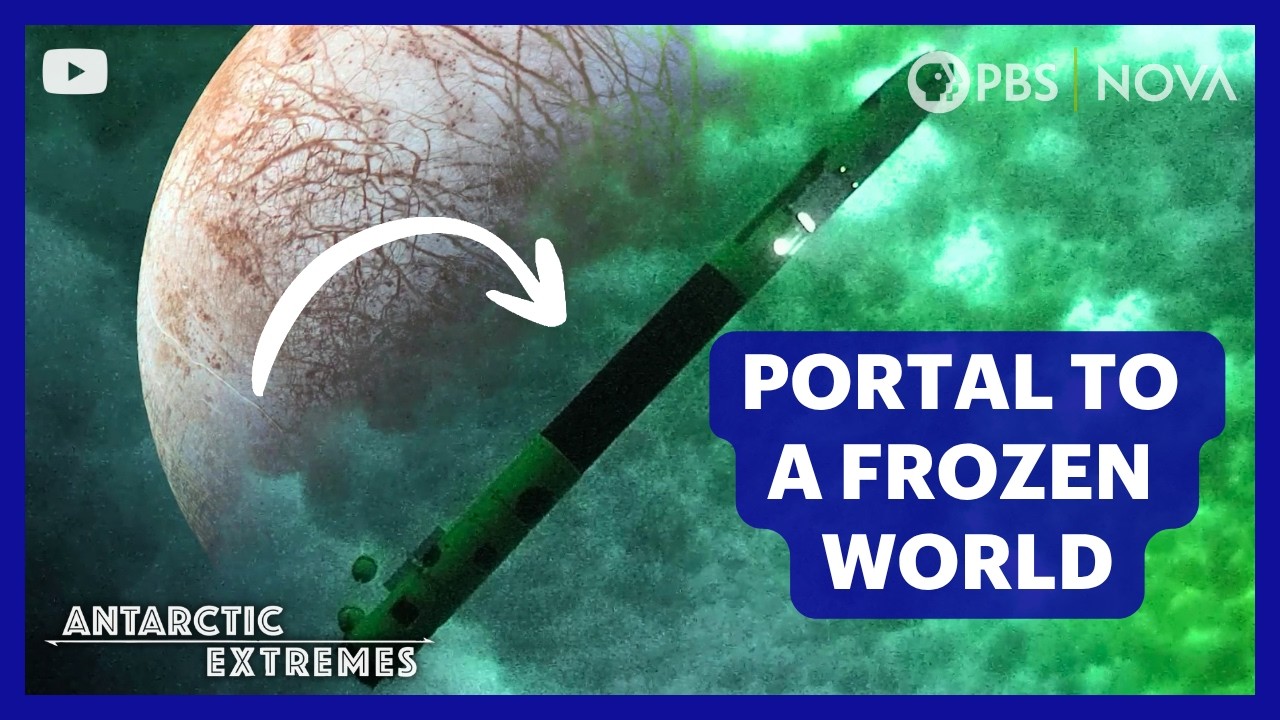
Mystery Beneath Antarctica's Glaciers | NOVA | PBS
Keywords
Summary
172 words
Critical Evaluation
The documentary provides a compelling and visually engaging overview of subglacial exploration in Antarctica, focusing on the Icefin robot and its potential applications. The scientific content is presented accurately, with clear explanations of key concepts such as the grounding line and the mechanisms of glacier instability. The interviews with scientists, particularly Britney Schmidt, lend credibility and provide insights into the research process. The documentary effectively communicates the urgency of studying glaciers like Thwaites, which are contributing to sea level rise, and the connection to planetary exploration is well-articulated.
However, the documentary is relatively short and lacks depth in certain areas. It does not provide specific data or citations to peer-reviewed studies, which limits its utility for viewers seeking rigorous scientific detail. The focus on the Icefin robot and the training mission at Erebus is appropriate, but the transition to Thwaites and Europa feels somewhat rushed. The documentary also does not address potential criticisms or alternative viewpoints regarding the methods or the interpretation of data.
The production quality is high, with stunning visuals of the Antarctic landscape and the underwater environment. The use of a PlayStation controller to pilot the robot adds a relatable element, but it may oversimplify the complexity of the operation. Overall, the documentary is a valuable introduction to the topic for a general audience, but it would benefit from more detailed scientific context and references.
228 words
Title / Content Match
The title accurately reflects the content, focusing on the mysteries beneath Antarctic glaciers and the exploration efforts using the Icefin robot.
Quality & Reliability
8/10
The documentary features interviews with scientists from a credible research team, shows actual field operations, and references specific data (e.g., 14 billion tons of ice melted, 4% of sea level rise from Thwaites). The content is consistent with established scientific knowledge about Antarctic glaciers and subglacial exploration. However, it is a popular science production with limited depth and no direct citations to peer-reviewed papers.
Key Moments
Markers derived by PSI from the transcript: the creator did not define chapters.
- Introduction to the Erebus Glacier and the team's mission.
- Discovery of ice caves and large ice crystals.
- Introduction to Europa and the motivation for exploring ice-covered oceans.
- Assembly and launch of the Icefin robot.
- Underwater exploration and encounters with marine life.
- Explanation of the grounding line and its importance.
- Discussion of Thwaites Glacier and its instability.
- Conclusion about the future of Icefin and its potential for Europa.
Cited Sources
- NOVA Newsletter — Mentioned in the video description as a way to stay updated on science discoveries.
Concurring Sources
- NASA's Europa Clipper mission — Supports the idea of exploring Europa's ocean for potential life.
- Thwaites Glacier collaboration — Confirms the international effort to study Thwaites Glacier.
Contribution & Novelties
The documentary provides a unique behind-the-scenes look at the Icefin robot’s testing in Antarctica, highlighting the practical challenges of subglacial exploration. It connects this work to both climate science and astrobiology, offering a dual perspective. The footage of the underwater environment and the robot’s operations is rare and valuable.
Pour aller plus loin :
- Icefin robot official page — Detailed information about the robot’s design and missions.
- NASA’s Europa Clipper mission — Upcoming mission to study Europa’s habitability.
- Thwaites Glacier research — International collaboration studying the glacier’s stability.
- Antarctic Glaciology — Overview of glacier science.
95 words
Radar Profile
The radar profile shows high scores in quality of information and reliability, reflecting the credible sources and expert interviews. The quantity of information is moderate, and the technical level is accessible, making it suitable for a general audience.