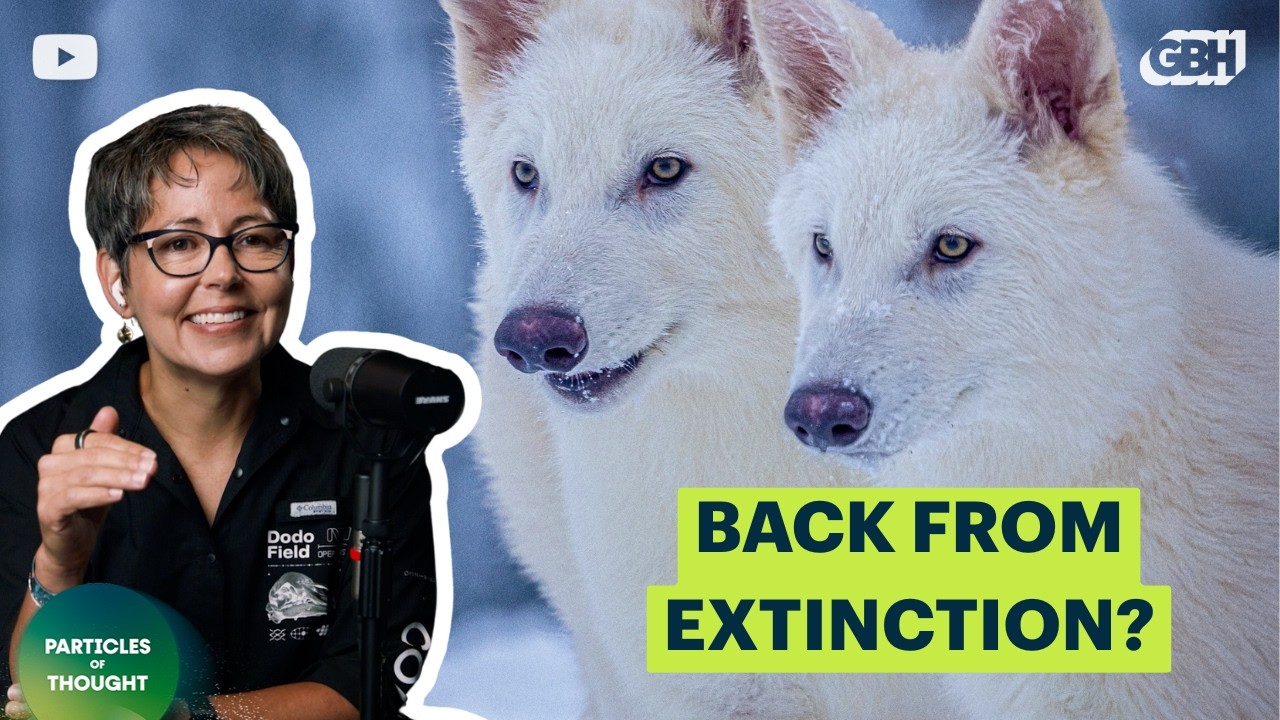
De-Extinction: A How-To Guide | Beth Shapiro
Keywords
Summary
189 words
Critical Evaluation
The interview provides a scientifically accurate and accessible overview of de-extinction, grounded in the expertise of Beth Shapiro, a leading researcher in ancient DNA. The content is well-structured, starting with a clear definition of de-extinction and then explaining the methodology in a step-by-step manner. Shapiro effectively corrects common misconceptions, particularly the idea that de-extinction involves reconstructing a complete genome from ancient DNA fragments, as depicted in Jurassic Park. She emphasizes that the approach is more pragmatic: using closely related living species as templates and editing in specific extinct traits. This is a crucial point that is often misunderstood in public discourse. The scientific rigor is high; Shapiro accurately describes the challenges of DNA degradation, the age limits of recoverable DNA, and the current limitations of genome editing technologies. She also highlights the importance of ancient DNA sequencing and comparative genomics in identifying which genetic variants to target. The argumentation is solid, and she provides concrete examples, such as the dire wolf project and the mammoth project, to illustrate her points. The sources cited are not explicitly named in the video, but the description includes links to an extended interview and a newsletter, which may contain further references. The title accurately reflects the content, and the video is a valuable resource for anyone interested in the real science behind de-extinction. The main limitation is the brevity of the interview, which prevents a deeper exploration of the ethical and ecological implications, but within its scope, it is excellent.
246 words
Title / Content Match
The title accurately reflects the content, which is a guide to how de-extinction is actually done, contrasting it with the fictional approach in Jurassic Park.
Quality & Reliability
8/10
Beth Shapiro is a leading expert in ancient DNA and evolutionary biology, and the content is scientifically accurate, though presented in an accessible interview format. The information is consistent with current scientific understanding, but some simplifications are made for a general audience.
Key Moments
Markers derived by PSI from the transcript: the creator did not define chapters.
- Introduction and definition of de-extinction.
- Explanation of the dire wolf project and the goal of restoring ecological interactions.
- Discussion of the light-colored coat and the importance of animal welfare.
- Contrast between Jurassic Park and real de-extinction methods.
- Explanation of why amber is not suitable for DNA preservation and the oldest DNA found.
- Description of the genome editing approach using CRISPR and the 99.5% similarity between mammoths and Asian elephants.
- Discussion of the limitations of current editing technologies and the need for multiplex editing.
- How ancient genomes are used to identify which traits to edit.
- Applications of these technologies for conservation and human health.
- Conclusion and final thoughts on the future of de-extinction.
Cited Sources
- Extended interview with Beth Shapiro — Mentioned in the description as a longer version of the interview.
- NOVA newsletter — Provided in the description for staying updated on science content.
Concurring Sources
- Colossal Biosciences — Company mentioned in the video as the employer of Beth Shapiro and the organization behind the dire wolf project.
Contribution & Novelties
The video provides a clear and accurate explanation of the real science of de-extinction, correcting common misconceptions and highlighting the practical approach of editing living relatives. It emphasizes the importance of ancient DNA and comparative genomics in identifying target traits, and discusses the technological challenges and potential applications for conservation and medicine.
Pour aller plus loin :
- CRISPR gene editing — Overview of the CRISPR technology mentioned in the video.
- Ancient DNA — Background on the study of ancient DNA, including its limitations and applications.
- De-extinction — General overview of the concept and ongoing projects.
95 words
Radar Profile
The radar profile shows high scores across all dimensions, indicating a well-balanced and informative video. The quantity and quality of information are strong, and the technical level is appropriate for an interested general audience. The reliability is high due to the expertise of the speaker.