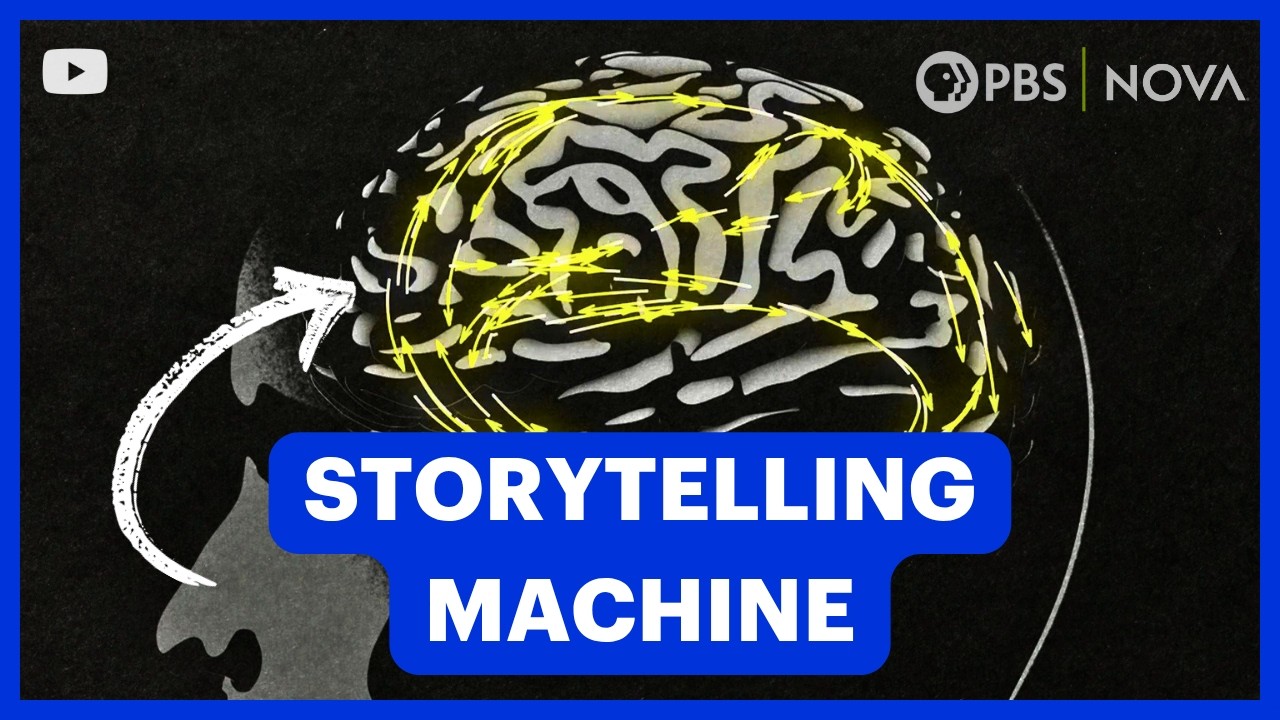
Your Brain is Making Reality Up | NOVA | PBS
Keywords
Summary
174 words
Critical Evaluation
The video provides a compelling and accessible overview of current neuroscience research on consciousness and memory. It effectively uses analogies (spotlight vs. floodlight, pebble in a lake) to explain complex concepts. The scientific content is accurate and well-presented, featuring interviews with experts and referencing key studies, such as the Nobel Prize-winning work of Eric Kandel. The fMRI experiments on conscious perception are clearly explained, and the TMS/EEG technique for measuring consciousness in unresponsive patients is a significant and hopeful application. The discussion of memory reconsolidation is particularly strong, illustrating how memories are dynamic and change with each recall. However, the video simplifies some aspects, such as the nature of consciousness, which remains a mystery. It also does not delve into potential criticisms or alternative theories. The title is appropriate, and the content is well-structured. Overall, the video is a high-quality science communication piece that informs without oversimplifying too much.
149 words
Title / Content Match
The title accurately reflects the content, which explores how the brain constructs reality through perception and memory.
Quality & Reliability
8/10
The video is produced by NOVA PBS, a reputable science documentary series. It features interviews with neuroscientists and presents established research on consciousness and memory, including references to Nobel Prize-winning work. The content is well-explained and aligns with current scientific understanding, though it simplifies complex topics for a general audience.
Key Moments
Markers derived by PSI from the transcript: the creator did not define chapters.
- Introduction to the brain's energy consumption and synaptic pruning in children.
- Explanation of consciousness as a spotlight, with fMRI experiments on conscious perception.
- Discussion of the neural correlates of consciousness and the 'ignition' of distributed brain areas.
- Introduction of TMS and EEG to measure consciousness in unresponsive patients.
- Explanation of memory reconsolidation and how memories become less accurate over time.
- Discussion of the self as a construction and the liberating perspective on memory.
Cited Sources
- NOVA Newsletter — Mentioned in the video description as a way to stay updated on science discoveries.
Concurring Sources
- NOVA: Your Brain: Perception Deception — The video is an excerpt from this full documentary, which likely contains more detailed information.
Contribution & Novelties
The video synthesizes current research on consciousness and memory, presenting it in an engaging format. It highlights the practical application of measuring consciousness in patients, which could impact medical decisions. The discussion of memory reconsolidation offers a fresh perspective on identity.
Pour aller plus loin :
- Global Workspace Theory — A prominent theory of consciousness that aligns with the video’s description of distributed brain activity.
- Reconsolidation — The process by which memories are destabilized and re-stabilized, as discussed in the video.
- Transcranial magnetic stimulation — The technique used to measure consciousness in the video.
94 words
Radar Profile
The radar profile shows high scores in information quantity, quality, and reliability, with a moderate technical level. This indicates a well-balanced video that is both informative and scientifically sound, suitable for a general audience interested in neuroscience.
💬 Positive and engaged: viewers appreciate the content and share personal experiences related to memory and perception. Some comments express fascination and gratitude for PBS's science programming.