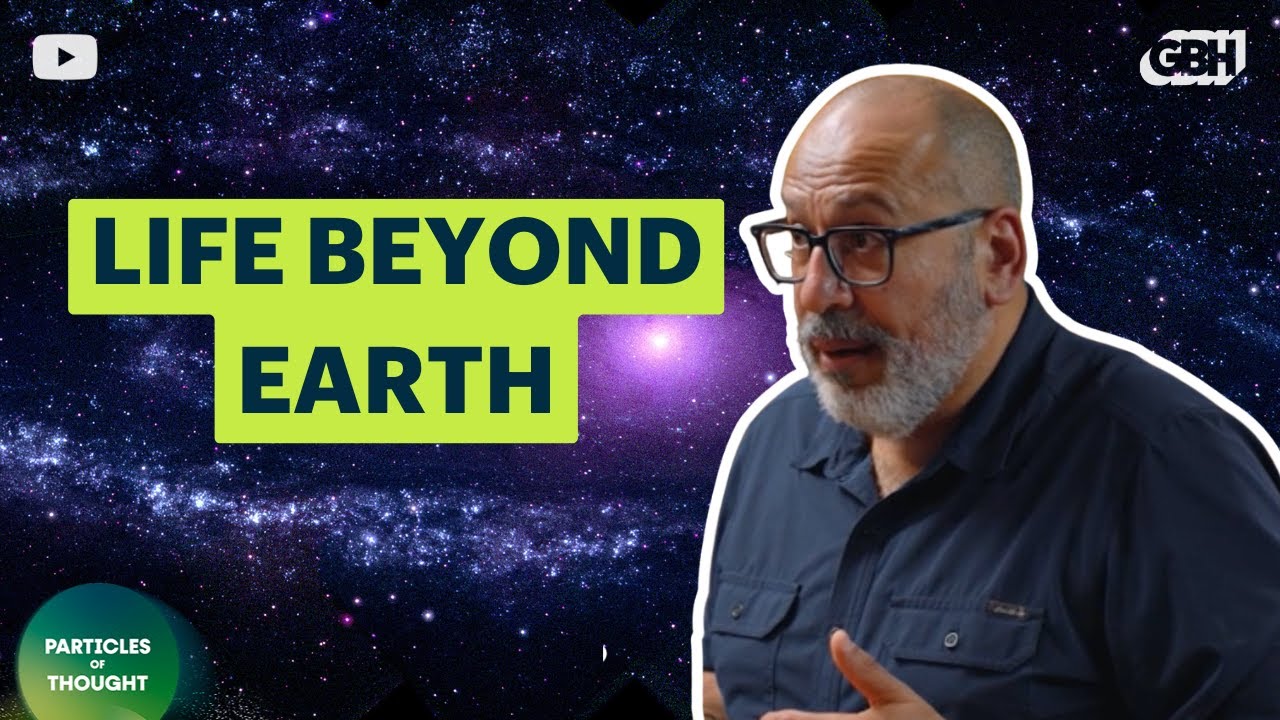
The Clues to Life Beyond Earth Are Hidden in Chemistry | Peter Girguis
Keywords
Summary
172 words
Critical Evaluation
The video provides a valuable and accessible overview of the scientific approaches to detecting life beyond Earth, focusing on chemical and isotopic signatures. Peter Girguis, a professor at Harvard, brings credible expertise in marine microbiology and biogeochemistry, and his explanations are grounded in established scientific principles. The discussion of isotope fingerprints, such as carbon isotopes in methane, is accurate and well-illustrated with examples like the difference between microbial and volcanic methane. The concept of chemical complexity as a potential biosignature is also scientifically sound, referencing the idea that long-chain organic molecules are unlikely to form abiotically. The conversation correctly highlights the limitations of remote sensing and the importance of sample return missions, which is a consensus in the astrobiology community. However, the content is presented in a conversational format without formal citations or references, and some claims, such as the uncertainty about NASA’s isotope analysis capabilities on Perseverance, are speculative. The discussion does not delve into the specifics of current missions or recent findings, but it offers a solid conceptual foundation. The title accurately reflects the content, and the video is well-produced with clear audio and visuals. Overall, the information is reliable and aligns with current scientific thinking, though it lacks depth in terms of specific data or recent discoveries. The public comments (not provided) would likely appreciate the clarity and expertise, but the video could benefit from more concrete examples or references to ongoing research.
236 words
Title / Content Match
The title accurately reflects the content, which focuses on chemical clues and isotopic fingerprints as key indicators for life beyond Earth.
Quality & Reliability
8/10
The discussion is led by a Harvard professor with expertise in marine microbiology and biogeochemistry, providing credible insights into the search for life beyond Earth. The content is grounded in established scientific concepts (isotope analysis, biosignatures, sample return) and aligns with current astrobiology research. However, it is a conversational podcast without formal citations or peer-reviewed references, and some claims (e.g., about NASA instruments) are uncertain.
Key Moments
Markers derived by PSI from the transcript: the creator did not define chapters.
- Introduction: The search for life beyond Earth is framed as a chemical detective story.
- Discussion of zircon crystals and carbon isotope ratios as evidence of early life on Earth.
- Girguis explains the concept of disequilibrium as a definition of life and its challenges for detection.
- The importance of chemical complexity: from simple molecules like acetic acid to long chains like DNA.
- Isotope fingerprints: how carbon isotopes can distinguish biological from non-biological methane.
- The challenge of remote isotope analysis and the need for sample return missions.
- Girguis advocates for international sample return and sending probes to multiple candidate sites on Mars.
- Debate on human vs. robotic exploration, referencing the Apollo program.
- Conclusion: The search for life is a collective human endeavor, and definitive answers may take time.
Cited Sources
- NOVA's newsletter — Mentioned in the video description for staying updated on science discoveries.
- Full podcast episode — Referenced as the full podcast of which this video is an excerpt.
Concurring Sources
- NASA Astrobiology — NASA's official astrobiology program, which supports research on biosignatures and life detection.
- Perseverance rover — NASA's Mars 2020 mission, which is collecting samples for potential return to Earth.
Dissenting Sources
- No discordant sources identified — The video's content aligns with current scientific consensus on the search for life beyond Earth.
Contribution & Novelties
The video offers a clear and expert explanation of how chemical and isotopic signatures are used in the search for life beyond Earth, emphasizing the importance of multiple lines of evidence and the need for sample return missions. It provides a valuable perspective from a marine biologist on the challenges of detecting microbial life remotely.
Pour aller plus loin :
- Biosignature — Overview of detectable indicators of life.
- Isotope analysis — Explanation of how isotope ratios are used in scientific research.
- Mars sample-return mission — Details on proposed missions to return Martian samples to Earth.
- Carbon isotope ratio — Information on carbon isotopes and their applications.
106 words
Radar Profile
The radar profile shows high scores in quality of information and reliability, reflecting the expert credibility and accurate scientific content. The quantity of information is moderate, as the video is a short podcast excerpt, and the technical level is accessible to a general audience. Overall, the video is a reliable and informative introduction to astrobiology.