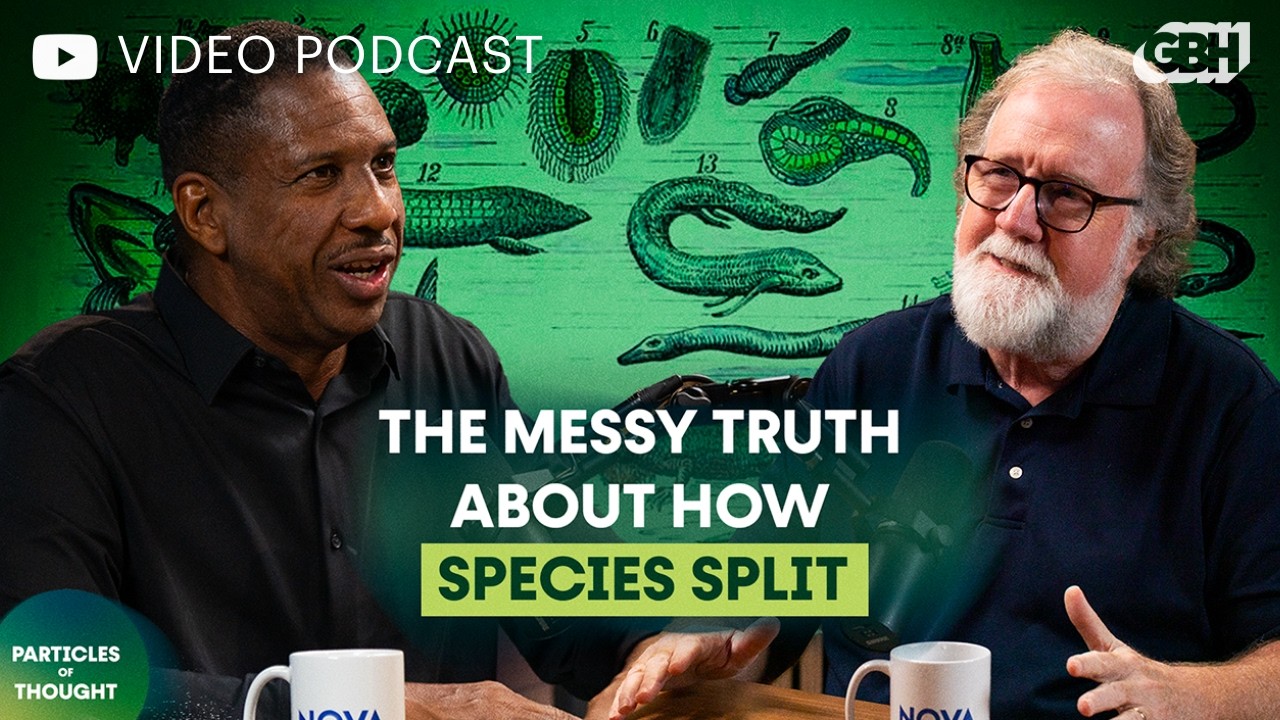
Interview: Evolution of New Species, Venom, Wings, and More with Sean B. Carroll
Keywords
Summary
143 words
Critical Evaluation
The interview provides a comprehensive and accessible overview of key concepts in evolutionary biology, particularly the role of developmental genetics in shaping biodiversity. Sean B. Carroll’s expertise is evident, and he effectively communicates complex ideas without oversimplifying. The host, Hakeem, asks insightful questions that guide the discussion toward important topics such as speciation, genetic toolkit, and the evolution of novelty. The scientific content is accurate and up-to-date, with references to recent research and examples like the green jay-blue jay hybrids. However, there are minor inaccuracies noted by viewers, such as the discovery of statins being attributed to Akira Endo, which is correct, but the context may be slightly misrepresented. The discussion on antivirals could also be more nuanced, as one commenter pointed out. Overall, the interview is rigorous and well-structured, offering valuable insights for both lay audiences and those with some biological background. The adéquation between title and content is excellent, as the title accurately reflects the topics covered. The presence of a sponsorship segment is noted but does not detract from the scientific value. The interview excels in conveying the excitement of evolutionary biology and its relevance to medicine and our understanding of life.
195 words
Title / Content Match
The title accurately reflects the content, which covers evolution of new species, venom, wings, and other topics with Sean B. Carroll.
Quality & Reliability
9/10
The interview features Sean B. Carroll, a renowned evolutionary biologist with extensive credentials (HHMI investigator, professor at University of Maryland). The discussion is grounded in established evolutionary biology concepts, with references to specific studies and examples. The host asks informed questions, and the content is consistent with current scientific understanding. Minor inaccuracies noted by commenters (e.g., statins discovery) slightly reduce the score.
Chapters
Cited Sources
- Apple Podcasts - Particles of Thought — Podcast platform where the interview is available.
- Particles of Thought on Apple Podcasts — Podcast page for the series.
- NOVA PBS Official — Link to NOVA PBS content related to the interview.
Concurring Sources
- Endless Forms Most Beautiful (book by Sean B. Carroll) — Book by Sean Carroll that elaborates on evo-devo concepts discussed in the interview.
Dissenting Sources
- Comment on statins discovery — A commenter pointed out a potential inaccuracy in the discussion of statins discovery, noting that Akira Endo was studying fungus for antibiotics, not specifically for cholesterol-lowering drugs.
Contribution & Novelties
The interview provides a clear and engaging synthesis of evolutionary developmental biology (evo-devo), emphasizing the role of genetic toolkit and gene regulation in generating diversity. It offers a nuanced perspective on speciation, highlighting the gradual and often ‘sloppy’ nature of the process. The discussion on the evolution of venom and its medical applications, as well as the origins of drugs like GLP-1 agonists and statins, underscores the practical relevance of evolutionary biology. The conversation also touches on the role of chance and contingency in evolution, adding depth to the understanding of life’s history.
Pour aller plus loin :
- Evolutionary developmental biology — Provides an overview of evo-devo, a central theme of the interview.
- Speciation — Explores the process of new species formation, discussed in detail.
- GLP-1 receptor agonist — Relates to the discussion on medicines derived from natural compounds.
- Sean B. Carroll — Background on the guest’s work and contributions.
150 words
Radar Profile
The radar profile shows high scores in information quantity, quality, and reliability, with a slightly lower score in technical level, indicating that the content is accessible to a broad audience while maintaining scientific rigor. The interview excels in providing substantial and accurate information, making it a valuable resource for understanding evolution.
💬 Très positif. Sur les 30 commentaires analysés, la grande majorité exprime une admiration pour la clarté de Sean Carroll et la qualité de l'interview, avec quelques remarques constructives sur des points scientifiques précis.