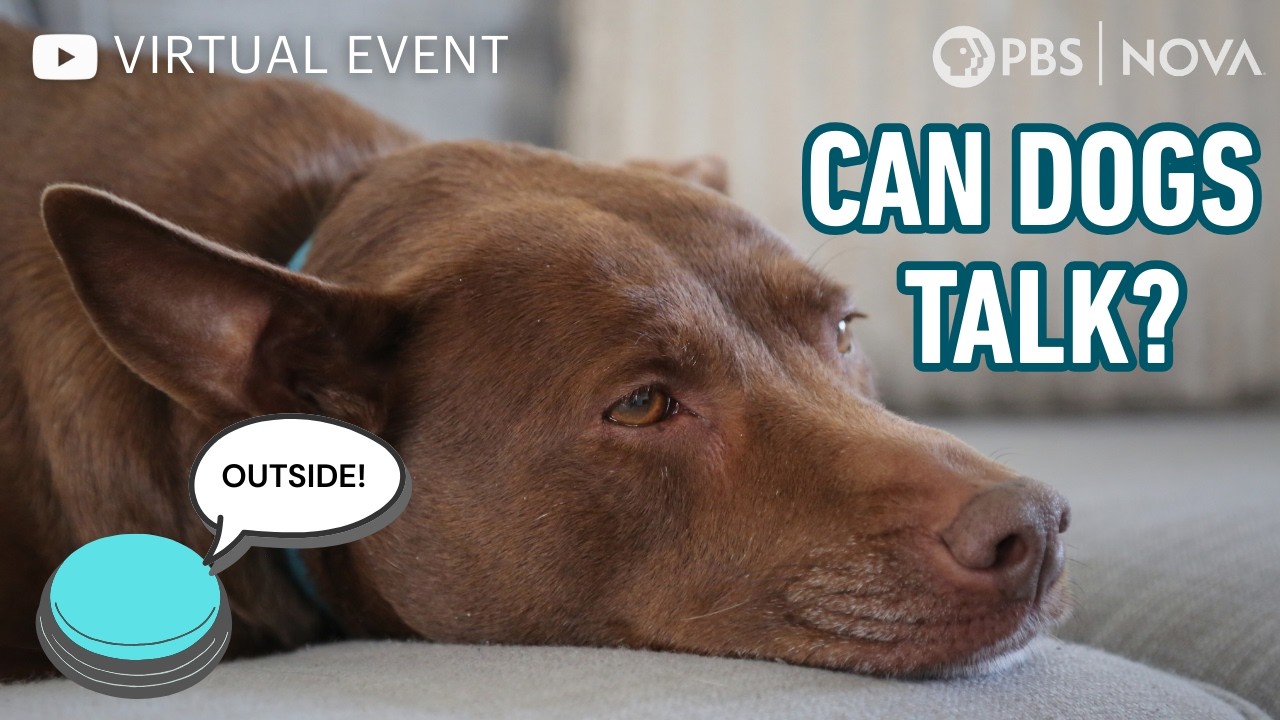
Can Dogs Talk? A Deep Dive with Christina Hunger & Federico Rossano | NOVA | PBS
Keywords
Summary
176 words
Critical Evaluation
The video provides a valuable and balanced exploration of the controversial topic of dogs using speech buttons. Its main strength lies in bringing together two key perspectives: Christina Hunger, the practitioner who popularized the method, and Federico Rossano, a cognitive scientist who leads a large-scale study on the phenomenon. This duality allows for a nuanced discussion that acknowledges both the anecdotal evidence from owners and the need for rigorous scientific validation. The conversation is well-moderated, with the hosts asking pertinent questions that draw out the scientific process and the challenges involved. Rossano’s explanation of his initial skepticism and the professional risks he faced adds credibility and highlights the scientific community’s cautious approach. The discussion also touches on the historical context of animal language studies, which is crucial for understanding the current debate. However, the format of a live Q&A limits the depth of the scientific content; many claims are presented without detailed evidence, and the conversation often relies on personal anecdotes rather than empirical data. The video does not provide a comprehensive review of the existing literature, and the scientific methods of Rossano’s study are only briefly mentioned. Additionally, the potential for anthropomorphism and the limitations of the button method are discussed but not deeply explored. Despite these limitations, the video serves as an excellent introduction to the topic and encourages viewers to think critically about animal communication. The presence of a brief sponsorship segment (not named) does not detract from the content. Overall, the video is informative and thought-provoking, but it would benefit from more detailed scientific evidence to fully support its claims.
264 words
Title / Content Match
The title accurately reflects the content: a deep dive into the question of whether dogs can talk, featuring the two main figures from the documentary.
Quality & Reliability
8/10
The video features a balanced discussion between a practitioner (Christina Hunger) and a cognitive scientist (Federico Rossano), with references to ongoing scientific research and a large-scale study. The claims are contextualized with appropriate skepticism, and the conversation is moderated by NOVA producers. However, the format is a live Q&A, not a peer-reviewed presentation, and some claims from the practitioner are anecdotal.
Key Moments
Markers derived by PSI from the transcript: the creator did not define chapters.
- Introduction and welcome by NOVA executive producers.
- Clip from the documentary introducing Stella and her button use.
- Christina Hunger explains her background as a speech-language pathologist and the inspiration for using buttons with Stella.
- Christina describes the initial training process and Stella's first word 'outside'.
- Christina shares the surprising moment when Stella used 'water' in a novel context.
- Federico Rossano discusses his initial skepticism and the history of animal language studies.
- Federico explains how he decided to launch a large-scale study with thousands of participants.
- Discussion of the scientific challenges and the risk of anthropomorphism.
- Christina and Federico respond to public and scientific reactions to the phenomenon.
- Q&A session with audience questions about the study and the future of research.
Cited Sources
- Comparative Cognition Lab - UC San Diego — Federico Rossano's lab, where the large-scale study on button-pressing pets is conducted.
- NOVA documentary: Can Dogs Talk? — The full documentary that this live Q&A is based on.
- NOVA Newsletter — Sign-up for NOVA's newsletter for updates on science content.
Concurring Sources
- Comparative Cognition Lab - UC San Diego — The lab's website provides information on the study and related research.
Dissenting Sources
Contribution & Novelties
The video provides a unique opportunity to hear directly from the pioneer of the talking dog movement and the lead scientist of the largest study on the topic. It offers insights into the motivations, challenges, and scientific rigor behind the research, which is not commonly available in standard media coverage. The discussion highlights the importance of balancing anecdotal evidence with systematic investigation.
Pour aller plus loin :
- Animal language - Wikipedia — Provides background on the history of attempts to teach animals human language.
- Clever Hans - Wikipedia — A classic example of unintended cues in animal behavior studies, relevant to the discussion of anthropomorphism.
- Federico Rossano’s research profile — Direct link to the lab’s website for more information on the ongoing study.
123 words
Radar Profile
The radar profile shows high scores in information quantity, quality, and reliability, reflecting the balanced and well-moderated discussion. The technical level is moderate, making the content accessible to a general audience while still providing scientific depth.
💬 Sur les 0 commentaires analysés, aucune tendance n'a pu être identifiée.