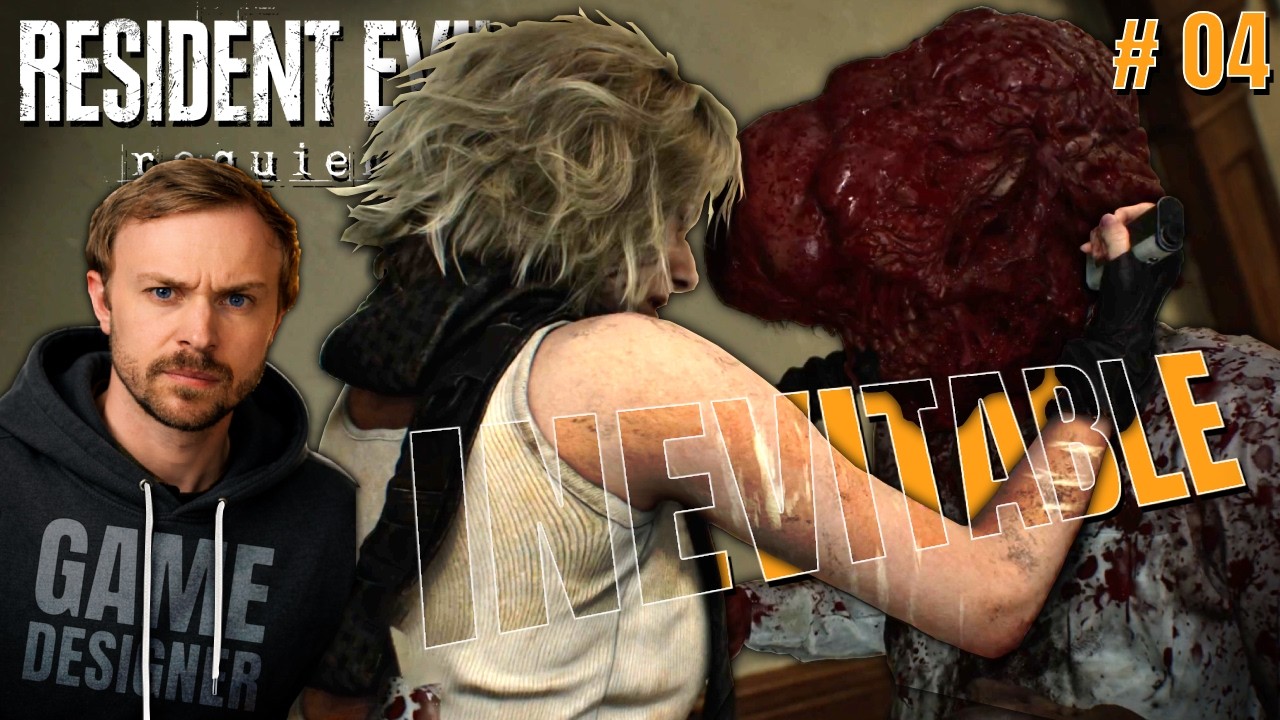
Designing Forced Encounters | Resident Evil Requiem Design Study #04
Keywords
Summary
205 words
Critical Evaluation
Value of the Information & Strength of the Argument
The video offers valuable insights into game design from a practitioner’s perspective, particularly regarding forced encounters and level routing. The argumentation is based on direct gameplay experience, with specific examples of how the game guides the player and creates tension. The creator’s reasoning is logical and well-articulated, though it is subjective and lacks external validation. The analysis is thoughtful, but the lack of comparative references or broader design theory limits its depth.
Scientific Rigor, Source Quality, Title Accuracy
The video does not cite external sources, relying solely on in-game content and the creator’s expertise. The title accurately reflects the content, focusing on forced encounters. The analysis is coherent and internally consistent, but the absence of citations and the subjective nature of the commentary reduce its scientific rigor. The creator’s credentials as a game designer lend some authority, but the video is more of a personal study than a rigorous academic analysis.
160 words
Title / Content Match
The title accurately reflects the content, as the video focuses on how the game forces encounters through level design and routing.
Quality & Reliability
7/10
The video is a subjective, experience-based analysis by a self-identified game designer, focusing on design observations rather than verifiable facts. It references in-game documents and mechanics, but lacks external sources or citations. The reasoning is coherent and grounded in gameplay, but the reliability is limited by its anecdotal nature.
Key Moments
Markers derived by PSI from the transcript: the creator did not define chapters.
- Introduction and overview of the episode's focus on forced encounters.
- Discussion of inventory upgrades and the importance of resource management.
- Analysis of the shop system and strategic purchasing decisions.
- Encounter with the 'alien' zombie and decision to restart to conserve resources.
- Solving safe puzzles and using lockpicks, noting the game's puzzle design.
- Reading lore documents that hint at a larger conspiracy, adding narrative depth.
- Obtaining the level two wristband after a forced encounter with a regenerating enemy.
- Discussion of audio cues and environmental storytelling in building tension.
- Discovering the security manager's office and the Braille puzzle.
- Conclusion and anticipation for future encounters.
Cited Sources
- Resident Evil Requiem Design Study Playlist — The creator's playlist for the full design study series.
Contribution & Novelties
The video provides a unique, first-hand analysis of Resident Evil Requiem’s design from a game designer’s perspective, focusing on how the game forces encounters through level layout and routing. It offers practical insights into resource management and player psychology. The analysis is original in its approach, though it is limited to a single playthrough.
Pour aller plus loin :
- Game design — Overview of game design principles.
- Level design — Discusses level layout and player guidance.
- Survival horror — Genre conventions and design tropes.
84 words
Radar Profile
The radar profile shows a balanced score across information quantity, quality, technical level, and reliability, with a slight emphasis on quality and quantity. This indicates a well-rounded analysis, though the technical depth and reliability are moderate, reflecting the subjective nature of the content.
💬 No comments were provided for analysis.