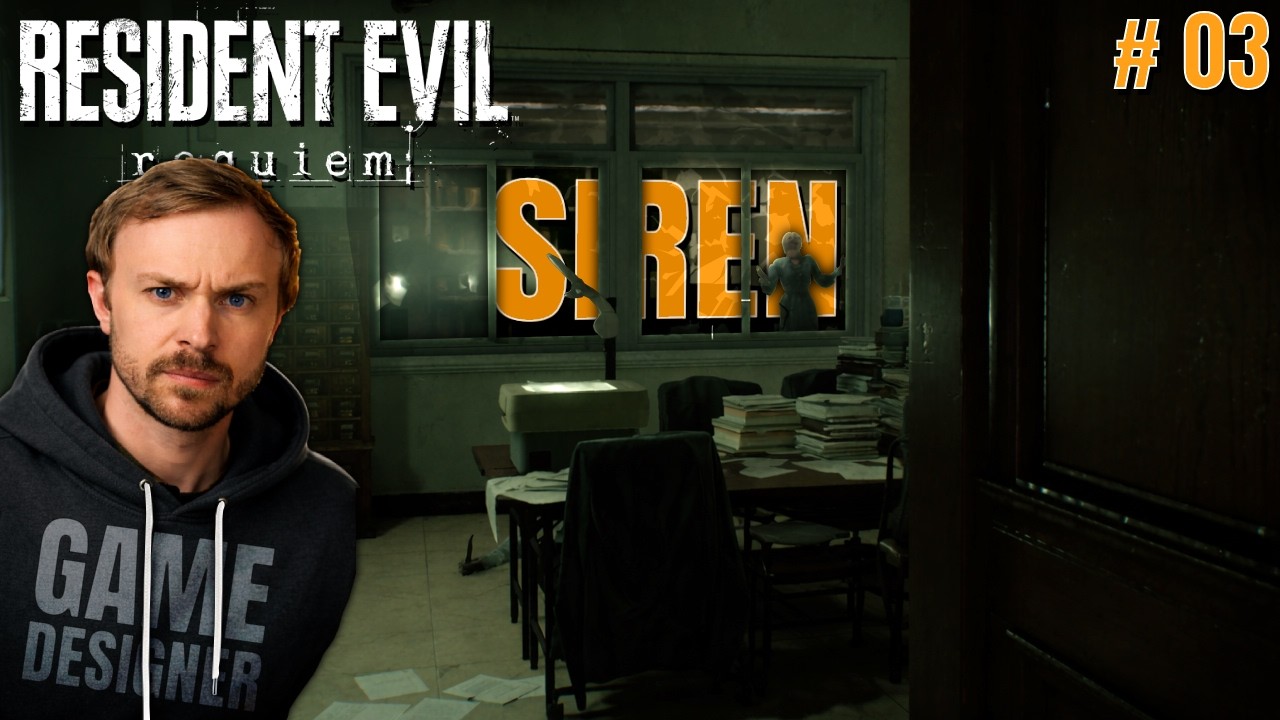
Directing Attention: The Auditory Trap | Resident Evil Requiem Design Study #03
Keywords
Summary
133 words
Critical Evaluation
Value of the Information & Strength of the Argument
The value of the information lies in the expert perspective of a game designer, offering insights into the intentional design choices behind audio and framing. The argumentation is solid, as the designer supports his observations with specific examples from the gameplay, explaining how certain audio cues and visual elements manipulate player attention. He also draws parallels to other games in the series, strengthening his analysis. However, the argumentation is subjective and based on personal experience, which is inherent to this type of content.
Scientific Rigor, Source Quality, Title Accuracy
The scientific rigor is moderate; the video is an opinion piece without external citations. The quality of sources is limited to the game itself and the designer’s expertise. The title accurately reflects the content, focusing on the auditory trap and attention direction. The video does not claim to be a formal study, but rather a design analysis, which is appropriate for the content.
161 words
Title / Content Match
The title accurately reflects the content, focusing on how audio cues and framing direct player attention in Resident Evil Requiem.
Quality & Reliability
7/10
The video is an expert opinion from a game designer, providing insightful analysis of game design mechanics. The reasoning is coherent and grounded in gameplay examples, but it lacks external sources or citations to support claims. The analysis is subjective and based on personal experience, which is typical for this type of content.
Key Moments
Markers derived by PSI from the transcript: the creator did not define chapters.
- Introduction to the care home and the siren sound that guides the player.
- Discussion on the similarity of progression to Resident Evil 7, predicting future events.
- Analysis of the audio cues that signal enemy presence and how they direct attention.
- Exploration of the crafting system and its integration into the gameplay loop.
- Encounter with a fast enemy, highlighting the use of sound to create tension.
- Puzzle solving and the use of visual framing to guide the player's attention.
- Discussion on the use of audio to misdirect the player, leading to surprise attacks.
- Final thoughts on the game's design and the effectiveness of its audio and framing techniques.
Cited Sources
- Design Study Playlist — The playlist for the complete Design Study series, mentioned in the video description.
Concurring Sources
- Resident Evil 7: Biohazard — The game is compared to Resident Evil 7 in terms of structure and design, providing a reference for the analysis.
Contribution & Novelties
The video offers a unique perspective from a game designer analyzing the game in real-time, providing insights into the intentional design choices behind audio and framing. It highlights specific techniques used to direct player attention, such as audio cues and visual framing, and how they contribute to the horror experience. The comparison to Resident Evil 7 provides a framework for understanding the game’s structure.
Pour aller plus loin :
- Game design and attention — Overview of game design principles, including attention direction.
- Audio design in games — Discussion on the role of audio in games, including its use for guidance and atmosphere.
- Horror game design — Exploration of horror game mechanics and how they create fear.
116 words
Radar Profile
The radar profile shows high scores in quantity of information and technical level, indicating a detailed and technical analysis. The lower score in reliability reflects the subjective nature of the content, which is typical for expert opinion videos.
💬 No comments were provided for analysis.