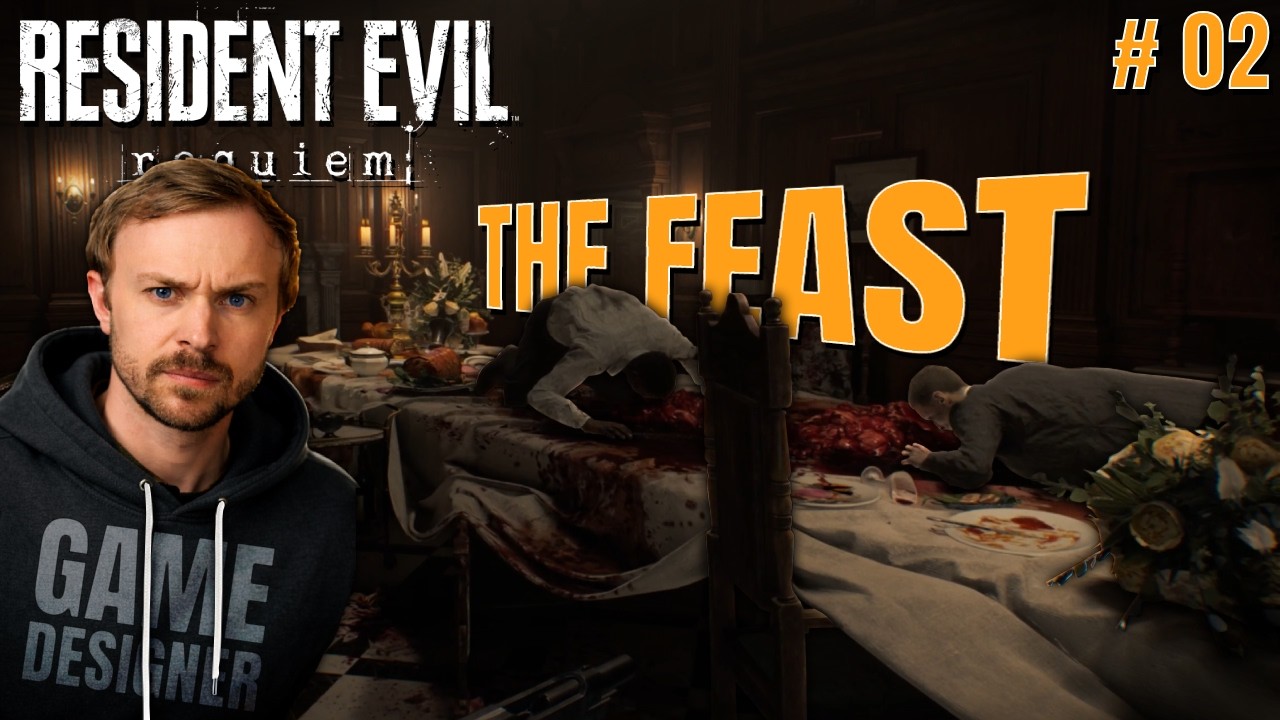
Serving Tension in Tight Spaces | Resident Evil Requiem Design Study #02
Keywords
Summary
151 words
Critical Evaluation
Value of the Information & Strength of the Argument
The video offers valuable insights into game design from a practitioner’s perspective. The creator’s commentary is thoughtful and demonstrates a deep understanding of how horror games create tension through environmental design, enemy behavior, and resource management. He effectively argues that the game’s design forces players into uncomfortable situations, enhancing the horror experience. The argumentation is coherent and grounded in specific examples from gameplay, making it persuasive. However, the analysis is subjective and lacks external validation, which limits its scientific rigor.
Scientific Rigor, Source Quality, Title Accuracy
The video does not cite any external sources, and the creator’s credentials as a game designer are not independently verified. The title accurately reflects the content, focusing on tension in tight spaces. The analysis is based on direct gameplay, which provides a strong foundation for the observations, but the lack of citations and the subjective nature of the commentary reduce its scientific rigor. The video is part of a series, and the creator’s approach is consistent with a tutorial or analysis format.
177 words
Title / Content Match
The title accurately reflects the content, focusing on how the game creates tension in confined spaces, which is the central theme of the commentary.
Quality & Reliability
7/10
The video is a first-person playthrough with analytical commentary by a self-identified game designer. It provides subjective observations on game design elements such as tension, pacing, and resource scarcity. The analysis is grounded in direct gameplay experience, but it lacks external citations or verification. The creator's credentials are not independently verified, and the content is primarily opinion-based.
Key Moments
Markers derived by PSI from the transcript: the creator did not define chapters.
- Introduction and setup: Leon's section begins, establishing the mission to find Victor Gideon.
- First encounter with the 'shadow ghost' enemy, highlighting its behavior and the tension it creates.
- Discussion of resource scarcity and the need to manage items carefully.
- Switch to Grace's perspective, emphasizing stealth and avoidance over combat.
- Analysis of the 'grandmother' enemy and its relentless pursuit, creating intense pressure.
- Leon's section resumes with more combat-focused gameplay, contrasting with Grace's stealth.
- Exploration of the care center, noting the use of environmental storytelling.
- Encounter with the 'cook' enemy and the need to sneak past or eliminate him.
- Cliffhanger ending with the player locked in a room, setting up the next episode.
Cited Sources
- Resident Evil Requiem Design Study Playlist — The creator's playlist for the full design study series.
Contribution & Novelties
This video provides a unique perspective on game design by analyzing a specific horror game from a designer’s viewpoint. It offers practical insights into how tension is created through level design, enemy AI, and resource management. The creator’s commentary is original and based on firsthand experience, adding value for viewers interested in game design.
Pour aller plus loin :
- Resident Evil (series) — Overview of the franchise and its design evolution.
- Survival horror — Genre characteristics and design principles.
- Level design — Key concepts in creating engaging game spaces.
89 words
Radar Profile
The radar profile shows moderate scores across all dimensions, indicating a balanced but not exceptional video. The highest scores are in information quality and technical level, reflecting the creator's expertise, while the lower scores in quantity and reliability suggest a lack of external validation and depth.
💬 No comments were provided for analysis.