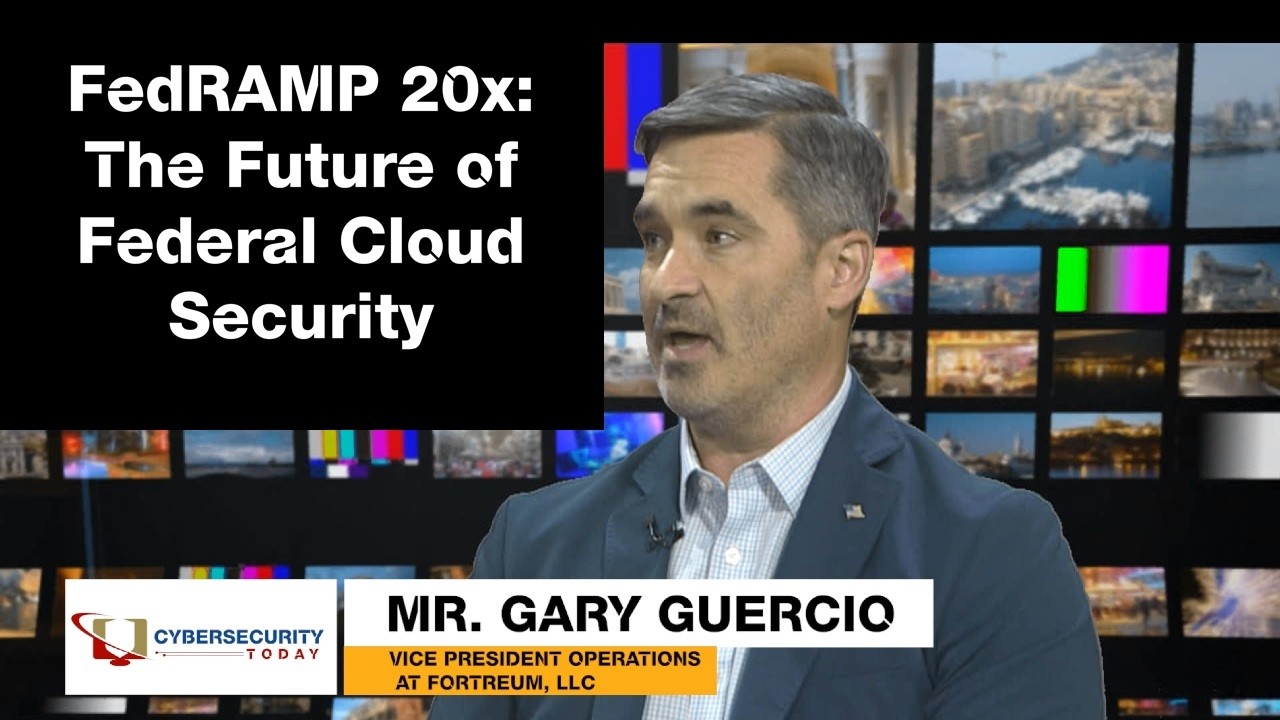
Cybersecurity Today TV - Ep 80 - FedRAMP 20x: The Future of Federal Cloud Security
Keywords
Summary
241 words
Critical Evaluation
Value of the Information & Strength of the Argument
The video provides valuable insights into the FedRAMP 20x program, offering a clear explanation of its goals, the new classification system, and the role of KSIs. The guest’s expertise lends credibility, and the discussion is well-structured, covering perspectives of CSPs, agencies, and assessors. The argumentation is coherent, with logical progression from problem to solution. However, the content is primarily descriptive and lacks critical analysis or counterarguments, which limits its depth.
79 words
Title / Content Match
The title accurately reflects the content, which focuses on FedRAMP 20x and its implications for federal cloud security.
Quality & Reliability
7/10
The video features an expert with extensive experience in FedRAMP, providing detailed insights into the program's evolution. However, it is a talk show format with limited external references, and the information is based on the guest's perspective rather than peer-reviewed sources.
Key Moments
Markers derived by PSI from the transcript: the creator did not define chapters.
- Introduction to the show and overview of cybersecurity news.
- Gary Guercio explains the history and purpose of FedRAMP.
- Discussion on the problems FedRAMP 20x aims to solve, including long timelines and sponsor challenges.
- Explanation of Key Security Indicators (KSIs) and their role in the new framework.
- Overview of the new Class A, B, C, D certification levels.
- Impact on cloud service providers, agencies, and assessors.
Contribution & Novelties
The video provides a comprehensive overview of FedRAMP 20x, a relatively new topic, making it a valuable resource for those unfamiliar with the program. It clarifies the shift from compliance-based to outcome-based security assessment, which is a significant change in federal cloud security. The discussion of KSIs and the new classification system offers practical insights for CSPs and agencies.
Pour aller plus loin :
- FedRAMP official website — Official information on the program, including the consolidated rules and draft documents.
- NIST SP 800-53 — The security controls framework that underpins FedRAMP.
- SOC 2 — A framework for service organization controls, mentioned as a potential reciprocity for Class A.
- Continuous Diagnostics and Mitigation (CDM) program — A program related to continuous monitoring, relevant to the discussion.
125 words
Radar Profile
The radar profile shows high scores in information quantity and technical level, reflecting the detailed and expert-driven content. The quality and reliability scores are slightly lower due to the lack of cited sources, but the overall profile indicates a solid, informative video.