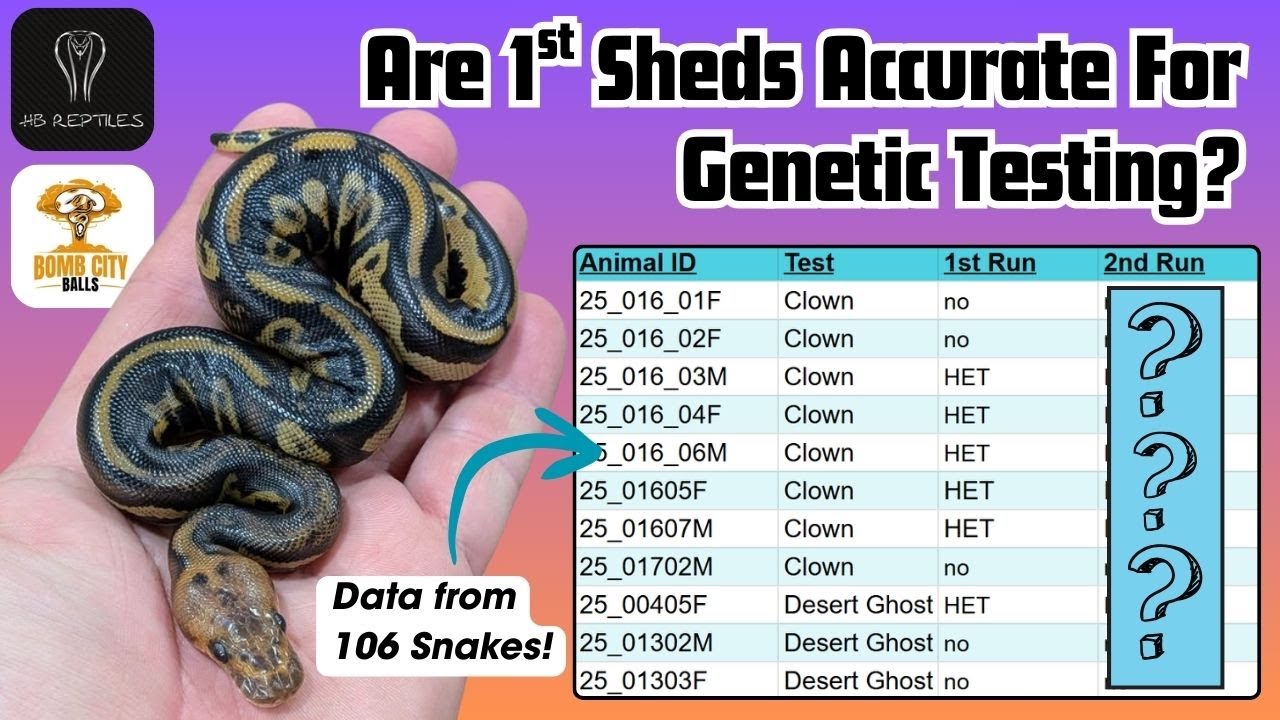
Hatchling Sheds vs 2nd Sheds: Do They Test The Same? | RGW Ep 138
Keywords
Summary
215 words
Critical Evaluation
Value of the Information & Strength of the Argument
The video provides valuable empirical data on a practical question in reptile breeding. The argumentation is solid: they present a clear hypothesis, a controlled experiment with a large sample size, and consistent results. The hosts also discuss limitations and potential confounding factors, such as the timing of separation and test sensitivity. The inclusion of multiple genetic markers strengthens the validity of the findings. However, the study is not peer-reviewed and relies on self-reported data from breeders, which could introduce bias. The discussion is transparent about the methodology, but the lack of a control group (e.g., snakes kept together until shedding) limits the generalizability. Overall, the value is high for the target audience, and the argumentation is convincing within the scope of the study.
Scientific Rigor, Source Quality, Title Accuracy
The scientific rigor is commendable for a hobbyist context: the experiment is well-designed, with a large sample size and replication. The sources are primarily the hosts’ own data and experiences, supplemented by references to their genetic testing service. The title accurately reflects the content. The description provides links to their website and social media, but no external scientific references are cited. The hosts acknowledge the need for further testing, such as separating snakes closer to shedding time. The adéquation between title and content is strong. No comments were provided for analysis.
229 words
Title / Content Match
The title accurately reflects the content, which directly compares hatchling sheds to subsequent sheds for genetic testing consistency.
Quality & Reliability
8/10
The video presents an original study with a clear methodology, a substantial sample size (106 animals, 200+ tests), and includes multiple genetic markers. The hosts are experienced breeders and a genetic testing service provider, lending practical expertise. However, the study is not peer-reviewed, lacks a control group for some variables, and the sample is limited to specific morphs and protocols.
Key Moments
Markers derived by PSI from the transcript: the creator did not define chapters.
- Introduction and topic overview
- Discussion of sample collection and shipping updates
- Introduction of guests Kenny and Herbert
- Kenny explains his breeding setup and shed collection practices
- Herbert describes his projects and initial concerns about first sheds
- Design of the experiment: collecting first and second sheds
- Results: all tests matched between first and second sheds
- Discussion of test sensitivity and implications for breeders
- Practical advice and closing remarks
Cited Sources
- Rare Genetics Inc. - Help/Contact — Mentioned for submitting sheds for future research and questions.
- Rare Genetics Inc. - Store — Mentioned for ordering genetic tests.
- Bomb City Balls - MorphMarket — Kenny's store, mentioned as a guest.
- HB Reptiles - MorphMarket — Herbert's store, mentioned as a guest.
- Rare Genetics Inc. - Bulk Order — Mentioned for bulk testing discounts.
Concurring Sources
- Non-invasive DNA sampling — Supports the use of shed skin as a DNA source.
Dissenting Sources
- Garter snake cross-contamination case — The hosts mention a case where garter snakes kept together produced false female results, suggesting cross-contamination can occur in other species or under different conditions.
Contribution & Novelties
This video provides original empirical data on the reliability of hatchling sheds for genetic testing in ball pythons, a topic previously lacking direct evidence. The study’s large sample size and inclusion of multiple genetic markers offer a robust preliminary answer. The practical implications for breeders are significant: earlier testing can reduce costs and improve efficiency. The hosts also highlight the importance of separation timing and suggest avenues for further research.
Pour aller plus loin :
- Reptile Genetics — Overview of genetic principles in reptiles.
- DNA extraction from shed skin — Note: This is a placeholder; actual URL may not exist. Better to cite a known source: Non-invasive DNA sampling — Relevant to shed DNA analysis.
- Ball python genetics — Background on morph inheritance.
- Polymerase chain reaction — Technique used in genetic testing.
132 words
Radar Profile
The radar profile shows high scores in quantity and quality of information, reflecting the substantial data and clear presentation. The technical level is moderate, suitable for a broad audience. The overall reliability is high due to the empirical nature, though not peer-reviewed.