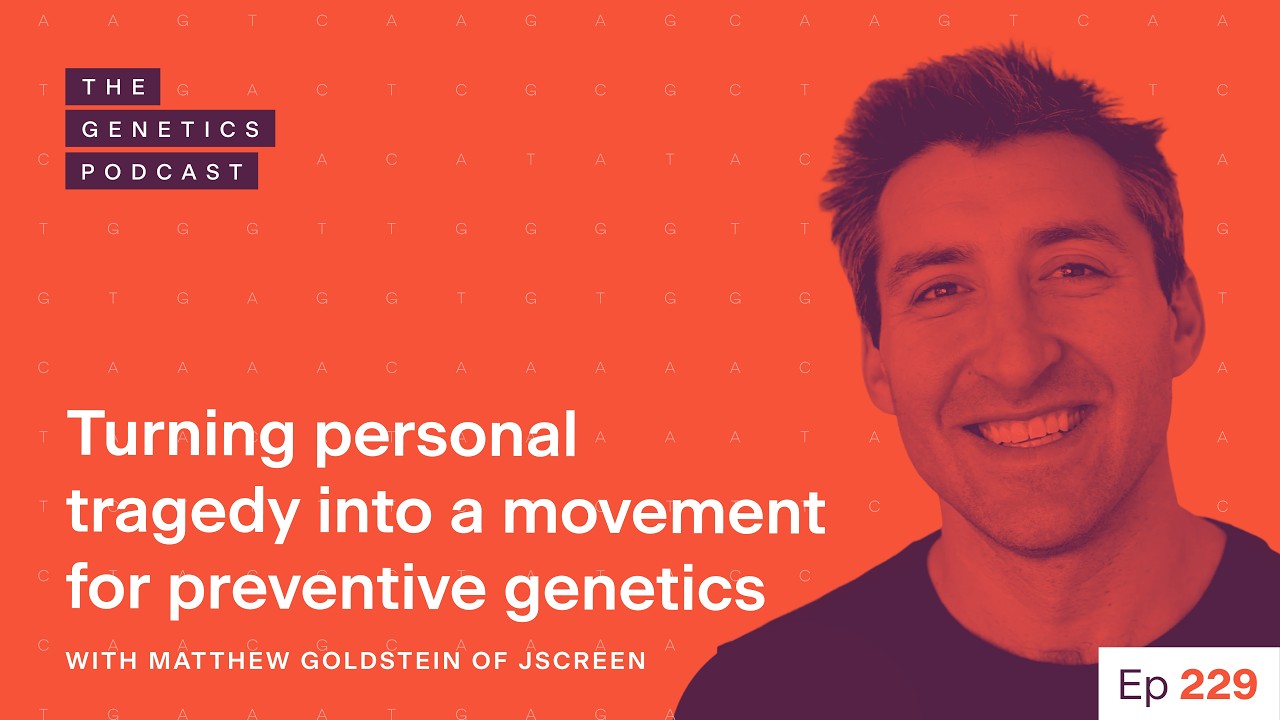
EP 229: Turning personal tragedy into a movement for preventive genetics with Matthew Goldstein
Keywords
Summary
164 words
Critical Evaluation
Value of the Information & Strength of the Argument
The value of the information lies in the personal narrative and the expert perspective on the implementation gap in genetic screening. Goldstein’s story illustrates a real failure in the healthcare system, highlighting the importance of accurate carrier screening. His arguments for nonprofit models and the need for better implementation are compelling, but they are based on anecdotal evidence and personal experience rather than systematic data. The discussion is insightful but lacks depth on technical aspects or evidence-based solutions.
Scientific Rigor, Source Quality, Title Accuracy
The podcast is an interview, so the primary source is the guest’s expertise. No specific scientific sources are cited, but the discussion references known concepts like Tay-Sachs and carrier screening. The title accurately reflects the content. The show notes provide chapter markers but no additional references. The information is presented as opinion and personal experience, which is appropriate for the format, but it is not a rigorous scientific review.
162 words
Title / Content Match
The title accurately reflects the content: the episode focuses on Matthew Goldstein's personal tragedy and his subsequent work in preventive genetics.
Quality & Reliability
7/10
The podcast features a credible expert (MD-PhD, CEO of a nonprofit) sharing personal experience and professional insights. The discussion is largely anecdotal and opinion-based, with limited scientific detail or references. The information is plausible and aligns with known challenges in genetic screening implementation, but lacks rigorous evidence or citations.
Chapters
- Intro to The Genetics Podcast
- Welcome to Matthew
- Matthew’s path from an MD-PhD to founding a personalized cancer vaccine biotech
- From personal tragedy to leading jscreen to expand access to reproductive carrier screening
- Purpose, grief, and how Matthew has led jscreen in honor of his daughter
- The implementation gap between genomic potential and real-world preventive screening
- Nonprofit models, reimbursement barriers, and building sustainable access to preventive genetic screening
- Lessons from the Jewish community’s experience with Tay-Sachs and gaps in understanding
- Preconception carrier screening and the role of community in preventive health
- Closing remarks
Contribution & Novelties
The episode provides a unique personal perspective on the consequences of genetic screening errors and the need for better implementation. It highlights the gap between technological capability and clinical practice, and argues for nonprofit models to ensure access. The discussion of the Jewish community’s experience with Tay-Sachs offers historical context.
Pour aller plus loin :
- Tay-Sachs disease — Overview of the disease and its genetic basis.
- Carrier screening — General information on carrier screening and its applications.
- JScreen — Official website of the nonprofit discussed in the episode.
88 words
Radar Profile
The radar profile shows moderate scores across all dimensions, with slightly higher quality of information and lower technical level. This reflects a podcast that is informative and credible but not highly technical or data-driven.