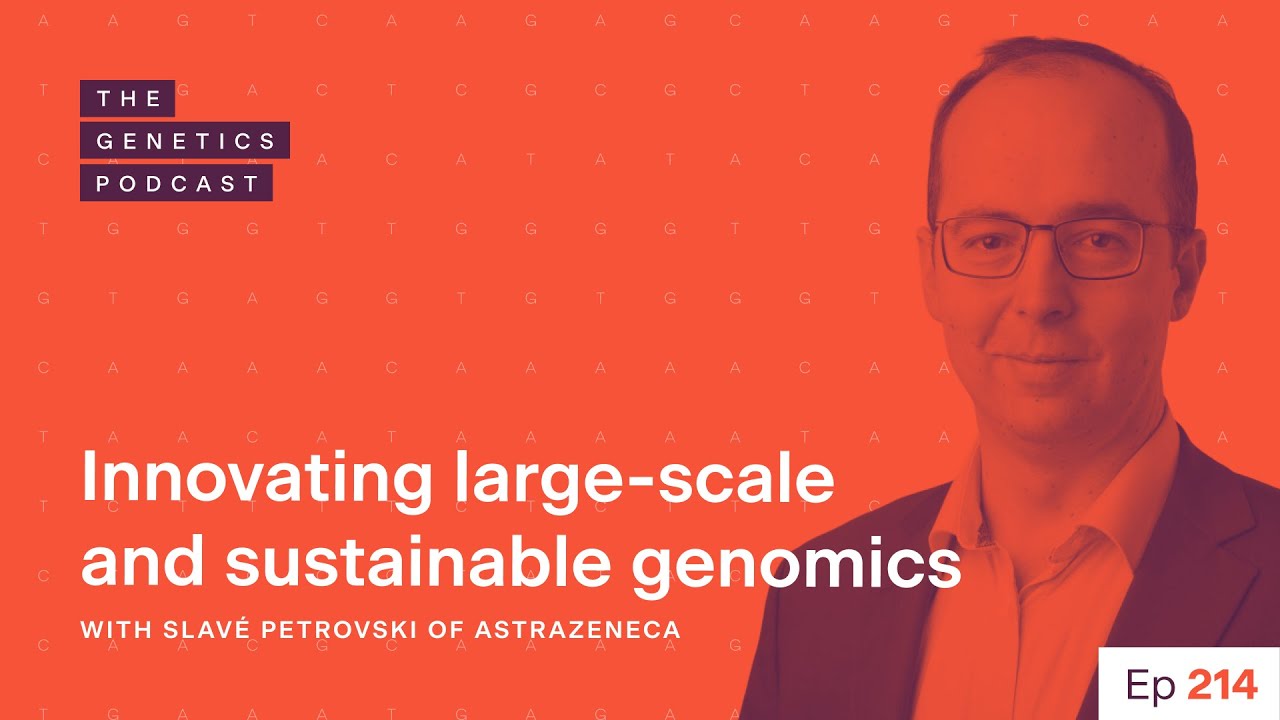
EP 214: Innovating large-scale and sustainable genomics with Slavé Petrovski of AstraZeneca
Keywords
Summary
148 words
Critical Evaluation
Value of the Information & Strength of the Argument
The episode provides valuable insights into the practical applications of large-scale genomics in the pharmaceutical industry. Petrovski’s arguments are well-supported by references to specific biobank data and examples like PCSK9 and TSLP, illustrating the power of genetic resilience in drug discovery. The discussion on MILTON demonstrates a clear rationale for integrating multi-omic data for early disease prediction, backed by results from UK Biobank. The emphasis on diversity in biobanks is well-argued, highlighting both ethical and scientific benefits. The sustainability angle is a novel contribution, though details on the ‘green’ algorithms are limited. Overall, the argumentation is coherent and credible, though it would benefit from more technical depth.
Scientific Rigor, Source Quality, Title Accuracy
The podcast maintains a high level of scientific rigor, with Petrovski referencing specific studies and datasets. The sources mentioned, such as UK Biobank and FinnGen, are well-known and reputable. The title accurately reflects the content, focusing on innovation and sustainability in genomics. The discussion is consistent with current scientific literature, and no major discrepancies are noted. The podcast does not include a formal citation list, but the references to published work and public datasets enhance credibility. The title-content alignment is strong, and the episode delivers on its promise.
210 words
Title / Content Match
The title accurately reflects the content, focusing on innovations in large-scale genomics and sustainability, as discussed with Slavé Petrovski.
Quality & Reliability
8/10
The discussion is led by an expert in genomics with substantial industry experience, referencing specific biobank collaborations and published findings. The claims are plausible and align with current scientific knowledge, though the podcast format limits the depth of methodological detail.
Chapters
- Intro to The Genetics Podcast
- Welcome to Slavé
- Slavé’s career path from business information systems to genomics
- How Slavé decided to move from academia to industry
- Scaling and diversifying biobank partnerships to unlock new genetic insights
- Translating biobank data into predictive and preventive medicine
- Discovering protective genetic variants through global biobank studies
- Leveraging population genetics to identify and validate protective drug targets
- Developing an AI tool (MILTON) for integrating multi-omic and clinical data for early disease prediction
- Redefining clinical trials in a presymptomatic and predictive medicine era
- AstraZeneca’s efforts to make large-scale genomics computing sustainable through green algorithm innovation
- AstraZeneca’s open science strategy and global impact of its shared genomics tools
- Fostering critical thinking and avoiding groupthink in large-scale genomics research
- Looking ahead to the next decade of genomics and precision healthcare
- Closing remarks
Cited Sources
- UK Biobank — Mentioned as a key resource for population genomics and the basis for MILTON.
- FinnGen — Cited as a biobank partnership providing diverse genetic data.
- AstraZeneca's open science portal — Referenced as a platform for sharing genomics tools and data.
Concurring Sources
- UK Biobank — Supports the scale and diversity claims made by Petrovski.
- FinnGen — Provides additional evidence for diverse population genomics.
Contribution & Novelties
This episode offers a unique perspective on how a major pharmaceutical company leverages population genomics for drug discovery, emphasizing the value of protective genetic variants and AI-based prediction. The discussion on sustainable computing in genomics is a forward-looking contribution.
Pour aller plus loin :
- PCSK9 and cardiovascular risk — Key example of genetic resilience informing drug development.
- UK Biobank — The primary dataset discussed for MILTON and other analyses.
- Green algorithms — Concept of reducing computational carbon footprint, relevant to the sustainability discussion.
83 words
Radar Profile
The radar profile shows high scores in quantity and quality of information, with a strong technical level and reliability. This indicates a well-balanced and informative episode, with particular strength in the depth of content and credibility of the speaker.
💬 Sur les 0 commentaires analysés, aucune tendance n'a pu être dégagée.