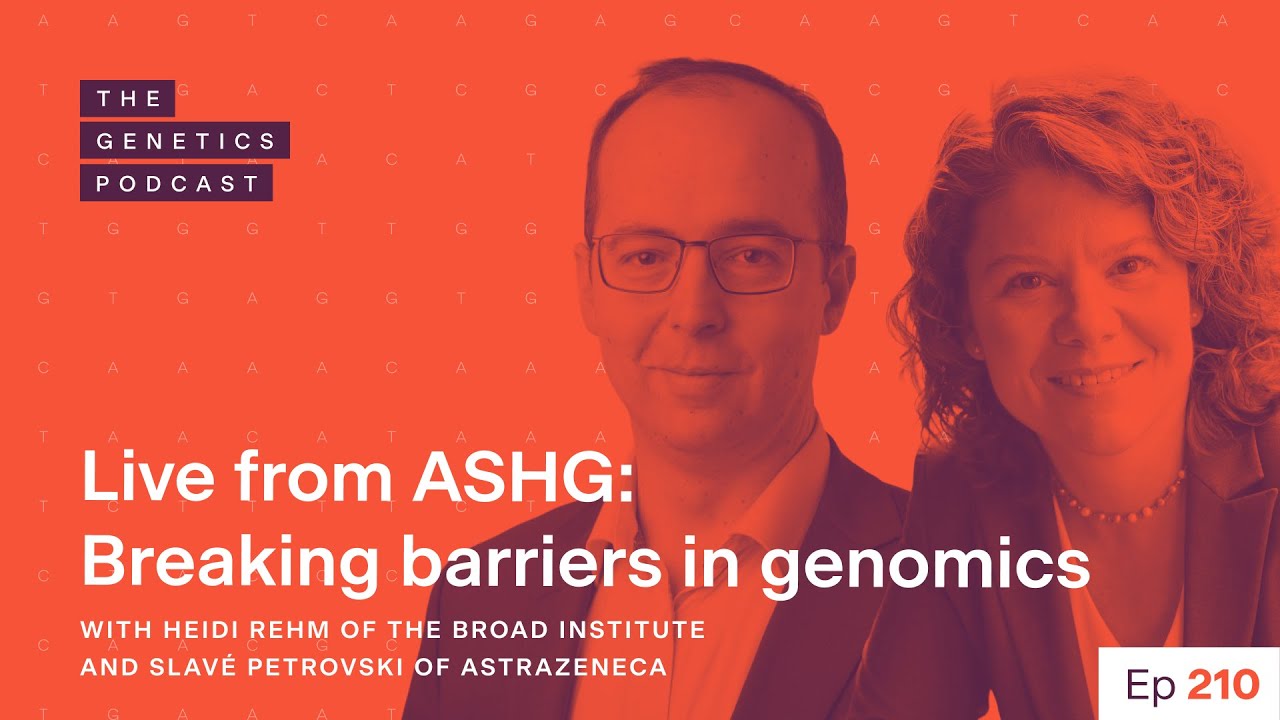
EP 210: Live from ASHG: Breaking barriers in genomics with Heidi Rehm and Slavé Petrovski
Keywords
Summary
159 words
Critical Evaluation
Value of the Information & Strength of the Argument
The value of the information is high, as it provides firsthand insights from two leaders in genomics on current trends and challenges. The argumentation is solid, grounded in their extensive experience and specific examples like the Guinness World Record and the Milton AI model. However, the discussion is largely anecdotal and lacks detailed evidence or citations, which limits its rigor. The speakers present compelling arguments for data sharing and the integration of genomics into healthcare, but they do not engage deeply with counterarguments or potential drawbacks.
Scientific Rigor, Source Quality, Title Accuracy
The scientific rigor is moderate; the speakers are credible experts, but they do not cite specific studies or data during the conversation. The only source provided in the description is a link to a Google Drive file, which is not directly referenced in the episode. The title accurately reflects the content, as it is a live podcast from ASHG discussing barriers in genomics. No comments were provided for analysis.
170 words
Title / Content Match
The title accurately reflects the content: a live podcast episode from ASHG discussing barriers in genomics with two prominent experts.
Quality & Reliability
8/10
The discussion features two leading experts in genomics with substantial experience in clinical and industry settings. They provide insights into current practices and future directions, but the content is largely anecdotal and based on personal experience rather than systematic evidence. No specific data or studies are cited in detail, limiting verifiability.
Chapters
- Intro to The Genetics Podcast
- Welcome to Heidi and Slavé
- Slavé’s role at AstraZeneca and work in genomics-driven R&D
- Heidi’s work at the Broad Institute bridging clinical genomics, rare disease research, and global data-sharing initiatives
- Heidi on breaking a Guinness world record for rapid neonatal ICU (NICU) genomics and the shift to open data sharing
- Slavé on how large-scale, multimodal human data is transforming genomics research
- Heidi’s initiatives to integrate genomics into routine care at hospitals and with primary care physicians
- Integrating genomics into clinical trials and healthcare, and enabling global discovery through AstraZeneca’s open data portal
- Breaking down legal and logistical barriers to genomic data sharing and centering the patient voice
- AstraZeneca’s large-scale plasma proteome study and machine learning models predicting disease onset years before diagnosis
- Emerging omics tools advancing rare disease diagnosis
- The value and pitfalls of AI in genomics today
- Advancing health equity in genomics through data sharing, diverse recruitment, and global collaboration
- Progress and challenges in next-generation genetic therapies
- Reflections and advice for the next generation entering genomics and data-driven medicine
- Audience Q&A
- Closing remarks
Cited Sources
- Show Notes — Link provided in the video description for show notes.
Concurring Sources
- Global Alliance for Genomics and Health — Heidi Rehm chairs this organization, which promotes data sharing standards.
- UK Biobank — Referenced as a model for large-scale data access and multi-omics.
Contribution & Novelties
The episode provides a unique perspective by bringing together a clinical genomics leader and an industry genomics leader, highlighting the importance of data sharing and collaboration across sectors. It offers insights into the latest initiatives, such as the Guinness World Record for rapid NICU sequencing and AstraZeneca’s open data portal. The discussion on AI in genomics and the potential of plasma proteomics for early disease detection adds valuable context.
Pour aller plus loin :
- Global Alliance for Genomics and Health — Heidi Rehm chairs this organization, which sets standards for data sharing.
- UK Biobank — Mentioned as a model for data access and large-scale multi-omics data.
- ClinVar — A public database for genomic variants, relevant to the discussion on data sharing.
121 words
Radar Profile
The radar profile shows high scores in quality and reliability, reflecting the expertise of the speakers, but lower scores in quantity and technical depth, as the discussion is more conversational and lacks detailed data. The overall balance suggests a valuable but not deeply technical episode.