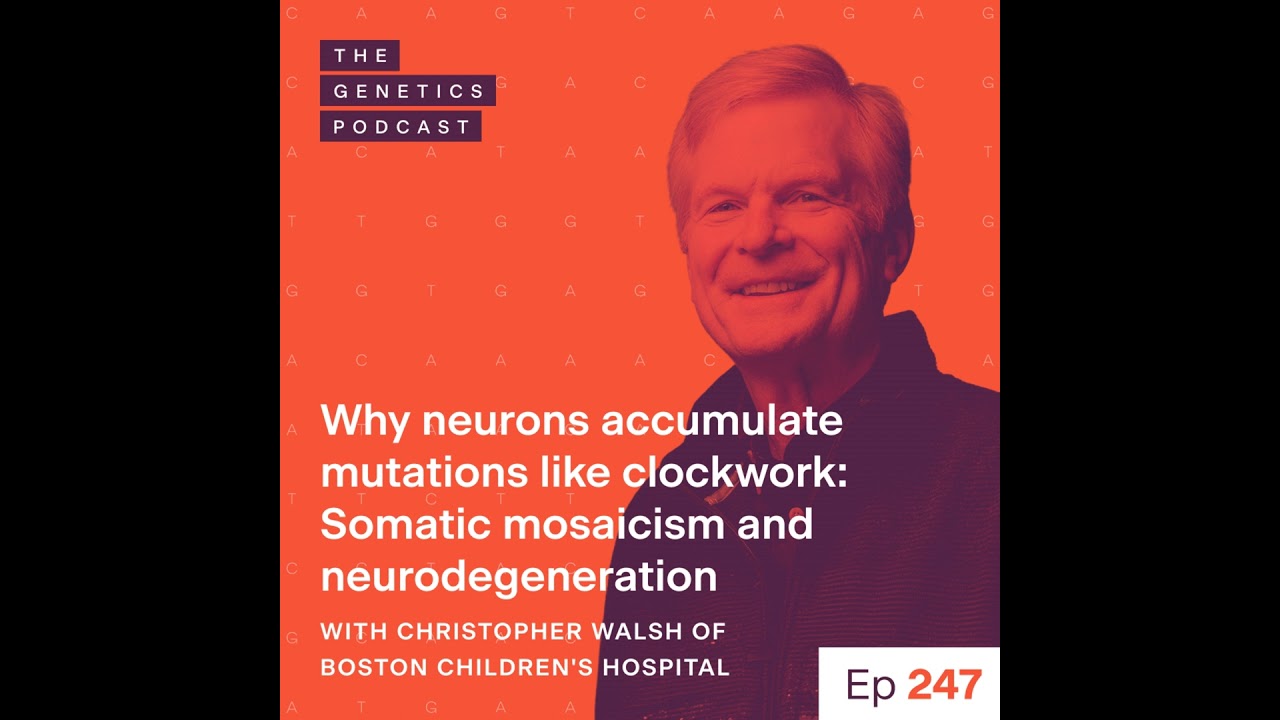
EP 247: Why neurons accumulate mutations like clockwork: Somatic mosaicism and neurodegeneration ...
Keywords
Summary
163 words
Critical Evaluation
Value of the Information & Strength of the Argument
The episode provides valuable insights into cutting-edge research on somatic mosaicism in the brain. Dr. Walsh presents compelling evidence and hypotheses, such as the inverted relationship between germline and somatic mutations in Alzheimer’s disease, and the identification of a common DNA damage signature across neurodegenerative conditions. His arguments are well-structured, drawing on his own research and that of others. He acknowledges uncertainties and alternative explanations, which strengthens the credibility of the discussion. The value lies in the expert perspective and the synthesis of complex findings into accessible concepts.
Scientific Rigor, Source Quality, Title Accuracy
The scientific rigor is high, as Dr. Walsh is a leading expert and the discussion is based on peer-reviewed research, though specific citations are not provided in the episode. The quality of sources is implied through his authority and the mention of publications in journals like Cell. The title accurately reflects the content, focusing on neuronal mutation accumulation and neurodegeneration. The episode does not include any advertising segments.
171 words
Title / Content Match
The title accurately reflects the main topic of the episode, focusing on somatic mosaicism and neurodegeneration.
Quality & Reliability
8/10
The content is an expert interview with a leading researcher in the field, discussing recent findings and hypotheses. The information is presented with appropriate nuance and references to ongoing research, but lacks detailed citations to specific publications.
Chapters
- Intro to The Genetics Podcast
- Welcome to Chris
- Chris’ path from neurobiology to human genetics
- How collaboration and mentorship have shaped Chris' career
- Somatic mosaicism and genetic mutations in the brain, from epilepsy to Alzheimer’s
- Repurposing cancer therapeutics and targeting DNA damage as new approaches to Alzheimer's
- A shared pattern of DNA damage across neurodegenerative diseases and the mechanism behind it
- How healthy neurons accumulate mutations with age and what that means for the brain
- How mutation rates and patterns vary across cell types
- How genome quality control and synaptic pruning may explain both brain development and neurodegeneration
- Why some people maintain a healthy brain into old age
- Chris’ advice for early-career scientists on pursuing goals
- Closing remarks
Cited Sources
- Walsh Lab — The lab's website, mentioned in the description, provides further information on Dr. Walsh's research.
Concurring Sources
- Walsh Lab — The lab's website, mentioned in the description, provides further information on Dr. Walsh's research.
Contribution & Novelties
This episode offers an original synthesis of recent findings on somatic mosaicism in the brain, particularly the discovery of cancer driver mutations in microglia in Alzheimer’s disease and a shared DNA damage signature across neurodegenerative diseases. It provides a novel perspective on the role of somatic mutations in neurodegeneration, suggesting potential therapeutic targets.
Pour aller plus loin :
- Somatic mosaicism — Provides background on the concept of somatic mosaicism.
- Alzheimer’s disease — Overview of the disease, relevant to the discussion.
- Single-cell sequencing — Technique used to study somatic mutations in individual cells.
92 words
Radar Profile
The radar profile shows high scores in information quantity, quality, and reliability, with a slightly lower technical level, indicating a content that is rich in expert insights but accessible to a broader audience.