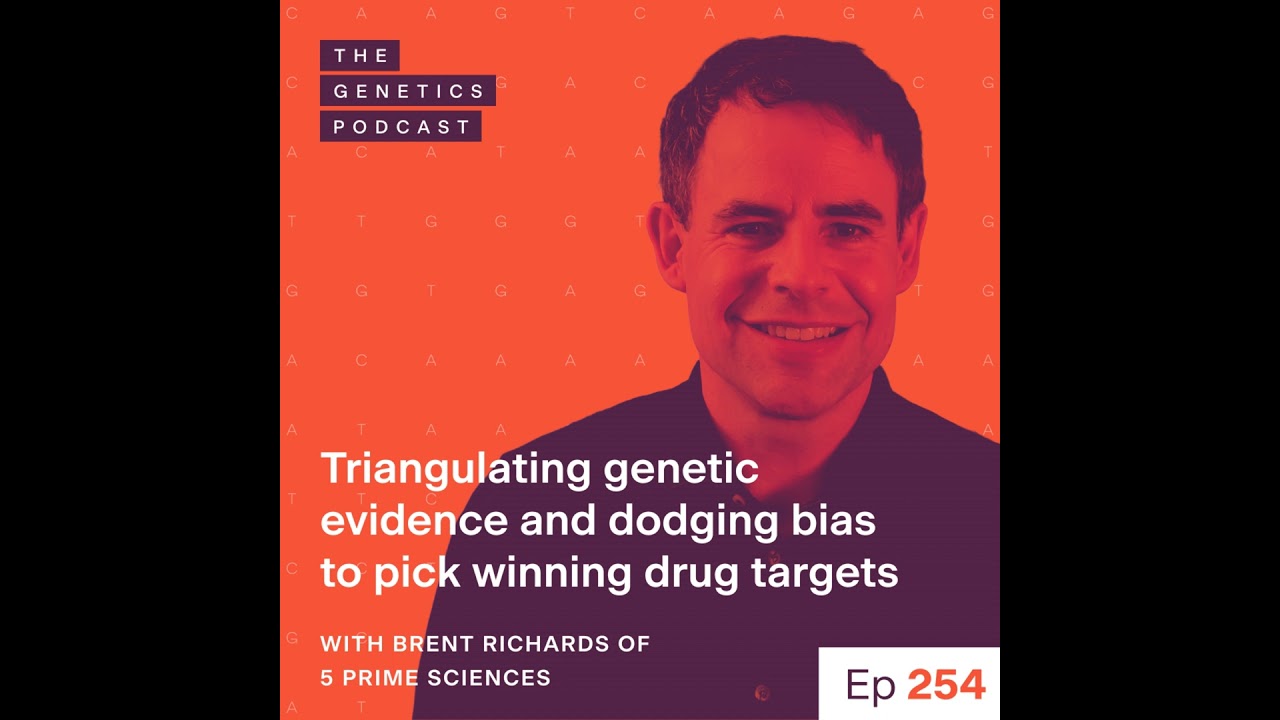
EP 254: Triangulating genetic evidence and dodging bias to pick winning drug targets with Brent R...
Keywords
Summary
187 words
Critical Evaluation
Value of the Information & Strength of the Argument
The episode provides valuable insights into the practical application of human genetics in drug discovery, going beyond simple checkboxes. Richards argues convincingly for the need to triangulate evidence from multiple sources to mitigate biases. He uses concrete examples, such as the Zeus IL-6 trial and the SGLT2 target, to illustrate complex concepts. The discussion on herd psychology and the null effect of literature volume on approval success is particularly thought-provoking, challenging common industry practices. The argumentation is solid, though it relies on anecdotal evidence and personal experience rather than systematic data presentation.
Scientific Rigor, Source Quality, Title Accuracy
The scientific rigor is high, with Richards referencing specific studies and methods, such as Mendelian randomization and GWAS. He mentions a paper on MS susceptibility vs. progression and a Regeneron paper on triglycerides, but does not provide full citations. The description includes a link to 5 Prime Sciences’ symposium, which is a relevant source for further information. The title accurately reflects the content, focusing on triangulating genetic evidence and avoiding bias. The podcast is well-structured with clear chapters, and the discussion stays on topic.
191 words
Title / Content Match
The title accurately reflects the core themes of the episode: triangulating genetic evidence and avoiding bias in drug target selection.
Quality & Reliability
8/10
The discussion is led by a professor of human genetics with extensive experience in both academia and industry. The content is well-structured, nuanced, and grounded in scientific reasoning, though it relies on anecdotal evidence and personal experience rather than systematic review.
Chapters
- Intro to The Genetics Podcast
- Welcome to Brent
- How company size shapes access to genetic drug discovery tools
- Brent's framework for triangulating different types of genetic evidence
- The herd psychology behind which drug targets get funded
- Potential reasons the Zeus IL-6 trial failed despite strong genetic evidence
- What a gold standard genetic evidence package actually looks like
- Closing the data gap with diverse genomes and systematic pipelines
- The diabetes patient story that drove Brent into drug development and balancing academia with industry
- Why obesity went from a drug development graveyard to its biggest frontier
- How collider bias can distort genetic risk trial results
- Where to go deeper on advanced genetic drug discovery concepts
- Closing remarks
Cited Sources
- 5 Prime Sciences Symposium 2026 — Mentioned as a resource for learning more about translating human genetic evidence into drug development decisions.
Concurring Sources
- 5 Prime Sciences Symposium 2026 — The symposium is directly relevant to the topics discussed, featuring experts on translating genetic evidence into drug development decisions.
Contribution & Novelties
The episode offers a nuanced perspective on the use of genetic evidence in drug discovery, emphasizing the importance of triangulation and the pitfalls of over-reliance on single methods. It provides a candid look at industry psychology and the challenges of novel target validation. The discussion on collider bias in clinical trials is particularly insightful.
Pour aller plus loin :
- Mendelian randomization — A key method discussed for causal inference in drug target validation.
- Genome-wide association study — The foundational tool for identifying genetic variants associated with diseases.
- Collider bias — A bias that can distort results in genetically stratified trials, as discussed in the episode.
- Zeus trial IL-6 — The clinical trial mentioned as a failure despite strong genetic evidence.
120 words
Radar Profile
The radar profile shows high scores across all dimensions, indicating a well-rounded and reliable episode. The high 'quantite_information' and 'qualite_information' scores reflect the depth and quality of the discussion, while the 'niveau_technique' score indicates a technical but accessible level. The 'fiabilite_globale' score is high, supported by the speaker's expertise and the use of concrete examples.