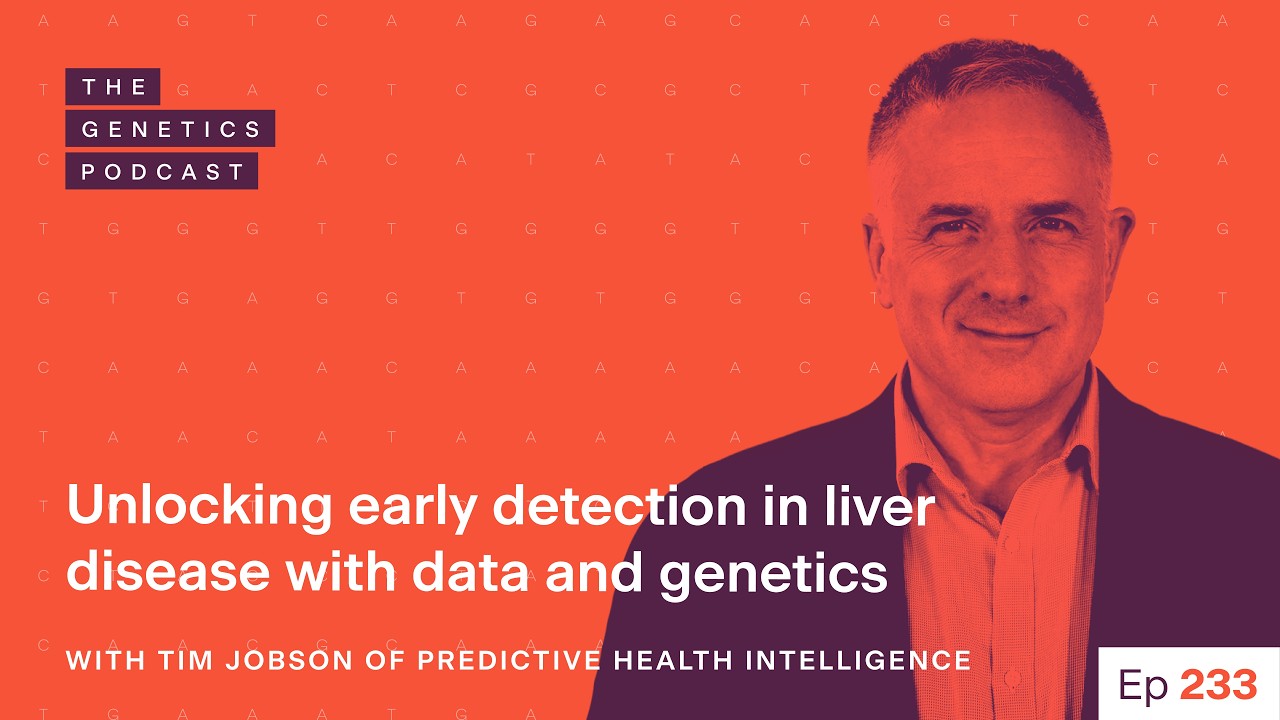
EP 233: Unlocking early detection in liver disease with data and genetics with Tim Jobson of PHI
Keywords
Summary
172 words
Critical Evaluation
Value of the Information & Strength of the Argument
The episode provides valuable insights into the clinical challenges of liver disease and the potential of data-driven approaches. Dr. Jobson’s arguments are well-supported by his clinical experience and specific examples, such as the Somerset Liver Improvement Program and the LiveWell study. He effectively explains the importance of early detection and the limitations of current tools. The discussion is balanced, acknowledging both the potential and the challenges of integrating genetics into routine practice.
Scientific Rigor, Source Quality, Title Accuracy
The scientific rigor is high, with references to specific studies (e.g., ESSENCE) and real-world programs. The sources are credible, though not all are explicitly cited with URLs. The title accurately reflects the content, focusing on early detection in liver disease using data and genetics. The episode is well-structured and stays on topic.
139 words
Title / Content Match
The title accurately reflects the content, focusing on early detection in liver disease using data and genetics, with Tim Jobson as the guest.
Quality & Reliability
8/10
The discussion is grounded in clinical practice and real-world data, with references to specific studies (e.g., ESSENCE) and programs (Somerset Liver Improvement Program). The expert's insights are credible, but the episode is primarily an opinion/interview rather than a systematic review.
Chapters
- Intro to The Genetics Podcast
- Welcome to Tim
- The rise of metabolic liver disease and worsening mortality trends
- Motivation and goals behind the Somerset Liver Improvement Program to address late diagnosis
- Where genetics is already used in liver disease and where it’s still emerging
- Current tools for staging liver disease and the challenge of predicting progression at scale
- How the LiveWell study could improve risk prediction and reshape trial recruitment in liver disease
- Applying longitudinal risk detection beyond liver disease to cardiometabolic and other chronic conditions
- Using subtle changes in routine blood tests to identify cancer risk earlier
- Using existing health data to drive earlier intervention and maximize patient impact
- Expanding beyond liver disease, scaling early detection, and advancing precision medicine
- Closing remarks
Cited Sources
- ESSENCE study — Mentioned as a major study published 18 months ago showing that semaglutide treatment can cause regression of fibrosis in MASLD.
Concurring Sources
- Somerset Liver Improvement Program — Described in the episode as a program using routine blood tests to identify patients at risk of late-stage liver disease.
Contribution & Novelties
The episode offers a unique perspective on combining routine clinical data with genetics for early detection of liver disease. It highlights the LiveWell study as an innovative approach to risk stratification and trial recruitment. The discussion on using existing health data to identify at-risk individuals is particularly insightful.
Pour aller plus loin :
- MASLD (Metabolic dysfunction-associated steatotic liver disease) — Overview of the disease and its nomenclature.
- Hereditary haemochromatosis — Genetic condition discussed as an example of routine genetic testing.
- Alpha-1 antitrypsin deficiency — Genetic condition mentioned as emerging in clinical practice.
92 words
Radar Profile
The radar profile shows high scores in information quantity, quality, and reliability, with a slightly lower technical level. This indicates a well-balanced, informative discussion that is accessible to a broad audience while maintaining scientific credibility.