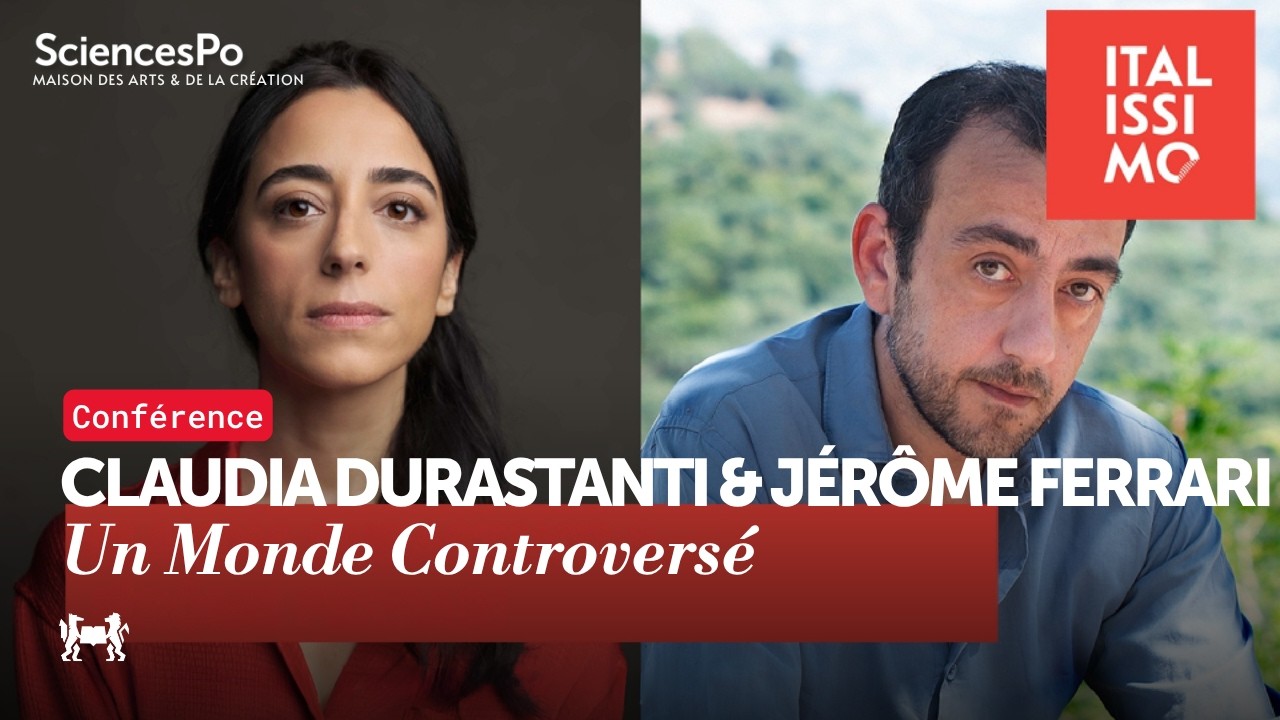
ITALISSIMO : Claudia Durastanti et Jérôme Ferrari - Un Monde Controversé
Keywords
Summary
135 words
Critical Evaluation
Value of the Information & Strength of the Argument
The value of the information lies in the authors’ insightful perspectives on modernity, drawing from their literary works and personal experiences. Durastanti’s notion of ‘parallel modernity’ offers a nuanced view of Southern Italy’s relationship with progress, challenging simplistic narratives of backwardness. Ferrari’s observations on Abu Dhabi highlight the paradoxes of globalization, where physical proximity does not translate into social connection. The argumentation is solid, grounded in literary examples and historical context, though it remains subjective and interpretive. The authors engage in a thoughtful dialogue, building on each other’s ideas, which enriches the discussion.
Scientific Rigor, Source Quality, Title Accuracy
The discussion is rigorous in its intellectual approach, with both authors referencing their own works and literary traditions. The sources cited are primarily literary and historical, such as the works of Carlo Levi and Ernesto De Martino, which are relevant to the themes discussed. The title accurately reflects the content, as the dialogue indeed explores a ‘controversial world’ through the lens of modernity. The institutional backing of Sciences Po adds credibility, but the lack of empirical data or external sources limits the scientific rigor. The title is appropriate and does not mislead.
200 words
Title / Content Match
The title accurately reflects the content: a dialogue between Claudia Durastanti and Jérôme Ferrari on contested themes of modernity, identity, and society.
Quality & Reliability
7/10
The discussion is a literary debate featuring two established authors, moderated by a professor emeritus. The content is high-quality and intellectually stimulating, but it is primarily opinion and literary analysis rather than empirical research. The institutional setting (Sciences Po) adds credibility, but the subjective nature of literary interpretation limits the reliability score.
Key Moments
Markers derived by PSI from the transcript: the creator did not define chapters.
- Opening remarks by the event organizer and introduction of the festival.
- Speech by the Italian embassy representative highlighting the importance of literature.
- Fabio Gambaro introduces the festival program and thanks partners.
- Marc Lazar introduces the authors and sets the stage for the debate.
- Claudia Durastanti discusses 'parallel modernity' in Southern Italy.
- Jérôme Ferrari talks about the paradoxes of globalization in Abu Dhabi.
- The authors engage in a dialogue about identity and history.
- Discussion on the role of literature in understanding contemporary society.
- Q&A session with the audience begins.
Cited Sources
- Sciences Po official website — Mentioned in the description as the institution hosting the event.
- Sciences Po newsletter — Provided in the description for further information.
- Sciences Po podcast — Mentioned in the description as a related resource.
Concurring Sources
- Sciences Po official website — The institution hosting the event, adding credibility to the discussion.
External References
Contribution & Novelties
The video provides a unique literary dialogue that bridges Italian and French perspectives on modernity, offering fresh insights into the cultural and social implications of modernization. The authors’ personal experiences and literary works enrich the discussion, making it a valuable resource for understanding contemporary societal issues.
Pour aller plus loin :
- Carlo Levi - Wikipedia — Levi’s work ‘Christ Stopped at Eboli’ is referenced in the discussion as a key interpretation of Southern Italy.
- Ernesto De Martino - Wikipedia — De Martino’s anthropological studies are mentioned as influential in understanding the region.
- Jérôme Ferrari - Wikipedia — Provides background on the author and his works, including the Goncourt Prize-winning novel.
110 words
Radar Profile
The radar profile shows high scores in information quality and reliability, reflecting the intellectual depth and institutional backing. The lower score in technical level indicates that the content is accessible to a general audience, focusing on literary and cultural analysis rather than specialized technical knowledge.