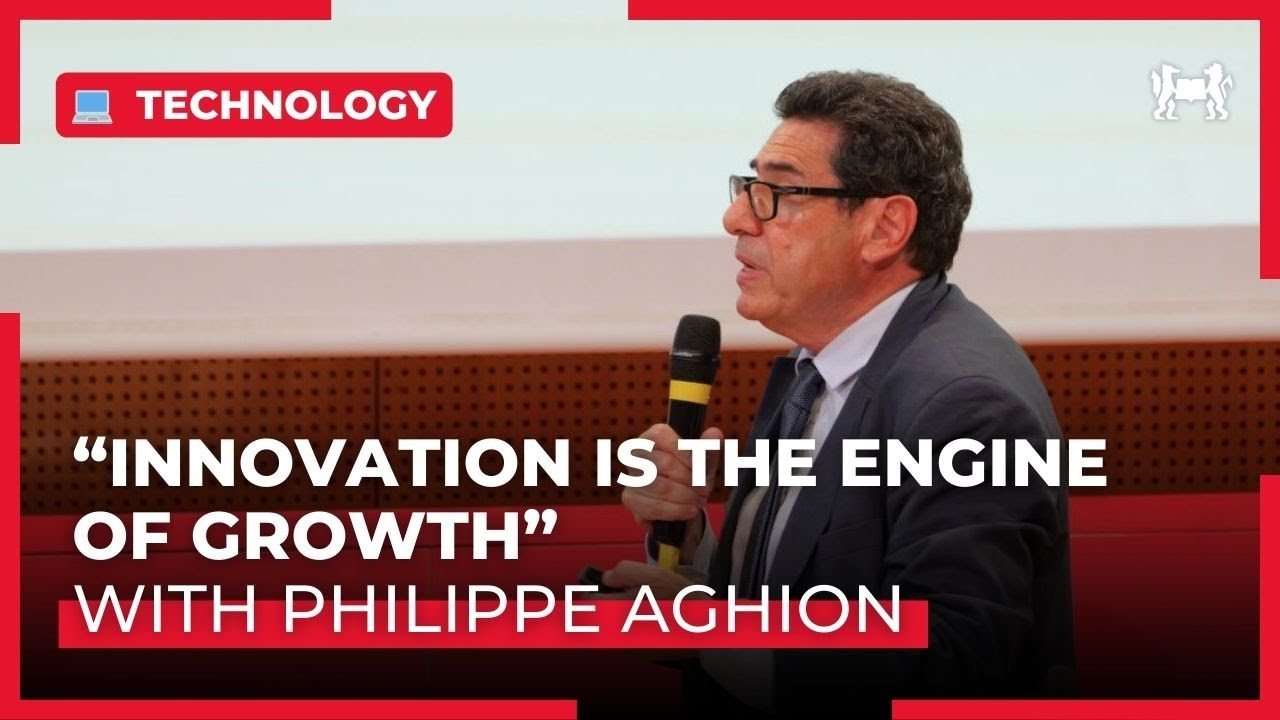
Philippe Aghion - Inaugural lecture of the School of Management & Impact of Sciences Po
Keywords
Summary
232 words
Critical Evaluation
Value of the Information & Strength of the Argument
The lecture provides high-value insights into the mechanisms of economic growth, grounded in rigorous academic research. Aghion’s argumentation is solid, based on empirical evidence and theoretical models. He effectively uses examples and data to support his claims, such as the relationship between firm turnover and growth, and the impact of competition on innovation. The presentation is persuasive and well-structured, making complex economic concepts accessible without oversimplifying.
75 words
Title / Content Match
The title accurately reflects the content, which focuses on the concept of creative destruction and its implications for growth, innovation, and policy.
Quality & Reliability
9/10
The lecture is delivered by a renowned economist, Philippe Aghion, Professor at the Collège de France, and co-author of the Schumpeterian growth paradigm. The content is grounded in decades of academic research and empirical evidence, with references to specific studies and data. The presentation is rigorous, well-structured, and avoids unsubstantiated claims.
Chapters
- Introduction
- Schumpeter and creative destruction
- Innovation vs. capital accumulation
- Contradictions of capitalism & inequality
- The digital revolution & “superstar firms”
- Competition and innovation policy
- Innovation, social mobility & lobbying
- Flexicurity, education & European models
- AI, automation & jobs
- Social protection & inclusive growth
- Europe, industrial policy & climate
- Q&A
Cited Sources
- Sciences Po App - App Store — Link to the Sciences Po app on the App Store, mentioned in the video description.
- Sciences Po LinkedIn — Link to Sciences Po's LinkedIn page, mentioned in the video description.
- Sciences Po Snapchat — Link to Sciences Po's Snapchat, mentioned in the video description.
Concurring Sources
- Aghion, P., & Howitt, P. (1992). A Model of Growth Through Creative Destruction — Foundational paper introducing the Schumpeterian growth model.
- Aghion, P., Bloom, N., Blundell, R., Griffith, R., & Howitt, P. (2005). Competition and Innovation: An Inverted-U Relationship — Empirical study on the relationship between competition and innovation, supporting the lecture's claims.
Contribution & Novelties
The lecture offers a comprehensive overview of the Schumpeterian growth paradigm and its applications to contemporary economic issues. It provides a novel perspective on secular stagnation, attributing it to the rise of superstar firms and inadequate competition policy rather than a lack of ideas. The discussion on the middle-income trap and the role of conglomerates in hindering innovation is particularly insightful. The lecture also addresses the future of capitalism and the potential of AI, offering a balanced view of its benefits and risks.
Pour aller plus loin :
- Schumpeterian growth paradigm — Provides a detailed explanation of the paradigm and its evolution.
- Creative destruction — Explores the concept introduced by Schumpeter and its relevance in economics.
- Total factor productivity — Discusses the measure of productivity used in the lecture to analyze growth trends.
133 words
Radar Profile
The radar profile shows high scores in all dimensions, indicating a well-rounded and reliable presentation. The lecture excels in information quality and reliability, with strong technical depth and substantial content.