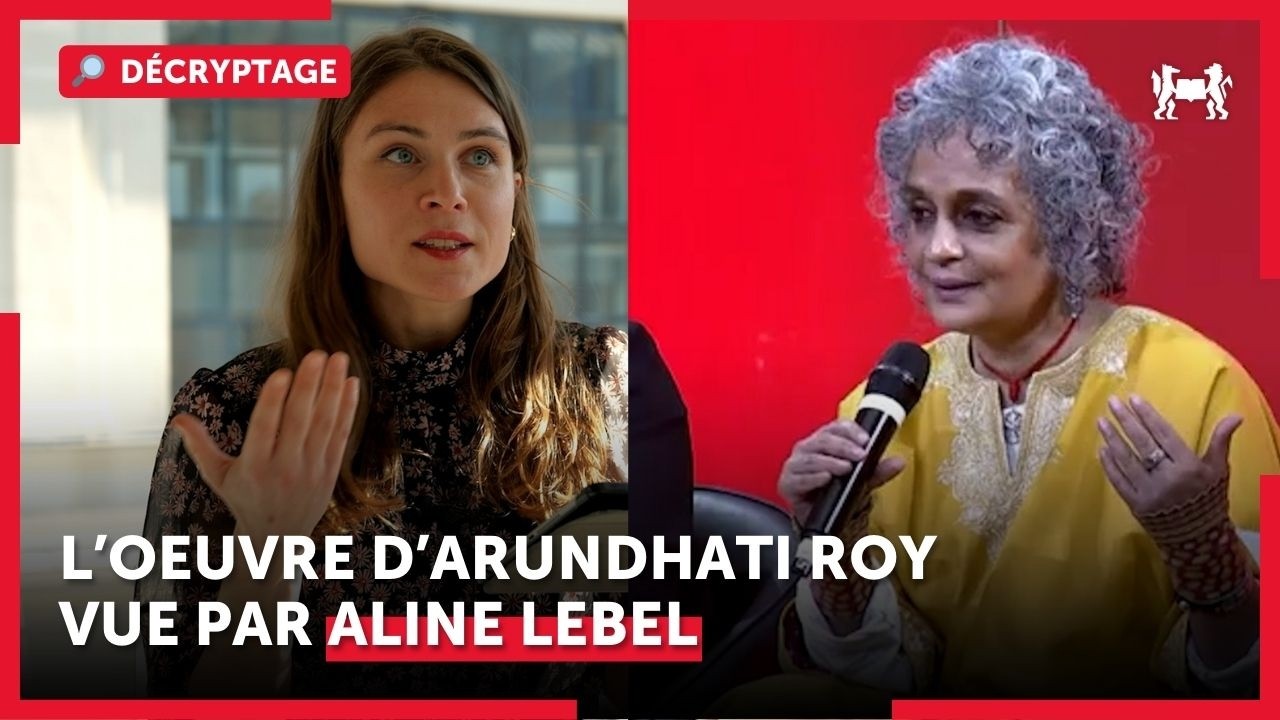
« Trouver la note juste » : Arundhati Roy entre littérature et politique
Keywords
Summary
153 words
Critical Evaluation
Value of the Information & Strength of the Argument
The video offers valuable insights into Arundhati Roy’s literary and political thought, particularly her concept of the porous boundary between fiction and non-fiction. Lebel’s argumentation is solid, supported by references to Roy’s works and her political activism. She effectively explains how Roy’s fiction can illuminate her autobiographical writings, and vice versa, and discusses the reception of Roy’s work in different cultural contexts. The analysis is nuanced, acknowledging both the strengths and criticisms of Roy’s positions, such as the debate over her role as a spokesperson for marginalized communities. The argumentation is coherent and well-structured, though it is an interpretive commentary rather than an empirical study.
Scientific Rigor, Source Quality, Title Accuracy
The video demonstrates scientific rigor through the expertise of the commentator and the use of specific examples from Roy’s works and public engagements. The quality of sources is high, as it draws on Roy’s published texts and known events, though it does not cite external academic sources. The title accurately reflects the content, focusing on the intersection of literature and politics in Roy’s work. The commentary is well-informed and provides a balanced perspective, though it is not a peer-reviewed analysis. The video’s production by Sciences Po adds credibility, and the discussion is relevant to contemporary debates on literature, politics, and feminism.
221 words
Title / Content Match
The title accurately reflects the content, which explores the intersection of literature and politics in Arundhati Roy's work, focusing on her conference at Sciences Po.
Quality & Reliability
8/10
The video features an academic expert (Aline Lebel, PhD candidate in comparative literature) providing a nuanced analysis of Arundhati Roy's work, grounded in literary theory and political context. The discussion is well-structured and references specific works and events, though it is an interpretive commentary rather than a peer-reviewed study.
Key Moments
Markers derived by PSI from the transcript: the creator did not define chapters.
- Introduction to the conference and the theme of porous boundary between fiction and non-fiction.
- Discussion on Roy's shift from fiction to non-fiction and back, and her theoretical essays.
- Analysis of Roy's autobiographical work and how fiction illuminates her life, particularly the figure of her mother.
- Exploration of the reception of 'The God of Small Things' in Kerala, including the scandal over caste relations.
- Discussion of Roy's political engagement, her advocacy for marginalized communities, and her criticism of the Indian government.
- Examination of Roy's role as a spokesperson and the criticisms she has faced, including her preface to 'Annihilation of Caste'.
Cited Sources
- Sciences Po official website — Mentioned as the institution hosting the conference and providing the video.
- Sciences Po YouTube channel — The video is published on this channel.
- Sciences Po on LinkedIn — LinkedIn page of Sciences Po, mentioned in the description.
- Sciences Po podcast — Podcast link provided in the description.
Concurring Sources
- Arundhati Roy - Wikipedia — Provides background on Roy's life and works, consistent with the video's discussion.
- The God of Small Things - Wikipedia — Offers information on the novel's plot and reception, aligning with the video's analysis.
External References
Contribution & Novelties
The video provides a scholarly analysis of Arundhati Roy’s work, focusing on the interplay between fiction and non-fiction, and the political dimensions of her writing. It offers a fresh perspective on Roy’s autobiographical text ‘Mother Mary Comes to Me’ and how it relates to her earlier novel ‘The God of Small Things’. The commentary highlights the complexities of Roy’s role as a public intellectual and the criticisms she has faced, providing a balanced view. This contributes to a deeper understanding of Roy’s literary and political significance.
Pour aller plus loin :
- Arundhati Roy - Wikipedia — Overview of her life and works.
- The God of Small Things - Wikipedia — Details on her debut novel.
- Annihilation of Caste - Wikipedia — The text she prefaced, by B.R. Ambedkar.
128 words
Radar Profile
The radar profile shows high scores in quality of information and reliability, reflecting the expert commentary and academic context. The quantity of information is moderate, and the technical level is moderate, indicating a balance between depth and accessibility. The overall profile suggests a well-rounded, credible analysis.
💬 Sur les 0 commentaires analysés, aucune tendance n'est disponible.