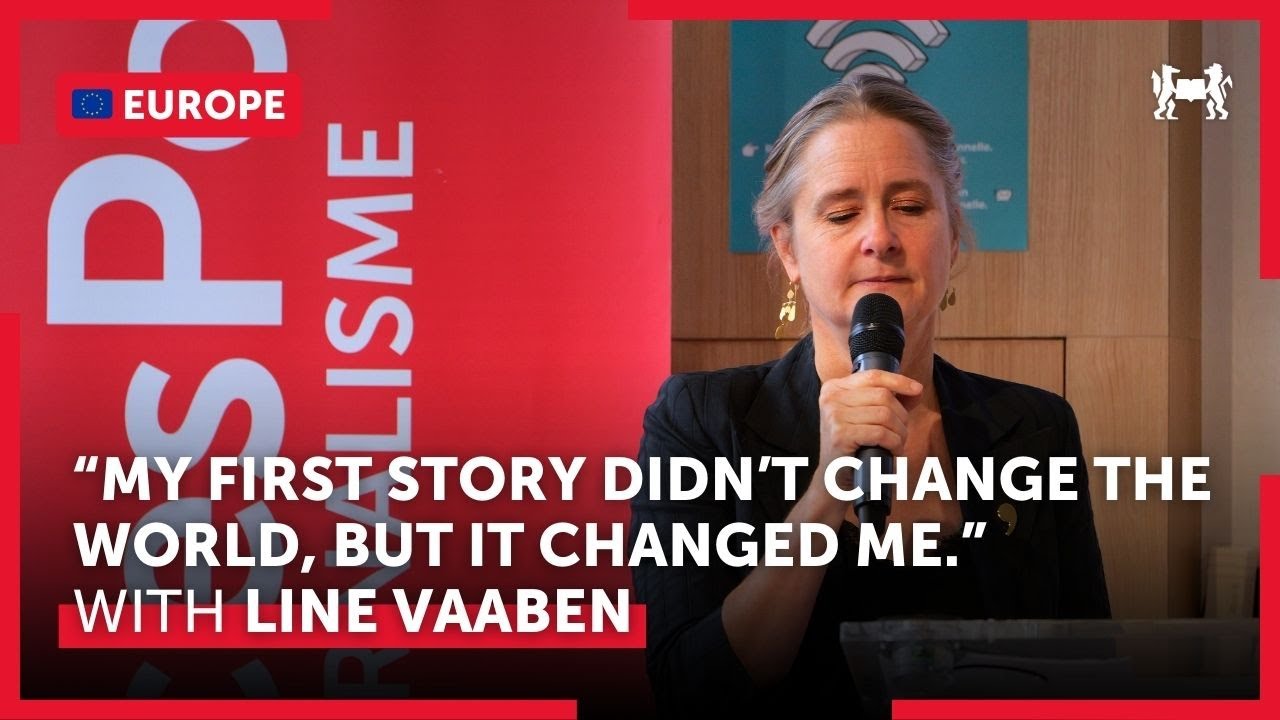
Line Vaaben - Inaugural lesson of the Journalism School of Sciences Po
Keywords
Summary
188 words
Critical Evaluation
Value of the Information & Strength of the Argument
The talk provides valuable insights into the practice of narrative journalism, particularly from a European perspective. Vaaben’s argument that human-centered storytelling is both meaningful and commercially successful is supported by anecdotal evidence and references to metrics from Politiken. She effectively argues that in the age of AI, journalists must differentiate themselves by emphasizing their human qualities. The argumentation is coherent and persuasive, though it relies heavily on personal experience and selected examples rather than systematic research.
Scientific Rigor, Source Quality, Title Accuracy
Vaaben demonstrates a good understanding of the theoretical foundations of storytelling, referencing Aristotle and Kierkegaard, and she mentions a specific study on the Agta people. However, she does not provide detailed citations or links to these sources. The title accurately reflects the content, and the talk is well-structured. The speaker’s credibility as a journalist and author adds to the overall reliability, but the lack of verifiable sources limits the scientific rigor.
162 words
Title / Content Match
The title accurately reflects the content: an inaugural lecture on European narrative journalism.
Quality & Reliability
8/10
The speaker is an experienced journalist and author, and the talk is based on personal experience and research, but it is primarily an opinion piece with limited verifiable data.
Chapters
- Introduction by Sciences Po
- First reporting assignment: oil spill and dying seagulls
- “The story didn’t change the world, but it changed me.”
- The human touch as the journalist’s greatest lesson
- Existential editor at Politiken
- From DNA tests to palliative care: narrative journalism in practice
- Why these stories matter: metrics and audience engagement
- Journalism in the age of AI: “Leave your human scent in the story”
- Ancient roots: from Aristotle to Kierkegaard
- A European art of storytelling vs. the American model
- Narrative journalism thriving across Europe
- Solidarity and democracy at the core of European narratives
- Advice to young journalists: “Go out, face the world, and report with all your senses.”
- Q&A: trust, ethics, immersion, and audience engagement
Cited Sources
- Sciences Po LinkedIn — Official LinkedIn page of Sciences Po, mentioned in the video description.
- Sciences Po Snapchat — Official Snapchat page of Sciences Po, mentioned in the video description.
- Sciences Po App on Apple App Store — Link to the Sciences Po app on the Apple App Store, mentioned in the video description.
Concurring Sources
- Narrative journalism - Wikipedia — Supports the definition and practice of narrative journalism as described by the speaker.
- Existentialism - Wikipedia — Provides philosophical background relevant to the speaker's concept of existential journalism.
Contribution & Novelties
The talk offers a unique perspective on European narrative journalism, emphasizing existential themes and a human-centered approach. It provides practical examples from the speaker’s career and argues for the value of such journalism in engaging audiences. The speaker also introduces the concept of ’existential editor’ and discusses the importance of leaving a ‘human scent’ in stories to differentiate from AI-generated content.
Pour aller plus loin :
- Narrative journalism - Wikipedia — Provides an overview of narrative journalism and its characteristics.
- Existentialism - Wikipedia — Explains the philosophical movement that influences the speaker’s approach.
- Aristotle’s Poetics - Wikipedia — Discusses the foundational text on storytelling structure.
- Søren Kierkegaard - Wikipedia — Information on the Danish philosopher mentioned in the talk.
- The Agta people - Wikipedia — Background on the indigenous group referenced in the study about storytellers.
136 words
Radar Profile
The radar profile shows high scores in quality of information and global reliability, reflecting the speaker's expertise and coherent argumentation. The lower score in technical level indicates that the talk is accessible to a general audience, while the moderate quantity of information suggests a focused but not exhaustive treatment of the topic.