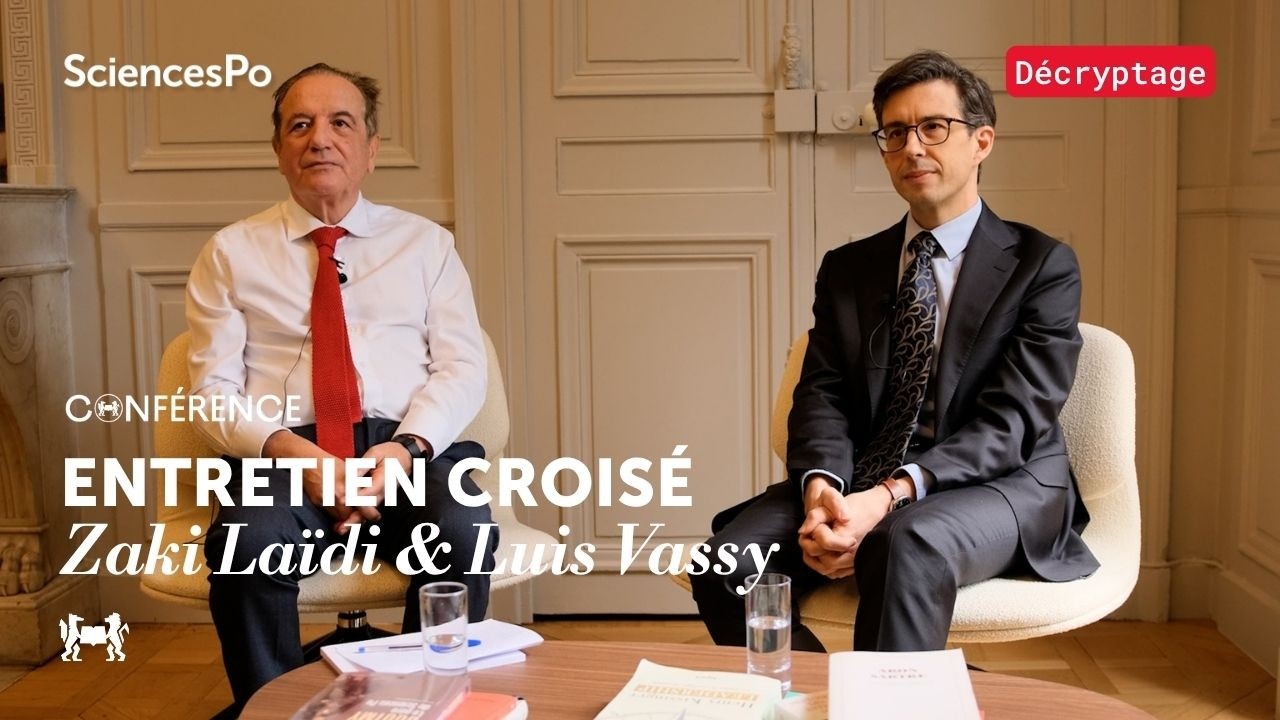
Zaki Laïdi & Luis Vassy : comment naviguer au coeur de la compétition sino-américaine ?
Keywords
Summary
120 words
Critical Evaluation
Value of the Information & Strength of the Argument
The value of the information lies in the introduction of the ‘hedgers’ concept, which provides a fresh perspective on international relations beyond traditional bipolar or multipolar frameworks. The argumentation is solid, based on empirical observations from interviews with diplomats and quantitative data on economic and military capabilities. The speakers effectively illustrate their points with concrete examples, such as Brazil’s resistance to US pressure and the differentiated voting patterns on Ukraine resolutions. The discussion is coherent and well-reasoned, though it remains an expert opinion rather than a systematic study.
Scientific Rigor, Source Quality, Title Accuracy
The scientific rigor is high, as both speakers are established experts in international relations. They reference their book ‘The Hedgers’ (2026) and draw on their professional experiences. The sources cited are primarily their own work and general knowledge, with no external references provided in the video description. The title accurately reflects the content, focusing on the Sino-American competition and hedging strategies. The discussion is well-structured and grounded in empirical evidence, though it lacks formal citations.
178 words
Title / Content Match
The title accurately reflects the content, which focuses on navigating the Sino-American competition through the concept of hedging.
Quality & Reliability
8/10
The discussion features two recognized experts in international relations, providing a nuanced analysis of hedging strategies. The arguments are well-structured and grounded in empirical observations, though the format is an interview rather than a peer-reviewed study.
Key Moments
Markers derived by PSI from the transcript: the creator did not define chapters.
- Introduction of the concept of 'hedgers' and its origins in finance.
- Discussion on how the war in Ukraine revealed the reluctance of many states to fully align with the West.
- Analysis of the hybrid system where bipolarity and multipolarity coexist.
- Examples of hedging behavior, including Brazil's resistance to US pressure and Gulf states' gains from the war.
- Discussion on the decline of European influence and the need for new diplomatic strategies.
- Addressing the 'double standard' accusation and its asymmetric application to Europe.
- Implications for diplomacy and the role of values in international relations.
Cited Sources
- The Hedgers (2026) — Book co-authored by Zaki Laïdi, referenced as the basis for the discussion.
- Sciences Po official website — Institution hosting the interview and providing context.
Concurring Sources
- Hedging in International Relations — Provides academic background on the concept of hedging.
External References
Contribution & Novelties
The video introduces the concept of ‘hedgers’ as a distinct category of states that strategically navigate between great powers, offering a nuanced understanding of contemporary geopolitics. It challenges the simplistic bipolar/multipolar dichotomy and proposes a hybrid system. The discussion provides fresh insights into the behavior of non-aligned states and the implications for European diplomacy.
Pour aller plus loin :
- Hedging (international relations) — Overview of the concept in IR literature.
- Non-Aligned Movement — Historical context of non-alignment.
- Brazil’s foreign policy — Example of a hedger state.
86 words
Radar Profile
The radar profile shows high scores in information quantity, quality, and reliability, with a slightly lower technical level, reflecting the expert but accessible nature of the discussion.