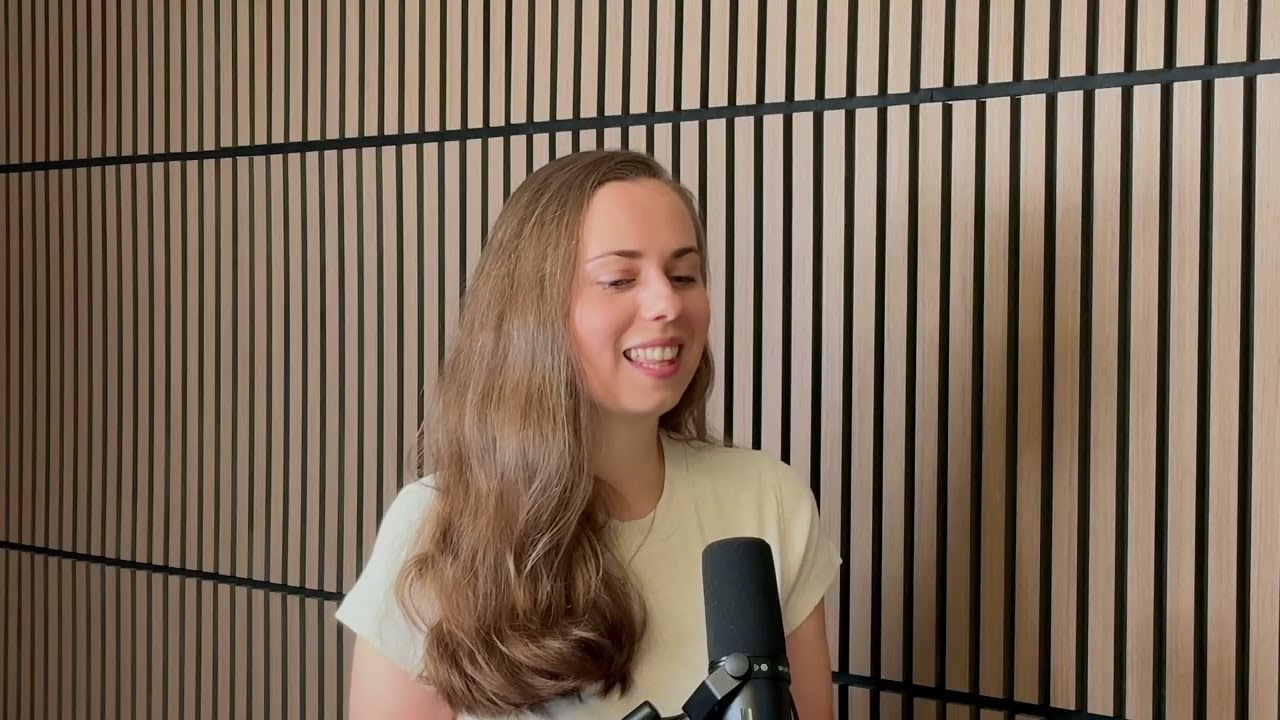
The Story Behind “DNA Today” Podcast
Keywords
Summary
175 words
Critical Evaluation
Value of the Information & Strength of the Argument
The value of this episode lies in its insider perspective on the development of a science communication project. Kira provides concrete examples of challenges and milestones, such as the initial lack of sponsors and the transition to weekly episodes. The argumentation is anecdotal but coherent, illustrating the growth of the podcast through specific episodes and guest interactions. The discussion on science communication offers practical insights, such as the use of analogies and knowing your audience, which are valuable for aspiring communicators. However, the episode lacks critical analysis of the podcast’s impact or limitations, and the narrative is largely celebratory.
Scientific Rigor, Source Quality, Title Accuracy
The episode does not cite external sources, but it references specific episodes and guests, which can be verified through the podcast’s archive. The title accurately reflects the content. The discussion is based on personal experience, which is appropriate for a retrospective but limits its scientific rigor. No comments were provided for analysis.
166 words
Title / Content Match
The title accurately reflects the content, which is a narrative about the podcast's origins and evolution.
Quality & Reliability
7/10
The episode is a retrospective interview with the podcast host, providing firsthand accounts of the show's history. While subjective, it includes specific details and references to episodes and guests, lending credibility. No external sources are cited, but the content is consistent with the podcast's public record.
Key Moments
Markers derived by PSI from the transcript: the creator did not define chapters.
- Kira explains the origin of DNA Today as a high school independent study project.
- Discussion about the podcast's name change from 'DNA Podcast' to 'DNA Today'.
- Kira describes the evolution from audio to video and the transition to weekly episodes.
- The first sponsorship at episode 100 and the growth of sponsorships over time.
- Kira reflects on key interviews, including Ellen Matloff and Eric Green.
- Discussion on what makes a strong science communicator, using analogies and audience awareness.
- Kira talks about the creation of Gene Pool Media and its mission to support science podcasts.
- Rapid-fire 'DNA Today Superlatives' segment with favorite and impactful episodes.
Cited Sources
- DNA Today Podcast — The podcast's official website, mentioned as a resource for episode 400.
Concurring Sources
- DNA Today Podcast — The podcast's official website, which lists episodes and guests mentioned in the video.
Contribution & Novelties
This episode provides a unique retrospective on the evolution of a science communication podcast, offering insights into the practical challenges and strategies of building a long-running show. It highlights the importance of adaptability, audience engagement, and collaboration. The discussion on science communication techniques, such as using analogies and understanding the audience, is valuable for practitioners.
Pour aller plus loin :
- Science Communication — Overview of the field and its challenges.
- Genetic Counseling — The profession that many of the podcast’s guests and the host are trained in.
- Podcast — Background on the medium and its evolution.
96 words
Radar Profile
The radar profile shows moderate scores across all dimensions, with a slightly higher score in fiabilite_globale due to the firsthand nature of the content. The low niveau_technique reflects the non-technical, retrospective nature of the episode.