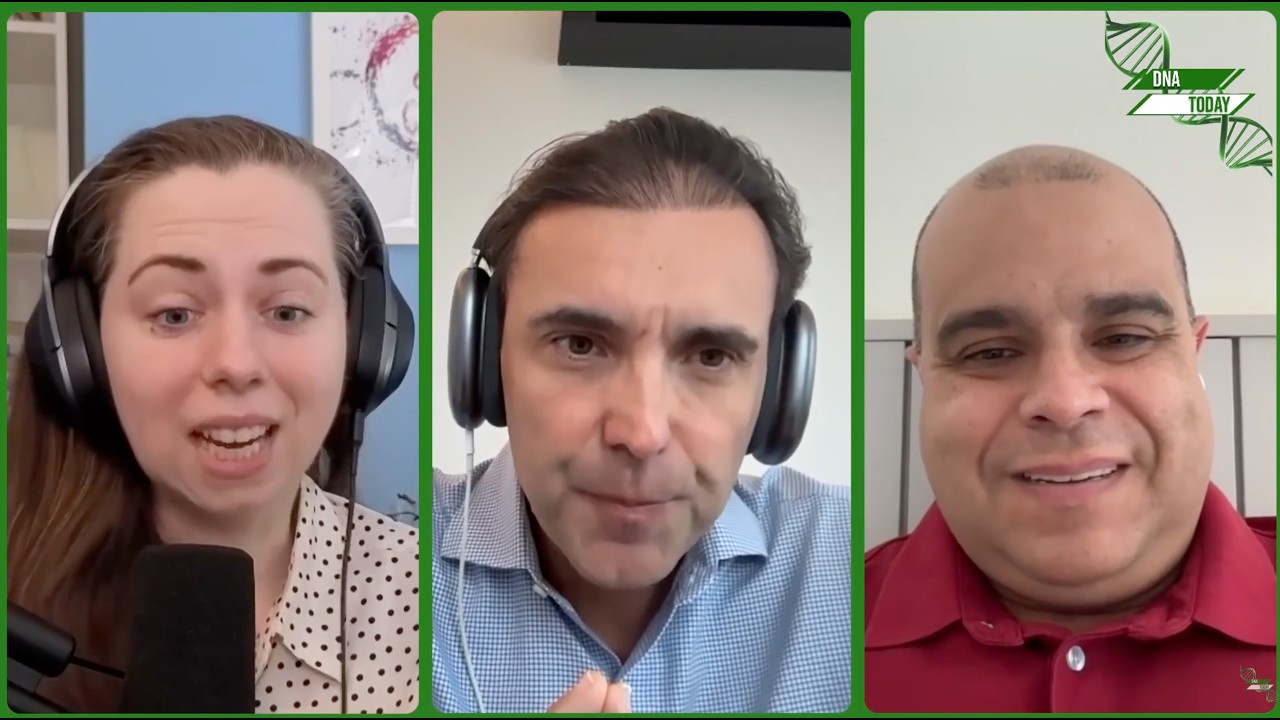
Inside the Brazilian Rare Genomes Project
Keywords
Summary
190 words
Critical Evaluation
Value of the Information & Strength of the Argument
The episode provides valuable insights into the implementation of large-scale genomic sequencing in a middle-income country, offering a unique perspective on the challenges and successes of the Brazilian Rare Genomes Project. The discussion is grounded in the speakers’ direct experience, lending credibility to their claims. Dr. Bosco presents quantitative data on the increased diagnostic yield of WGS compared to exome sequencing, which strengthens the argument for adopting WGS as a first-line test. Victor Camillo’s perspective on technology partnerships adds a practical dimension, emphasizing the importance of cost reduction and end-to-end solutions. The argumentation is coherent and well-structured, with each speaker contributing complementary viewpoints. However, the discussion is largely anecdotal and lacks detailed methodological transparency, such as specific study designs or statistical analyses, which would further substantiate the claims. Overall, the information is valuable for understanding the practical aspects of implementing genomics in resource-limited settings, but it would benefit from more rigorous scientific evidence.
Scientific Rigor, Source Quality, Title Accuracy
The scientific rigor of the episode is moderate. The speakers are credible experts with direct involvement in the projects discussed, which lends authority to their statements. However, the episode does not provide detailed references to specific studies or publications, and the claims about diagnostic yields are presented without full methodological context. The title accurately reflects the content, focusing on the Brazilian Rare Genomes Project. The description provides relevant resources and links to related episodes, which helps contextualize the discussion. The episode does not include any public comments, so no analysis of audience reception is possible.
263 words
Title / Content Match
The title accurately reflects the content, which focuses on the Brazilian Rare Genomes Project and its impact on rare disease diagnosis.
Quality & Reliability
7/10
The episode features expert guests with direct involvement in a national genomics initiative, providing credible firsthand insights. However, the discussion is largely anecdotal and lacks detailed methodological transparency or independent verification.
Key Moments
Markers derived by PSI from the transcript: the creator did not define chapters.
- Introduction to the episode and guests, setting the context for rare disease month.
- Discussion on the global impact of rare diseases and the role of genomics.
- Dr. Bosco explains the origins of the Brazilian Rare Genomes Project and its goals.
- Comparison of genetic testing access in Brazil versus the United States.
- Victor Camillo discusses technology partnerships and their role in reducing disparities.
- Explanation of why whole genome sequencing is preferred over exome sequencing.
- Dr. Bosco presents data on increased diagnostic yield with WGS.
- Discussion on the collaboration between clinicians, researchers, government, and industry.
- Dr. Bosco talks about founding NeoGenomica and its focus on WGS.
- Closing thoughts on the future of rare disease care in Brazil and the importance of awareness.
Cited Sources
- DNA Today Episode 383 — Referenced as the source for relevant resources and related episodes.
Concurring Sources
- Genomics England — Mentioned as a similar national genomics initiative in the UK.
Contribution & Novelties
The episode provides a unique insider perspective on the implementation of a national rare disease genomics initiative in Brazil, highlighting the practical challenges and successes. It offers concrete data on the increased diagnostic yield of whole genome sequencing compared to exome sequencing, which is valuable for clinicians and policymakers. The discussion on the role of public-private partnerships and the transition from research to government-funded implementation provides a model for other middle-income countries.
Pour aller plus loin :
- Brazilian Rare Genomes Project — Official project website with information on the initiative.
- Whole genome sequencing — Overview of the technology and its applications.
- Rare disease — General information on rare diseases and their prevalence.
112 words
Radar Profile
The radar profile shows high scores in information quantity and quality, reflecting the depth of the discussion and the expertise of the guests. The technical level is moderate, making the content accessible to a broad audience. The global reliability is strong due to the firsthand experience of the speakers, though the lack of detailed references slightly reduces the score.