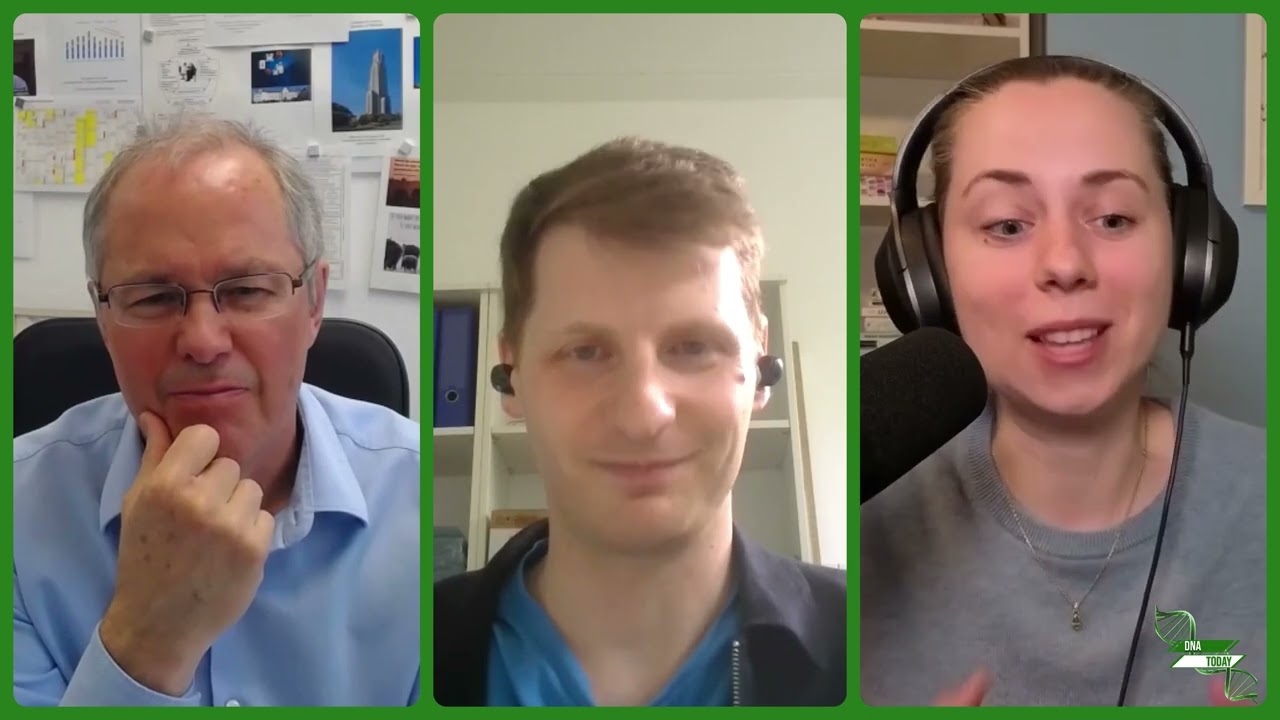
Mapping Melanoma: How Spatial Biology Is Advancing Cancer Research
Keywords
Summary
134 words
Critical Evaluation
Value of the Information & Strength of the Argument
The value of the information lies in its expert insights into the current state and future directions of spatial biology in cancer research. The guests provide a clear rationale for using spatial technologies to study the tumor microenvironment, particularly the role of endothelial cells and immune cell interactions. The argumentation is coherent, with each expert contributing complementary perspectives: Tüting emphasizes the importance of spatial context and cell identity, Braun discusses the clinical and pathological relevance, and Khoo explains the technological capabilities. However, the discussion is largely descriptive and lacks detailed experimental data or specific results, limiting its depth. The promotional aspect from MGI is present but does not overshadow the scientific content.
Scientific Rigor, Source Quality, Title Accuracy
The scientific rigor is moderate. The guests are credible experts, and the discussion references specific technologies (Stereo-seq, single-cell RNA sequencing) and a research project. However, no specific peer-reviewed papers or external sources are cited during the conversation. The title accurately reflects the content, focusing on spatial biology in melanoma research. The description provides additional resources, but these are not directly cited in the episode. Overall, the information is reliable but not extensively sourced.
200 words
Title / Content Match
The title accurately reflects the content, which focuses on spatial biology in melanoma research.
Quality & Reliability
7/10
The discussion features credible experts in dermatology and spatial biology, and references specific technologies and a research project. However, it is primarily an interview with limited detailed data or peer-reviewed citations, and the promotional aspect from MGI is present.
Key Moments
Markers derived by PSI from the transcript: the creator did not define chapters.
- Introduction to the episode and guests.
- Thomas Tüting discusses the evolution of melanoma immunotherapy and the focus on treatment resistance.
- Andreas Braun explains the project's focus on the tumor microenvironment and endothelial cells.
- Discussion on the value of the Magdeburg biobank and its clinical annotation.
- Andreas Braun describes the integration of spatial transcriptomics and single-cell data.
- Thomas Tüting elaborates on the importance of spatial context and cell identity.
- Jia Hui Khoo explains MGI's DCSP approach and the role of Stereo-seq.
- Discussion on integrating proteomics and the challenges of data analysis.
- Thomas Tüting discusses the dynamics of cancer and the limitations of snapshot biopsies.
- Andreas Braun talks about bridging high-resolution research to clinical practice.
Cited Sources
- DNA Today Episode 395 — Referenced as the source for resources related to this episode.
Concurring Sources
- Spatial transcriptomics — Provides background on the technology discussed in the episode.
- Single-cell sequencing — Relevant to the single-cell RNA sequencing methods mentioned.
Contribution & Novelties
The episode provides an accessible overview of how spatial biology is being applied to melanoma research, highlighting the importance of spatial context in understanding tumor biology. It offers insights from experts directly involved in a specific research project, which adds a practical perspective. The discussion of MGI’s DCSP approach and Stereo-seq technology provides up-to-date information on available tools.
Pour aller plus loin :
- Spatial transcriptomics — Overview of the technology and its applications.
- Single-cell sequencing — Background on single-cell RNA sequencing methods.
- Tumor microenvironment — Key concepts related to the tumor’s cellular environment.
- Immunotherapy — General information on cancer immunotherapy approaches.
101 words
Radar Profile
The radar profile shows relatively high scores in information quantity and quality, with a moderate technical level. The reliability is also high, reflecting the expert guests and clear explanations. The overall balance suggests a solid educational resource for those interested in cancer research technologies.
💬 No comments were provided for analysis.