Bonn Climate Dialogue
Keywords
Summary
190 words
Critical Evaluation
Value of the Information & Strength of the Argument
The video provides valuable insights into the practical implications of budget tariff incentives for solar energy in Bangladesh. The argumentation is solid, based on expert knowledge and specific examples from neighboring countries. The guest effectively argues that the current incentives are too restrictive and may hinder the achievement of renewable energy targets. He supports his points with data on import dependency, solar potential, and cost comparisons. The discussion is balanced, acknowledging the positive aspects of the budget while highlighting critical gaps. The argumentation is persuasive and grounded in real-world experience, though it is primarily from an industry perspective.
Scientific Rigor, Source Quality, Title Accuracy
The scientific rigor is moderate; the video relies on expert opinion and policy analysis rather than peer-reviewed research. The sources cited are primarily from the guest’s experience and references to programs like India’s PM Surya Ghar Yojana and Pakistan’s solar initiatives, but no specific URLs or documents are provided. The title ‘Bonn Climate Dialogue’ is somewhat misleading as the content focuses on Bangladesh’s domestic solar policy, not the international climate conference. However, it may be part of a series on climate-related dialogues. The adequacy between title and content is partial, which slightly affects the overall score.
209 words
Title / Content Match
The title 'Bonn Climate Dialogue' is somewhat misleading as the content focuses on Bangladesh's solar policy and budget incentives, not specifically on the Bonn Climate Dialogue conference. However, it may refer to a broader climate dialogue context.
Quality & Reliability
7/10
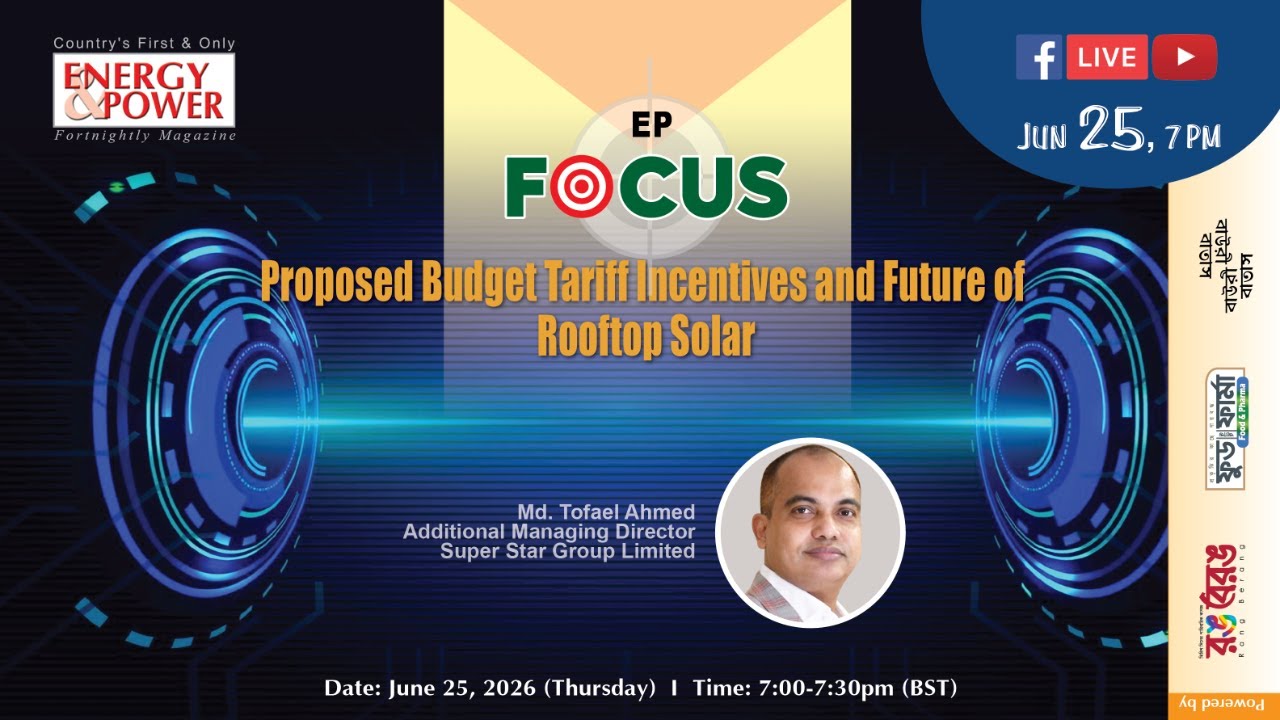
The video features an expert interview with Md. Tofael Ahmed, Additional Managing Director of Super Star Group Limited, discussing budget tariff incentives for solar energy in Bangladesh. The information is based on expert opinion and current policy analysis, but lacks peer-reviewed sources and is limited to a single perspective. The discussion is coherent and grounded in specific data (e.g., import dependency, solar potential), but the reliability is moderate due to potential bias and lack of independent verification.
Key Moments
Markers derived by PSI from the transcript: the creator did not define chapters.
- Introduction to the topic and guest.
- Guest evaluates the budget incentives for solar.
- Discussion on Pakistan's solar success and comparison.
- Concerns about the exclusion of CAPEX projects and households.
- Potential of solar irrigation pumps and battery storage.
- Financing challenges and need for green finance.
- Call for policy revisions before budget passage.
Cited Sources
- PM Surya Ghar Yojana — Mentioned as an Indian subsidy program for rooftop solar.
- Pakistan solar import data — Referenced in discussion on Pakistan's solar adoption.
Concurring Sources
- Bangladesh Power Development Board — Official data on power generation and demand.
Contribution & Novelties
The video provides a unique perspective on the practical challenges of implementing solar tariff incentives in Bangladesh, highlighting the gap between policy design and on-ground impact. It offers specific data on the potential of solar irrigation and battery storage, and compares with regional examples. The discussion on financing models and the need for inclusive incentives adds value to the policy debate.
Pour aller plus loin :
- Bangladesh Sustainable and Renewable Energy Authority — Official authority for renewable energy in Bangladesh.
- PM Surya Ghar Yojana — Official Indian scheme for rooftop solar subsidies.
- Net Metering in Bangladesh — Policy framework for net metering, relevant to the discussion.
106 words
Radar Profile
The radar profile shows moderate scores across all dimensions, with a slight peak in information quantity and quality, indicating a content-rich discussion but with limited technical depth and reliability due to reliance on expert opinion.
💬 No comments were provided for analysis.