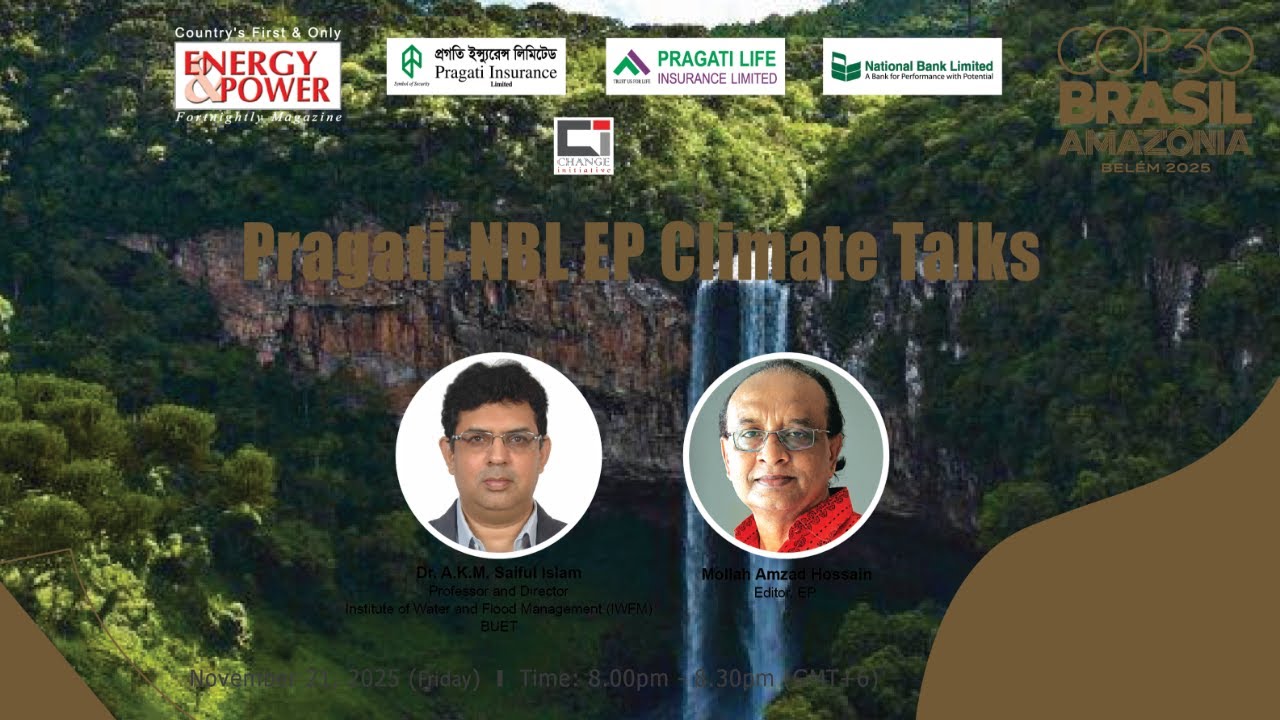
Pragati-NBL EP Climate Talks | Dr. A.K.M. Saiful Islam | COP30
Keywords
Summary
134 words
Critical Evaluation
Value of the Information & Strength of the Argument
The video provides valuable insights into the complexities of COP30 negotiations, particularly from the perspective of a vulnerable developing country. Dr. Islam effectively argues that scientific evidence is often diluted by political and economic interests, citing the example of the shift from ‘phase-out’ to ’transitioning away’ from fossil fuels. He also highlights the disparity between developed and developing countries’ priorities, and the challenges of securing adequate climate finance. The argumentation is coherent and well-structured, though it relies heavily on personal opinion and experience rather than presenting new data or studies.
Scientific Rigor, Source Quality, Title Accuracy
The discussion is scientifically informed, referencing IPCC reports and the Paris Agreement, but lacks specific citations or links to sources. The title accurately reflects the content, which is an expert interview about COP30. The video does not include any promotional segments. No comments were provided for analysis.
152 words
Title / Content Match
The title accurately reflects the content: a climate talk episode with Dr. A.K.M. Saiful Islam discussing COP30.
Quality & Reliability
7/10
The video features an expert in water and flood management providing informed commentary on COP30 negotiations. The discussion is grounded in scientific consensus (IPCC) and current political dynamics, but lacks detailed citations and is primarily an opinion-based analysis.
Key Moments
Markers derived by PSI from the transcript: the creator did not define chapters.
- Introduction to the show and guest Dr. A.K.M. Saiful Islam.
- Discussion on how politics overrides science in COP negotiations.
- Analysis of the Belém Package and its six major targets.
- Challenges of fossil fuel lobbyists and the divide among developing countries.
- Discussion on climate finance targets, including the 1.3 trillion per year goal.
- Bangladesh's NDC 3.0 and the need for external support.
- Loss and damage fund status and the Tropical Forests Forever Fund.
- Closing remarks on innovative financing and national preparedness.
Cited Sources
- IPCC Reports — Referenced as the best available science for climate action.
- Paris Agreement — Mentioned as the legal framework for climate commitments.
- NDC 3.0 of Bangladesh — Discussed in the context of Bangladesh's emission reduction targets.
Concurring Sources
- IPCC Sixth Assessment Report — Supports the scientific consensus on the need for rapid emission reductions.
Dissenting Sources
- OPEC statements on fossil fuel phase-out — OPEC countries have opposed a complete phase-out, aligning with the video's mention of resistance from oil-rich nations.
Contribution & Novelties
The video offers a unique perspective from a Bangladeshi expert on the COP30 negotiations, highlighting the specific challenges faced by vulnerable countries. It provides a clear analysis of the political dynamics and the gap between scientific recommendations and political commitments. The discussion on the need for grant-based climate finance and the importance of national preparedness adds value to the understanding of climate governance.
Pour aller plus loin :
- COP30 Official Website — For official updates and documents from COP30.
- IPCC Sixth Assessment Report — The latest scientific assessment on climate change.
- Loss and Damage Fund — Information on the fund’s status and governance.
103 words
Radar Profile
The radar profile shows a balanced performance across all dimensions, with slightly higher scores in information quantity and reliability, reflecting the expert's informed commentary. The lower score in technical level suggests the content is accessible to a general audience.