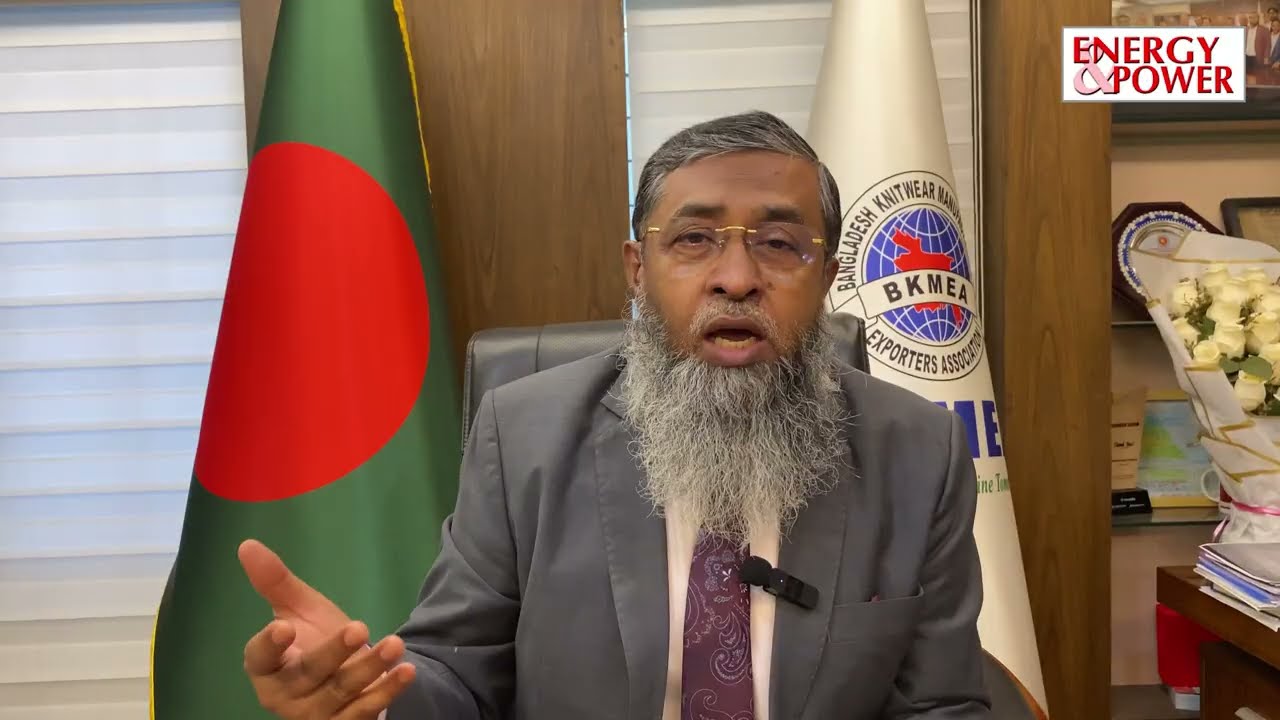
Fuel Crisis Cuts Textile and Garment Orders by One-Third | Mohammad Hatem | EP
Keywords
Summary
156 words
Critical Evaluation
Value of the Information & Strength of the Argument
The interview provides valuable insights into the real-world consequences of energy shortages on a major export industry. The interviewee’s arguments are coherent and grounded in his long experience, but they are largely anecdotal and lack quantitative evidence. He effectively connects the energy crisis to broader economic issues, such as investment and employment, but his proposed solutions are general and not backed by detailed feasibility analysis.
Scientific Rigor, Source Quality, Title Accuracy
The interview is based on the personal testimony of an industry leader, with no external sources cited. The title accurately reflects the content, but the lack of verifiable data and references limits the scientific rigor. The discussion is focused on the economic and policy aspects, with no mention of technical details or independent studies.
134 words
Title / Content Match
The title accurately reflects the core topic: the fuel crisis leading to a one-third reduction in orders, as stated by the interviewee.
Quality & Reliability
6/10
The interview presents a firsthand account from an industry leader, but lacks verifiable data or external references, and the claims are not independently corroborated.
Key Moments
Markers derived by PSI from the transcript: the creator did not define chapters.
- Introduction of the topic: impact of fuel crisis on textile and garment sector.
- Mohammad Hatem describes the crisis as the worst in his 40-year career.
- Discussion on production disruptions, delayed exports, and financial losses.
- Buyer confidence drops, leading to one-third reduction in orders.
- Proposed alternatives: LPG, coal, jute boilers, and need for government policy.
- Impact on investment and job creation; energy security as prerequisite.
- Call for policy support, including loan repayment suspension.
- Discussion on reinstating gas connections and LNG imports.
- Priorities for the 10-year energy security plan: domestic gas extraction and LNG imports.
- Emphasis on separate pipeline for industries and alternative energy sources.
Contribution & Novelties
The interview offers a unique perspective from an industry insider on the immediate effects of the fuel crisis on Bangladesh’s textile sector, highlighting the reduction in orders and the need for policy intervention. It underscores the urgency of energy security for economic stability.
Pour aller plus loin :
- Bangladesh Textile Industry — Provides background on the sector’s importance.
- Energy in Bangladesh — Overview of the country’s energy challenges.
- Liquefied Natural Gas — Relevant to the proposed LNG imports.
78 words
Radar Profile
The radar profile shows moderate scores across all dimensions, with a slight emphasis on information quantity and quality over technical depth and reliability. This reflects an interview that is informative but lacks rigorous technical analysis and external validation.