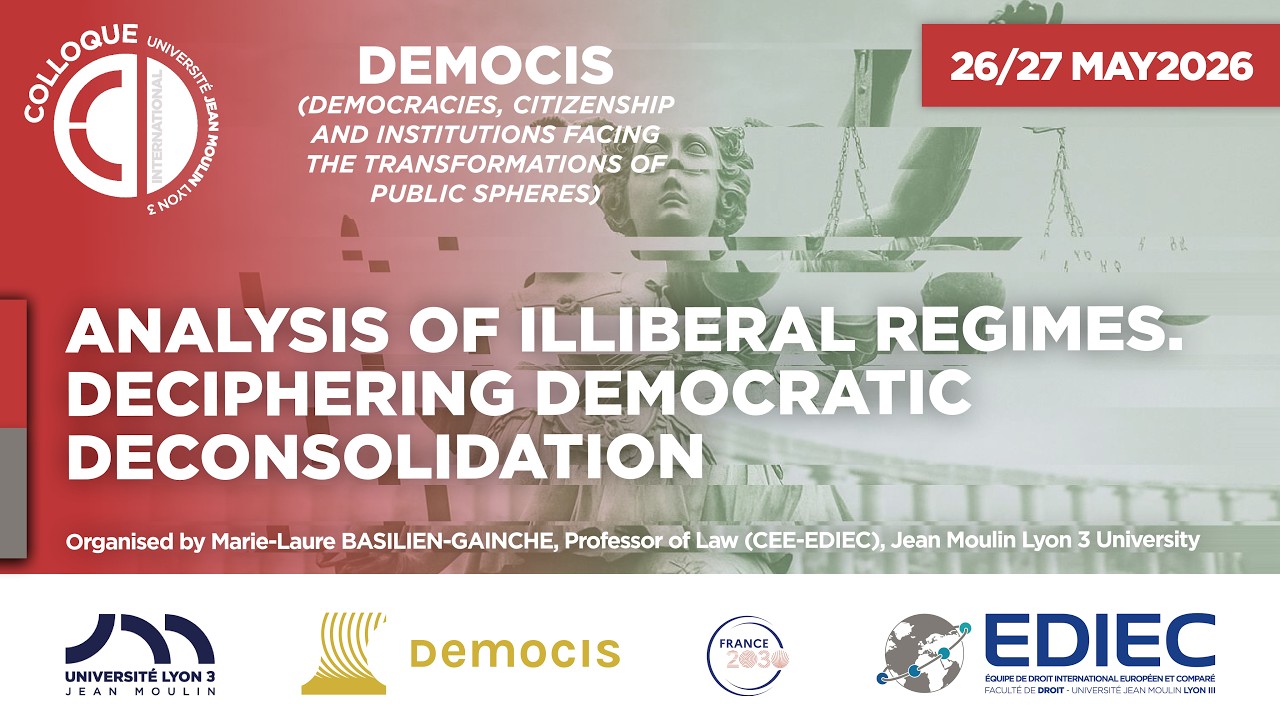
Discussion – Illiberal Regimes Dismantling the Rule of Law (2): The Human Rights Protection
Keywords
Summary
116 words
Critical Evaluation
Value of the Information & Strength of the Argument
The discussion provides valuable insights into the legal and philosophical dimensions of illiberalism. Padilla’s analysis of academic freedom highlights the complexity of its legal basis across different constitutional traditions. Pranchère’s critique of ‘populism’ is well-argued, drawing on historical examples like Martin Luther King and the Front Populaire to challenge contemporary usage. The argumentation is solid, though it relies on the speakers’ expertise rather than extensive citations. The exchange on no-platforming and constitutional protection offers practical considerations for defending academic freedom.
Scientific Rigor, Source Quality, Title Accuracy
The panelists are established academics, lending credibility to their statements. However, the format is a discussion, so sources are not systematically cited. The title accurately reflects the content, focusing on human rights protection under illiberal regimes. The discussion is rigorous in its conceptual analysis, though some claims could benefit from explicit references. No comments were provided for analysis.
153 words
Title / Content Match
The title accurately reflects the content, which focuses on the dismantling of human rights protections under illiberal regimes, as part of a broader conference on democratic deconsolidation.
Quality & Reliability
7/10
The discussion features academic experts in law and philosophy, providing nuanced arguments grounded in constitutional theory and historical examples. However, the format is a Q&A session, so claims are not systematically sourced, and some assertions rely on the speakers' expertise rather than explicit citations.
Key Moments
Markers derived by PSI from the transcript: the creator did not define chapters.
- Introduction and call for questions from the audience.
- First question on academic freedom and free speech, and constitutional entrenchment.
- Marie Padilla responds on the articulation between free speech and academic freedom.
- Discussion on no-platforming and its dual use.
- Jean-Yves Pranchère critiques the term 'populism' and its historical misuse.
- Pranchère discusses the origins of the semantic shift in Latin America.
- Question on contested concepts and illiberal actors reclaiming liberalism.
- Pranchère responds on the need for conceptual history and historical memory.
- Final question on the Front Populaire and populist rhetoric.
- Concluding remarks and thanks to panelists.
Cited Sources
- DemoCIS Conference on Illiberal Regimes — The video itself is part of this conference, providing context for the discussion.
Concurring Sources
- Populism and the People — Provides background on the contested nature of populism, aligning with Pranchère's critique.
Dissenting Sources
- The Populist Paradox — Some scholars argue that populism is inherently anti-pluralist, contrary to Pranchère's historical interpretation.
Contribution & Novelties
The discussion offers a nuanced critique of the term ‘populism’, arguing that its contemporary usage obscures historical meanings and can be misleading. It also provides a comparative analysis of academic freedom protections across different legal systems, highlighting the importance of constitutional context. The panelists emphasize the need for conceptual clarity and historical memory in defending democratic institutions.
Pour aller plus loin :
- Populism — Overview of the term’s evolution and debates.
- Academic freedom — Discussion of its legal and philosophical foundations.
- Rule of law — Key concept in the context of illiberal regimes.
93 words
Radar Profile
The radar profile shows high scores in quality of information and technical level, reflecting the expertise of the panelists. The quantity of information is moderate, as the discussion is relatively short. Overall, the content is reliable and well-argued, though it could benefit from more explicit sourcing.